Villa lateralis
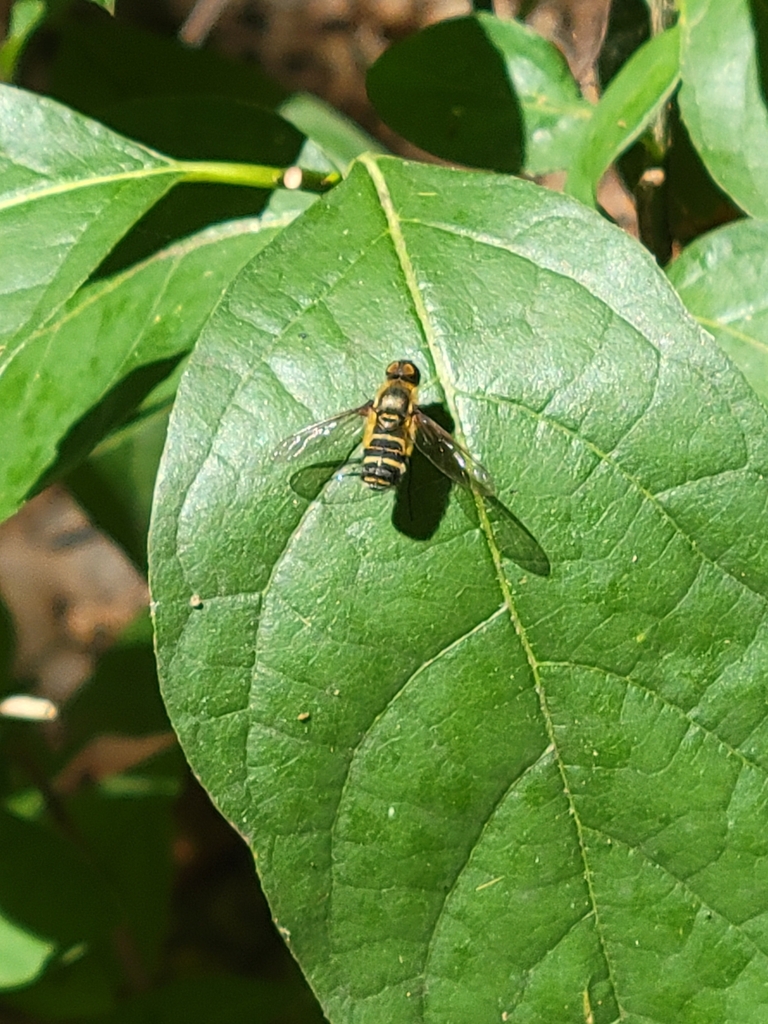
no rights reserved · CC0
Family: Bombyliidae · Class: Insecta · Order: Diptera
Villa lateralis is a California animal in the Bombyliidae family.
Villa lateralis is a bee fly in the family Bombyliidae, representing one of California's lesser-documented dipteran species. As with most members of this family, adults are characterized by their robust, hairy bodies and long, forward-projecting proboscis used for nectar feeding. The species exhibits the typical bombyliid flight pattern of hovering near flowers while feeding, resembling small hummingbirds in their aerial behavior. The distribution and range of Villa lateralis in California requires further documentation through systematic surveys. Based on available records, the species appears to be associated with coastal and near-coastal habitats, though comprehensive range mapping has not been completed. The genus Villa contains numerous species distributed across North America, with several species documented from California's diverse ecosystems. Habitat preferences for Villa lateralis include areas that support both adult nectar sources and suitable substrates for larval development. According to documentation from the Ballona Wetlands biological assessment, the species has been recorded in pickleweed marsh environments (Mattoni 1991). Bombyliidae larvae are typically parasitoids or hyperparasitoids of other insects, often targeting beetle larvae, moth pupae, or other fly larvae in soil or plant material. The specific larval ecology and host relationships for Villa lateralis have not been thoroughly studied, representing a significant knowledge gap in understanding this species' life cycle requirements. Adult Villa lateralis, like other bee flies, are anthophilous, visiting flowers for nectar while inadvertently providing pollination services. Their long proboscis allows them to access nectar from tubular flowers that may be inaccessible to other insects. Flight period and seasonal activity patterns have not been well documented for this species, though most bombyliids are active during warmer months when flowering plants provide abundant nectar resources. Mating behaviors and reproductive ecology remain largely undocumented. The conservation status of Villa lateralis has not been formally assessed. No federal or state listing status has been assigned, and the species lacks global or state conservation rankings. This absence of status designation likely reflects limited survey effort and taxonomic attention rather than actual security. Many dipteran species, particularly those in specialized families like Bombyliidae, remain poorly studied despite their ecological importance as pollinators and natural pest control agents. Primary conservation concerns for Villa lateralis would likely parallel those affecting other coastal California insects, including habitat loss from urban development, agricultural conversion, and climate change effects on host plant communities. The documented presence in pickleweed marsh habitat suggests potential vulnerability to wetland degradation and sea level rise impacts on coastal ecosystems. Scientific documentation for this species remains extremely limited. The information presented here synthesizes available sources including the Ballona Wetlands biological survey data. Detailed ecological studies, comprehensive distribution surveys, and basic life history research are needed to properly assess the status and conservation needs of Villa lateralis. We welcome contributions of verified scientific data, photographs, or field observations to enhance this species account.
Classification
Class: Insecta · Order: Diptera · Family: Bombyliidae
Frequently asked questions
How is Villa lateralis classified?
Villa lateralis belongs to class Insecta, order Diptera, family Bombyliidae.
What family does Villa lateralis belong to?
Villa lateralis is in the Bombyliidae family.
What is Villa lateralis?
Villa lateralis is a bee fly in the family Bombyliidae, representing one of California's lesser-documented dipteran species.
Is Villa lateralis found in California?
Yes. Villa lateralis is recorded in California in The California Species Project's catalogue.
Related species
Other California species in the same genus, family, or bioregion.
Data from The California Species Project — 14,000+ California species with verified data from CNPS, CDFW, USFWS, and more.