Vireo bellii
Bell's Vireo
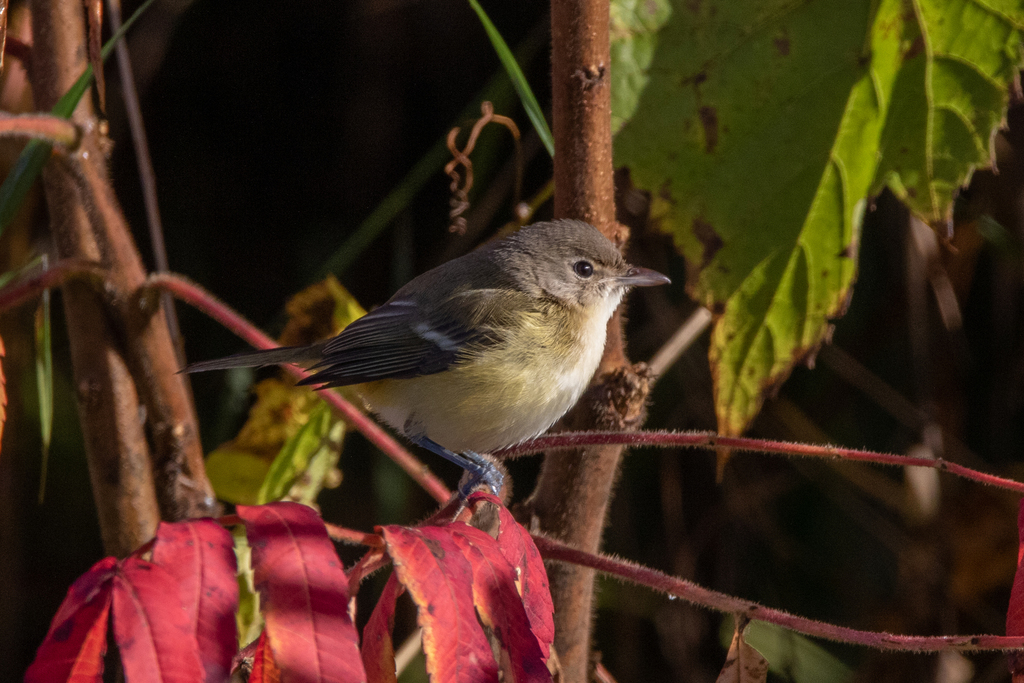
no rights reserved · CC0
Family: Vireonidae · Class: Aves · Order: Passeriformes
Vireo bellii (Bell's Vireo) is a California animal in the Vireonidae family.
Bell's Vireo is a small, cryptic songbird measuring 11.5 to 12.5 cm (4.5 to 4.9 inches) in length with a wingspan of approximately 18 cm (7.1 inches). Adults weigh 8 to 10 grams. The species displays subdued plumage with olive-gray upperparts and whitish to pale yellow underparts. A faint white eye-ring and indistinct wing bars distinguish it from similar vireos. The bill is short, slightly hooked, and dark gray. Males and females appear similar, though breeding males may show slightly brighter olive tones on the back and wings. Bell's Vireo breeds across much of the western and central United States, with California populations representing the westernmost extent of the species' range. In California, the species historically nested in riparian habitats throughout the Central Valley and along coastal river systems from San Luis Obispo County north to Shasta County. Current breeding populations are significantly reduced and fragmented, with the largest remaining populations in the Sacramento Valley and isolated sites along the Kern, Salinas, and Santa Clara rivers. The species winters primarily in northwestern Mexico and southern Baja California. The species requires dense riparian woodland with a well-developed understory for nesting and foraging. Preferred habitats include willow thickets, cottonwood groves, and mixed riparian forests with shrub layers composed of elderberry, wild rose, and blackberry. Bell's Vireo typically nests in vegetation 1 to 3 meters above ground, often in willows or other riparian shrubs. The species shows strong site fidelity to breeding territories that provide adequate cover density and proximity to water sources. Bell's Vireo is an insectivorous species that gleans small arthropods from foliage and bark surfaces. The diet consists primarily of caterpillars, aphids, beetles, and other small insects, with some consumption of berries during late summer. Males establish territories through persistent singing from concealed perches within dense vegetation. The breeding season extends from April through July, with females constructing cup-shaped nests suspended in shrub forks. Clutches typically contain 3 to 4 white eggs marked with brown spots. Incubation lasts 14 days, and nestlings fledge after 10 to 12 days. Pairs often produce two broods per season in favorable conditions. Bell's Vireo populations in California have declined substantially due to habitat loss and fragmentation. Agricultural conversion and urban development eliminated an estimated 95% of riparian habitat in the Central Valley during the 20th century. Brown-headed Cowbird parasitism poses an additional threat, with parasitism rates exceeding 60% in some populations. The species is considered a Species of Special Concern by the California Department of Fish and Wildlife. Current conservation efforts focus on riparian habitat restoration, cowbird control programs, and protection of remaining breeding sites through conservation easements and habitat management plans.
Classification
Class: Aves · Order: Passeriformes · Family: Vireonidae
Frequently asked questions
How is Vireo bellii classified?
Vireo bellii belongs to class Aves, order Passeriformes, family Vireonidae.
What family does Vireo bellii belong to?
Vireo bellii is in the Vireonidae family.
What is Vireo bellii?
Bell's Vireo is a small, cryptic songbird measuring 11.5 to 12.5 cm (4.5 to 4.9 inches) in length with a wingspan of approximately 18 cm (7.1 inches).
Is Vireo bellii found in California?
Yes. Vireo bellii is recorded in California in The California Species Project's catalogue.
Related species
Other California species in the same genus, family, or bioregion.
Data from The California Species Project — 14,000+ California species with verified data from CNPS, CDFW, USFWS, and more.