Vitula edmandsii
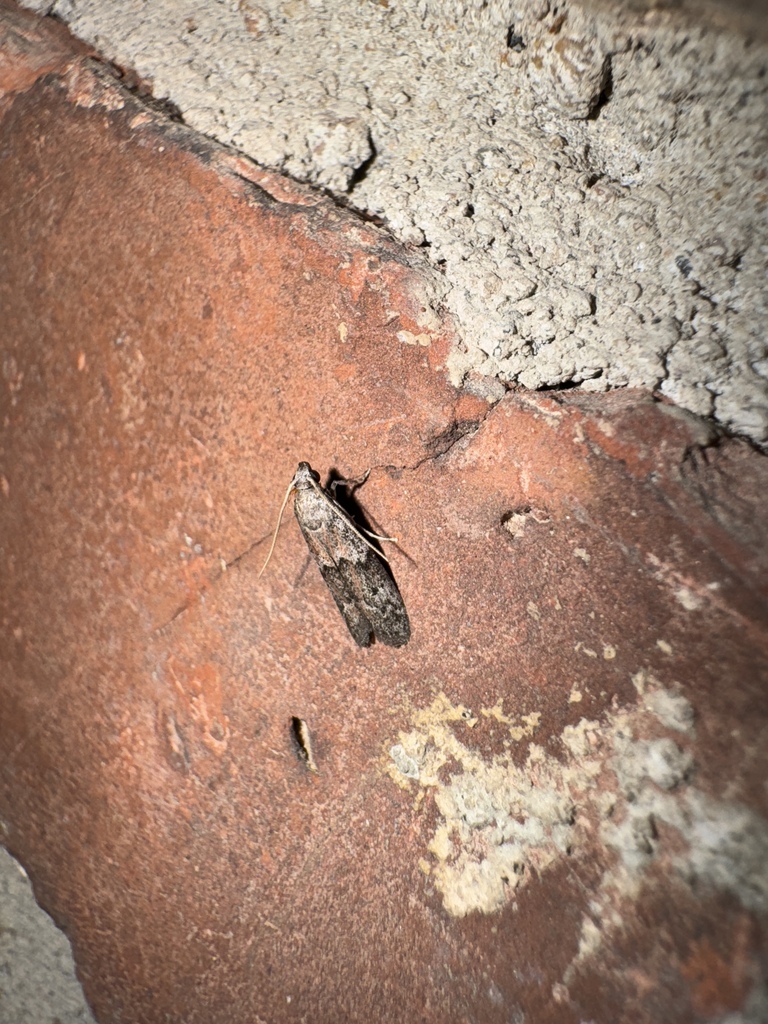
(c) Tyler, some rights reserved (CC BY) · licence
Family: Pyralidae · Class: Insecta · Order: Lepidoptera
Vitula edmandsii is a California animal in the Pyralidae family.
Vitula edmandsii is a small moth species belonging to the family Pyralidae, commonly known as the snout moths or grass moths. This species represents one of the lesser-documented members of the Vitula genus, which comprises small pyralid moths found primarily in North America. Adult moths typically measure 8-12 mm in wingspan, displaying the characteristic features of the Pyralidae family including elongated labial palps that form a prominent snout-like projection. The forewings are generally brownish-gray to pale brown with subtle darker markings, though detailed morphological descriptions remain limited in the scientific literature. Like other members of the genus Vitula, V. edmandsii likely exhibits sexual dimorphism, with males possessing more pronounced antennal structures and females showing a more robust abdomen adapted for egg-laying. The historical and current range of Vitula edmandsii appears to be restricted to specific regions of western North America, though precise distribution records are scarce. The species has been documented in California, though comprehensive surveys to establish its full geographic extent have not been conducted. The limited collection records suggest a potentially narrow endemic range, which is not uncommon among specialized pyralid moths. Habitat requirements for V. edmandsii remain poorly understood due to limited ecological research. Based on related Vitula species, this moth likely inhabits areas with appropriate larval host plants, which for the genus typically include various herbaceous plants and possibly dried organic matter. The species may occupy coastal sage scrub, chaparral, or grassland habitats characteristic of California's Mediterranean climate regions. The life cycle of Vitula edmandsii follows the typical lepidopteran pattern of complete metamorphosis. Larvae likely feed on specific plant materials, though the exact host plant relationships have not been definitively established. Adult flight periods are unknown, but related species in the genus typically have one or two generations per year, with adults active during warmer months. Mating behaviors likely involve pheromone communication, as is standard for pyralid moths. The conservation status of Vitula edmandsii remains undetermined, as insufficient data exists to assess population trends or threats. The apparent rarity of collection records suggests either a naturally uncommon species or one that has experienced population decline. Potential threats to pyralid moths in California include habitat loss from urban development, agricultural conversion, altered fire regimes, and climate change impacts on host plant communities. The taxonomic validity and distinctiveness of V. edmandsii may require further investigation through molecular and morphological studies. Many pyralid species have undergone taxonomic revision in recent decades as new techniques have revealed cryptic species complexes and clarified relationships within the family. Conservation assessment would benefit from targeted surveys to locate extant populations and determine current distribution and abundance patterns.
Classification
Class: Insecta · Order: Lepidoptera · Family: Pyralidae
Frequently asked questions
How is Vitula edmandsii classified?
Vitula edmandsii belongs to class Insecta, order Lepidoptera, family Pyralidae.
What family does Vitula edmandsii belong to?
Vitula edmandsii is in the Pyralidae family.
What is Vitula edmandsii?
Vitula edmandsii is a small moth species belonging to the family Pyralidae, commonly known as the snout moths or grass moths.
Is Vitula edmandsii found in California?
Yes. Vitula edmandsii is recorded in California in The California Species Project's catalogue.
Related species
Other California species in the same genus, family, or bioregion.
Data from The California Species Project — 14,000+ California species with verified data from CNPS, CDFW, USFWS, and more.