Vulpes macrotis mutica
San Joaquin kit fox
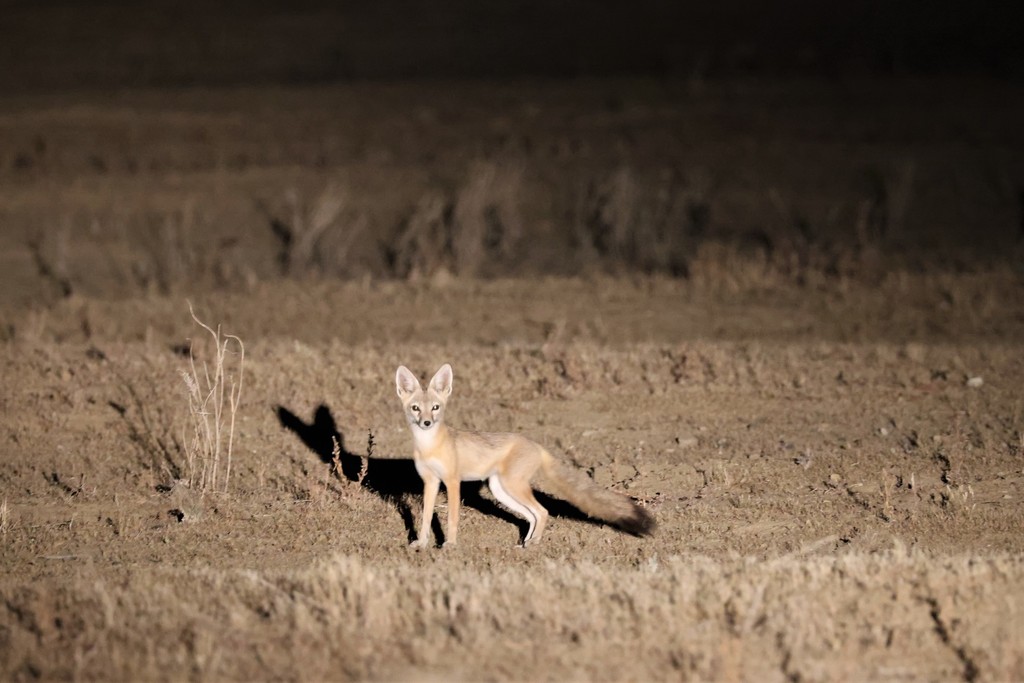
no rights reserved · CC0
Family: Canidae · Class: Mammalia · Order: Carnivora
Conservation status: ST · Endangered · G4T2 S3
Vulpes macrotis mutica (San Joaquin kit fox) is a California animal in the Canidae family.
The San Joaquin kit fox is the smallest fox in North America, with an average body length of 20 inches (51 cm) and weight of approximately 5 pounds (2.3 kg). This subspecies is lightly built with long legs and large ears adapted for desert survival. The coat ranges from tan to buffy gray during summer months, transitioning to silvery gray in winter. The belly is whitish, and the tail is distinctively black-tipped (USFWS). The San Joaquin kit fox is endemic to the San Joaquin Valley and adjacent areas of central California. Its range extends from San Joaquin County in the north to Kern County in the south, including the western valley floor from Contra Costa, Alameda, and San Joaquin counties to the La Grange area of Stanislaus County on the eastern side. The range also encompasses valleys along the Coast Range, including the Panoche and Cuyama valleys and the Carrizo Plain in San Luis Obispo County (USFWS). This species inhabits desert and grassland environments, preferring areas with minimal shrubs and grasses. Primary habitat types include foothill grasslands, oak savannah adjacent to grasslands, and agricultural lands on the valley floor within 3 miles of foothill grasslands. The species also utilizes dryland farmed areas and ruderal lands associated with natural habitats. Kit foxes construct dens that are significantly larger than those of California ground squirrels, with average entrance dimensions of 21.1 cm height and 17.2 cm width (Cypher et al. 2023). San Joaquin kit foxes are primarily nocturnal carnivores that hunt small mammals, birds, reptiles, and insects. They are known to utilize multiple dens throughout their territory, with complex burrow systems serving for shelter, reproduction, and predator avoidance. The species exhibits seasonal movements in response to prey availability and environmental conditions. Reproduction typically occurs in late winter to early spring, with females giving birth to 2-6 pups after a gestation period of approximately 50 days. The San Joaquin kit fox was federally listed as endangered on March 11, 1967, and is state-listed as threatened in California. The species faces significant threats including habitat loss to agricultural, urban, and industrial development, which continues to constitute a major threat. Additional threats include direct mortality from vehicle strikes and rodenticide poisoning, displacement from human activities, reduction of prey populations, loss of denning sites, and increased competition with other predators. The 1998 Recovery Plan for Upland Species of the San Joaquin Valley established core and satellite conservation areas to support population recovery. Current conservation efforts focus on habitat protection, restoration, and implementing protective measures for development projects within the species' range. The most recent 5-year review was completed in 2010, with a Species Status Assessment conducted in 2020 to inform ongoing recovery planning.
Classification
Class: Mammalia · Order: Carnivora · Family: Canidae
Conservation status
ST · Endangered · G4T2 S3
Frequently asked questions
How is Vulpes macrotis mutica classified?
Vulpes macrotis mutica belongs to class Mammalia, order Carnivora, family Canidae.
What family does Vulpes macrotis mutica belong to?
Vulpes macrotis mutica is in the Canidae family.
Is Vulpes macrotis mutica protected or of conservation concern?
Vulpes macrotis mutica carries the following status: ST · Endangered · G4T2 S3.
What is Vulpes macrotis mutica?
The San Joaquin kit fox is the smallest fox in North America, with an average body length of 20 inches (51 cm) and weight of approximately 5 pounds (2.3 kg).
Is Vulpes macrotis mutica found in California?
Yes. Vulpes macrotis mutica is recorded in California in The California Species Project's catalogue.
Related species
Other California species in the same genus, family, or bioregion.
Data from The California Species Project — 14,000+ California species with verified data from CNPS, CDFW, USFWS, and more.