Vulpes vulpes necator pop. 2
Sierra Nevada red fox - Sierra Nevada DPS
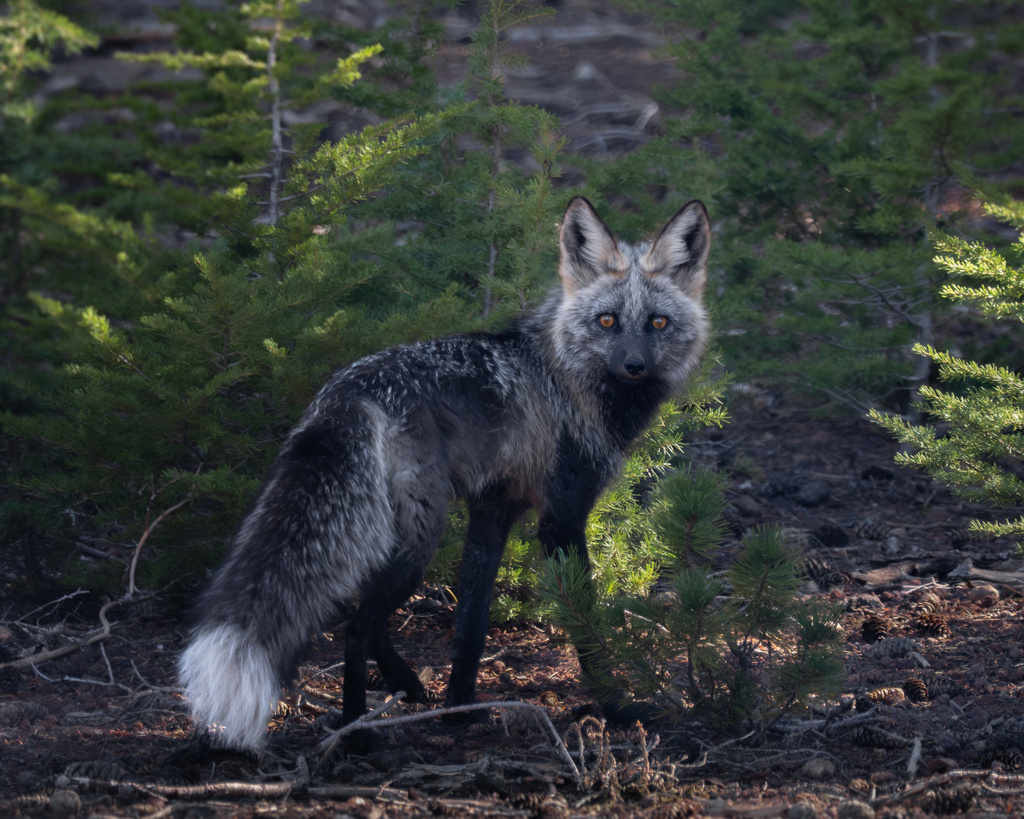
(c) David Willingham, some rights reserved (CC BY) · licence
Family: Canidae · Class: Mammalia · Order: Carnivora
Conservation status: ST · Endangered · G5TNR S1
Vulpes vulpes necator pop. 2 (Sierra Nevada red fox - Sierra Nevada DPS) is a California animal in the Canidae family.
The Sierra Nevada red fox is a small carnivore endemic to the high-elevation regions of the Sierra Nevada mountain range. Adults are smaller than lowland red fox subspecies, with distinctive morphological adaptations for mountainous terrain and snow-covered habitats. The species exhibits the characteristic reddish coat coloration with black legs and white-tipped tail typical of red foxes, though specific measurements for this subspecies have not been well documented in the literature. Historically, the Sierra Nevada red fox occupied high-elevation areas throughout the Sierra Nevada range. According to the U.S. Fish and Wildlife Service, current sightings of the Sierra Nevada population are limited to federal lands in Alpine, Fresno, Inyo, Madera, Mono, and Tuolumne counties (USFWS 2021). The subspecies' range has contracted significantly from its historical distribution, with populations now fragmented into small, isolated groups. The species inhabits high-elevation montane environments, typically occupying areas above the mixed conifer forest zone where snow persists for extended periods. Sierra Nevada red foxes are adapted to snow-covered habitats and utilize subalpine and alpine ecosystems characterized by rocky terrain, meadows, and sparse vegetation. Their habitat preferences distinguish them from other red fox subspecies that occupy lower elevation environments. Sierra Nevada red foxes are opportunistic predators, though specific dietary studies for this subspecies are limited. Like other red fox populations, they likely consume small mammals, birds, insects, and seasonal vegetation. Reproductive behavior and denning requirements specific to this high-elevation subspecies have not been extensively documented. The species faces competition from coyotes, which may impact foraging success and territorial behavior. The Sierra Nevada Distinct Population Segment was listed as federally endangered in 2021. According to USFWS, only about 18 to 39 individuals remain in the wild as of 2021, making this one of the rarest mammal subspecies in North America. One study estimated density at 1.06 foxes per 100 square kilometers distributed throughout 22,926 square kilometers, resulting in a rough population estimate of 243 foxes (Green et al. 2023). However, field surveys suggest actual numbers may be at the lower end of these estimates. Primary threats include unpredictable events such as wildfire and drought, competition with coyotes, decreases in prey numbers, and widespread hybridization with non-native fox populations (USFWS 2021). Climate change poses additional risks through altered precipitation patterns and reduced snowpack duration. The small population size makes the subspecies extremely vulnerable to stochastic events and genetic bottlenecks. The California Department of Fish and Wildlife lists the species as state threatened, recognizing the critical conservation status at both federal and state levels. Recovery efforts focus on population monitoring, habitat protection, and research into hybridization impacts.
Classification
Class: Mammalia · Order: Carnivora · Family: Canidae
Conservation status
ST · Endangered · G5TNR S1
Frequently asked questions
How is Vulpes vulpes necator pop. 2 classified?
Vulpes vulpes necator pop. 2 belongs to class Mammalia, order Carnivora, family Canidae.
What family does Vulpes vulpes necator pop. 2 belong to?
Vulpes vulpes necator pop. 2 is in the Canidae family.
Is Vulpes vulpes necator pop. 2 protected or of conservation concern?
Vulpes vulpes necator pop. 2 carries the following status: ST · Endangered · G5TNR S1.
What is Vulpes vulpes necator pop. 2?
The Sierra Nevada red fox is a small carnivore endemic to the high-elevation regions of the Sierra Nevada mountain range.
Is Vulpes vulpes necator pop. 2 found in California?
Yes. Vulpes vulpes necator pop. 2 is recorded in California in The California Species Project's catalogue.
Related species
Other California species in the same genus, family, or bioregion.
Data from The California Species Project — 14,000+ California species with verified data from CNPS, CDFW, USFWS, and more.