Walshia miscecolorella
Sweet Clover Root Borer Moth
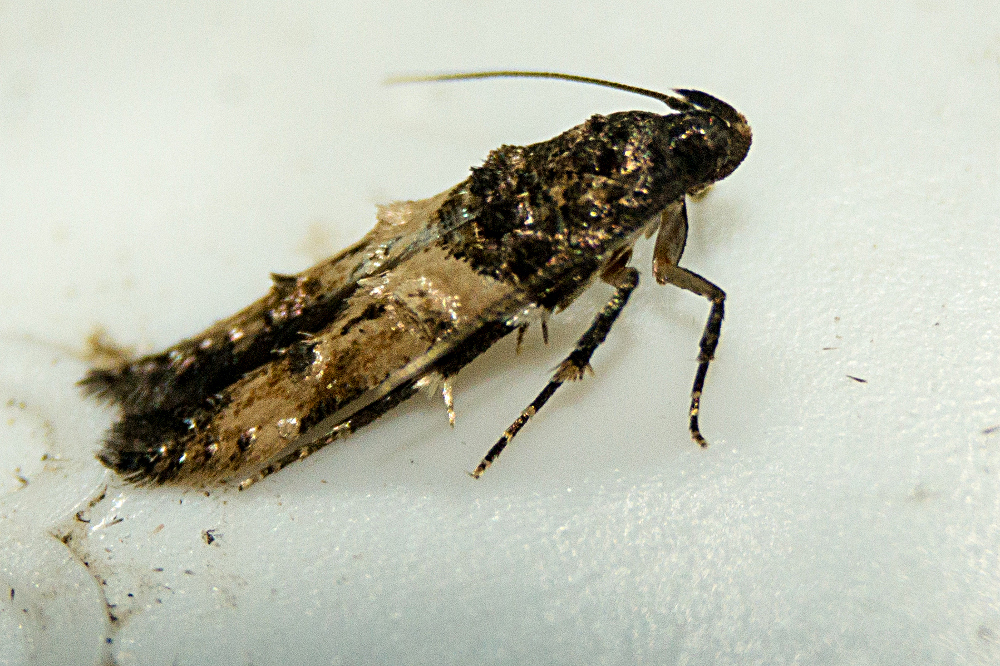
(c) psweet, some rights reserved (CC BY-SA) · licence
Family: Cosmopterigidae · Class: Insecta · Order: Lepidoptera
Walshia miscecolorella (Sweet Clover Root Borer Moth) is a California animal in the Cosmopterigidae family.
Walshia miscecolorella, commonly known as the Sweet Clover Root Borer Moth, is a small microlepidopteran belonging to the family Cosmopterigidae. This species was originally described by Chambers in 1875 under the genus Laverna and represents one of several economically significant root-boring moths in North America. The Sweet Clover Root Borer Moth is characterized by its small size typical of cosmopterigid moths, with forewings displaying mixed coloration that gives the species its name "miscecolorella." Adult moths have narrow, elongated wings with subtle patterning. Detailed morphological descriptions of wing patterns and body characteristics require examination of pinned specimens, as this species can be challenging to distinguish from related Walshia species without close inspection. This moth occurs across a broad range in North America, with documented populations extending from coast to coast. The species has been recorded from multiple states including California, Nevada, New Mexico, and numerous eastern localities. The wide distribution reflects the moth's association with widely distributed host plants in the legume family. Larval development occurs primarily in association with plants from three families: Fabaceae (legumes), Asteraceae (sunflower family), and Berberidaceae (barberry family). Host genera include Melilotus (sweet clover), Lupinus (lupines), Astragalus (milk-vetches), Cirsium (thistles), Arachis (peanuts), and Achlys (vanilla leaf) (Moth Photographers Group). The larvae typically feed within root systems, though some populations utilize stems as feeding sites (Robinson et al. 2002). This root-boring behavior distinguishes the species from many other small moths and can occasionally impact agricultural legume crops, particularly sweet clover stands. The association with sweet clover (Melilotus species) is particularly significant, as these introduced legumes have become widespread across North America and provide abundant larval habitat. The moth's life cycle involves larvae tunneling through root tissues, potentially weakening plants and reducing stand vigor in agricultural settings. Adult flight periods and specific reproductive timing vary with latitude and local climate conditions. The Sweet Clover Root Borer Moth demonstrates the complex ecological relationships between native lepidoptera and both native and introduced plant species. While not considered a major agricultural pest, populations can occasionally reach levels that impact sweet clover production in certain regions. The species' ability to utilize multiple host plant families suggests considerable ecological flexibility. Currently, W. miscecolorella has no special conservation status and appears to maintain stable populations across its range. The widespread distribution of suitable host plants, including abundant introduced sweet clover, likely supports robust populations. However, like many small moth species, detailed population monitoring data are limited, and the species' status may be influenced by agricultural practices and habitat management in areas where legume crops are intensively managed.
Classification
Class: Insecta · Order: Lepidoptera · Family: Cosmopterigidae
Frequently asked questions
How is Walshia miscecolorella classified?
Walshia miscecolorella belongs to class Insecta, order Lepidoptera, family Cosmopterigidae.
What family does Walshia miscecolorella belong to?
Walshia miscecolorella is in the Cosmopterigidae family.
What is Walshia miscecolorella?
Walshia miscecolorella, commonly known as the Sweet Clover Root Borer Moth, is a small microlepidopteran belonging to the family Cosmopterigidae.
Is Walshia miscecolorella found in California?
Yes. Walshia miscecolorella is recorded in California in The California Species Project's catalogue.
Related species
Other California species in the same genus, family, or bioregion.
Data from The California Species Project — 14,000+ California species with verified data from CNPS, CDFW, USFWS, and more.