Watersipora subtorquata
Red-rust bryozoan
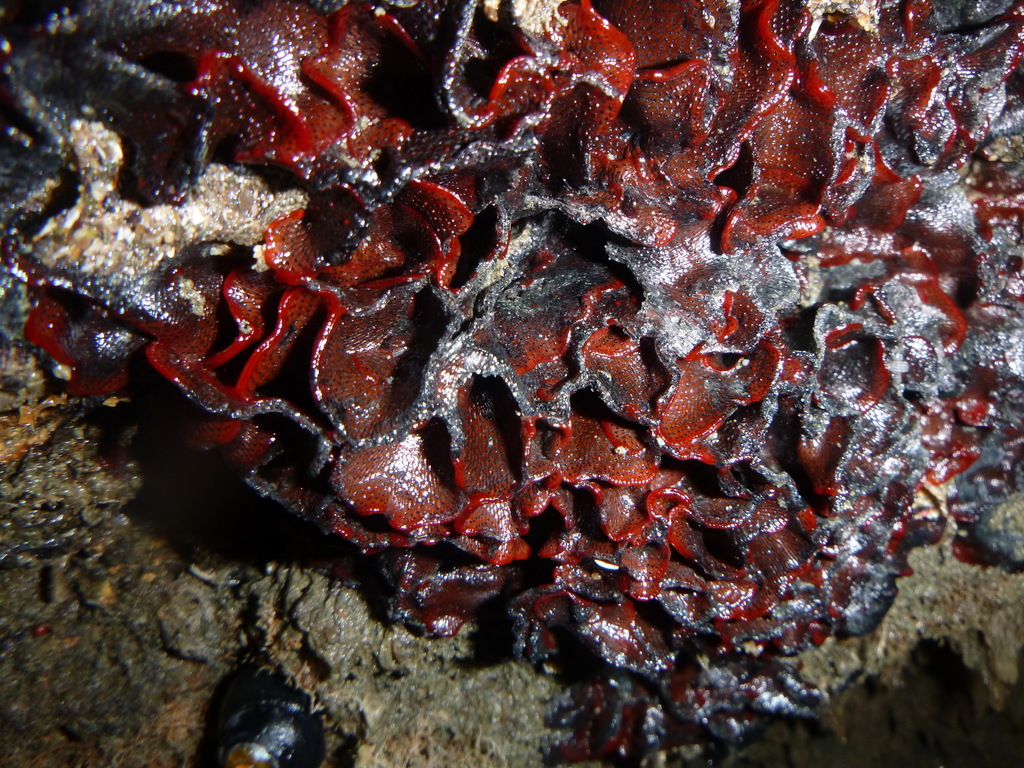
(c) LJ Moore-McClelland, some rights reserved (CC BY) · licence
Family: Watersiporidae · Class: Gymnolaemata · Order: Cheilostomatida
Watersipora subtorquata (Red-rust bryozoan) is a California animal in the Watersiporidae family.
The red-rust bryozoan (Watersipora subtorquata) is a marine colonial invertebrate belonging to the class Gymnolaemata and order Cheilostomatida. This encrusting bryozoan forms reddish-brown to rust-colored colonies that can extend several centimeters across hard substrates. Individual zooids within the colony are rectangular to oval-shaped, measuring approximately 0.4 to 0.6 millimeters in length, and are arranged in regular patterns across the colony surface. The colony surface appears bumpy or granular due to the raised frontal walls of individual zooids, and the characteristic rust coloration distinguishes it from many other bryozoan species. Watersipora subtorquata is a non-native marine invasive species that has established populations along the California coast. The species is believed to have originated from Australia or New Zealand and has spread to temperate marine environments worldwide through shipping and other human-mediated transport vectors. In California waters, established populations have been documented in harbors, marinas, and coastal areas from central to southern California, where it colonizes artificial structures and natural hard substrates. This bryozoan species typically inhabits marine environments with hard substrates in intertidal and shallow subtidal zones. Colonies are commonly found on pier pilings, boat hulls, rocks, shells, and other marine infrastructure in harbors and marinas. The species demonstrates tolerance for a range of environmental conditions including varying salinity levels and water temperatures, contributing to its success as an invasive species. Optimal growth occurs in areas with moderate water flow that facilitates feeding and prevents sediment accumulation on colony surfaces. As a suspension feeder, W. subtorquata captures plankton and organic particles from the water column using ciliated tentacles called lophophores that extend from individual zooids. Colonies reproduce both sexually and asexually, with sexual reproduction producing free-swimming larvae that can disperse to new locations before settling and metamorphosing into founding zooids. Asexual reproduction through budding allows rapid colony expansion once established. The species demonstrates seasonal growth patterns, with peak growth and reproductive activity typically occurring during warmer months when food availability is higher. Currently, Watersipora subtorquata does not hold federal or state conservation listing status, as it is classified as a non-native invasive species rather than a species requiring protection. California Department of Fish and Wildlife monitors marine invasive species as part of broader ecosystem management efforts. The species is considered a marine pest due to its potential ecological impacts on native marine communities and its ability to foul marine infrastructure. Management strategies focus on prevention of further spread through hull cleaning requirements and early detection monitoring programs in California ports and harbors. Research continues on the species' ecological impacts and potential control methods as part of comprehensive marine invasive species management efforts along the California coast.
Classification
Class: Gymnolaemata · Order: Cheilostomatida · Family: Watersiporidae
Frequently asked questions
How is Watersipora subtorquata classified?
Watersipora subtorquata belongs to class Gymnolaemata, order Cheilostomatida, family Watersiporidae.
What family does Watersipora subtorquata belong to?
Watersipora subtorquata is in the Watersiporidae family.
What is Watersipora subtorquata?
The red-rust bryozoan (Watersipora subtorquata) is a marine colonial invertebrate belonging to the class Gymnolaemata and order Cheilostomatida.
Is Watersipora subtorquata found in California?
Yes. Watersipora subtorquata is recorded in California in The California Species Project's catalogue.
More California species
This species has no close relatives in our California data — here are other species to explore.
Data from The California Species Project — 14,000+ California species with verified data from CNPS, CDFW, USFWS, and more.