Xanthia tatago
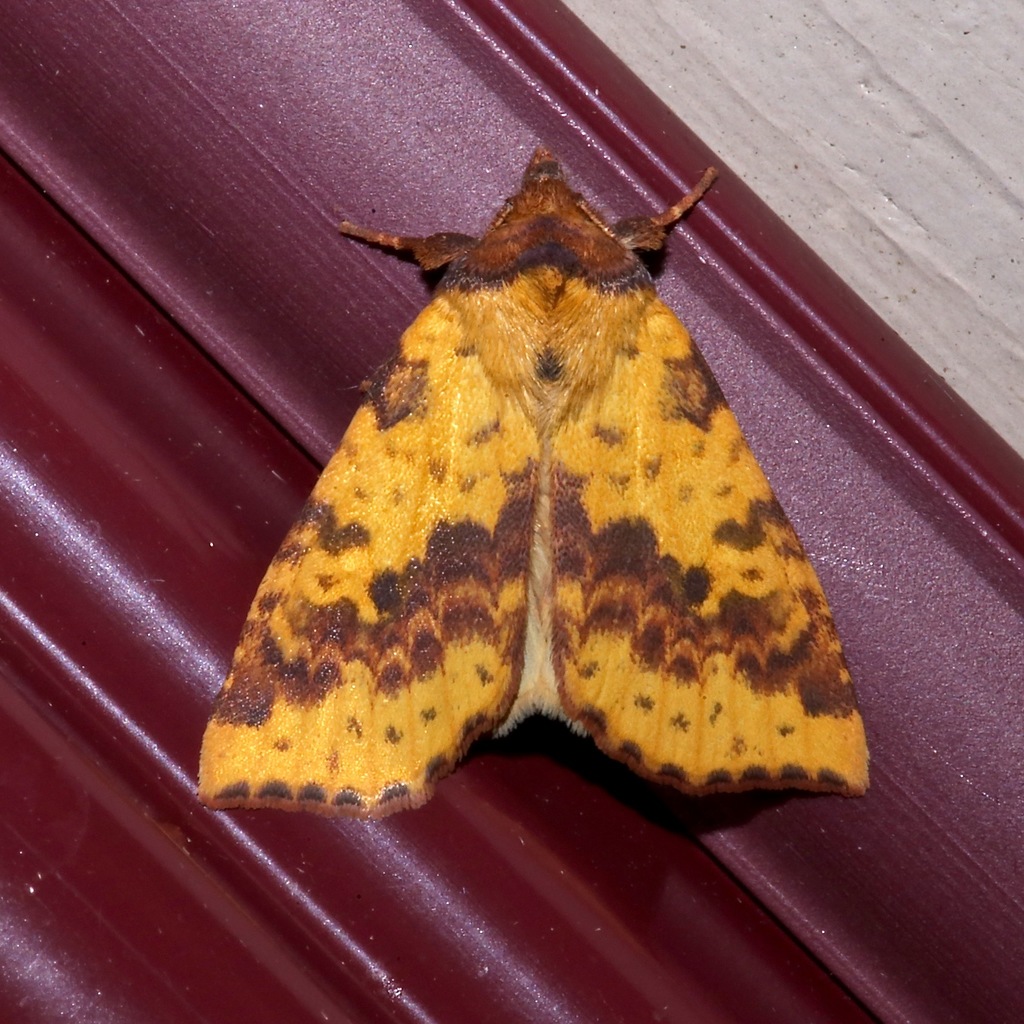
(c) Laura Gaudette, some rights reserved (CC BY) · licence
Family: Noctuidae · Class: Insecta · Order: Lepidoptera
Xanthia tatago is a California animal in the Noctuidae family.
Xanthia tatago is a moth species in the family Noctuidae, commonly known as the pink-barred sallow. Adults have a wingspan of 32-40 mm (1.3-1.6 inches), with forewings displaying a distinctive pink to purplish cross-band across buff or orange-yellow ground coloration. The forewings also feature darker brown markings and a prominent kidney-shaped reniform spot. Hindwings are pale yellowish-white with a faint darker border. The thorax matches the forewing coloration, while the abdomen is typically paler. The species ranges from Newfoundland south to Connecticut and Pennsylvania, representing a primarily northeastern North American distribution. In Canada, it occurs across the Maritime provinces and extends westward through Quebec and Ontario. The southern limit of its range includes portions of New England and the northern Mid-Atlantic states. Xanthia tatago inhabits areas where its host plants occur, primarily associated with willow-dominated wetland edges, riparian zones, and moist woodland margins. The species shows a preference for habitats containing various willow species (Salix spp.), which serve as the exclusive larval food plants. These environments typically include stream corridors, lake margins, beaver ponds, and other areas supporting willow growth. Adults are active during late summer and fall, with peak flight periods occurring from August through October. The species exhibits nocturnal behavior, with adults attracted to artificial lights and sugar baits. Females deposit eggs on willow twigs and branches in autumn. Larvae develop the following spring, feeding within catkins and young shoots of willow trees. The caterpillars are green with pale stripes and can reach 35-40 mm in length when fully grown. Pupation occurs in late spring or early summer in a cocoon constructed among leaf litter or in shallow soil. The species produces one generation per year. Larvae demonstrate specialized feeding behavior, initially boring into willow catkins before moving to feed on developing leaves and shoots. This intimate association with willows makes the species dependent on healthy riparian ecosystems and wetland margins where these trees thrive. The timing of adult emergence coincides with autumn willow senescence, when adults mate and prepare for overwintering as eggs. No specific conservation status has been assigned to Xanthia tatago at federal or state levels. The species appears to maintain stable populations throughout much of its range, though it may face localized threats from habitat loss due to wetland drainage, stream channelization, and riparian development. Climate change could potentially affect the species through alterations to wetland hydrology and willow phenology. Conservation of riparian corridors and wetland habitats benefits this species by maintaining suitable conditions for its willow host plants. The moth's restricted host plant association makes it vulnerable to factors that negatively impact willow populations, including invasive plant species, altered hydrology, and habitat fragmentation.
Classification
Class: Insecta · Order: Lepidoptera · Family: Noctuidae
Frequently asked questions
How is Xanthia tatago classified?
Xanthia tatago belongs to class Insecta, order Lepidoptera, family Noctuidae.
What family does Xanthia tatago belong to?
Xanthia tatago is in the Noctuidae family.
What is Xanthia tatago?
Xanthia tatago is a moth species in the family Noctuidae, commonly known as the pink-barred sallow.
Is Xanthia tatago found in California?
Yes. Xanthia tatago is recorded in California in The California Species Project's catalogue.
Related species
Other California species in the same genus, family, or bioregion.
Data from The California Species Project — 14,000+ California species with verified data from CNPS, CDFW, USFWS, and more.