Xanthochilus saturnius
Mediterranean Seed Bug
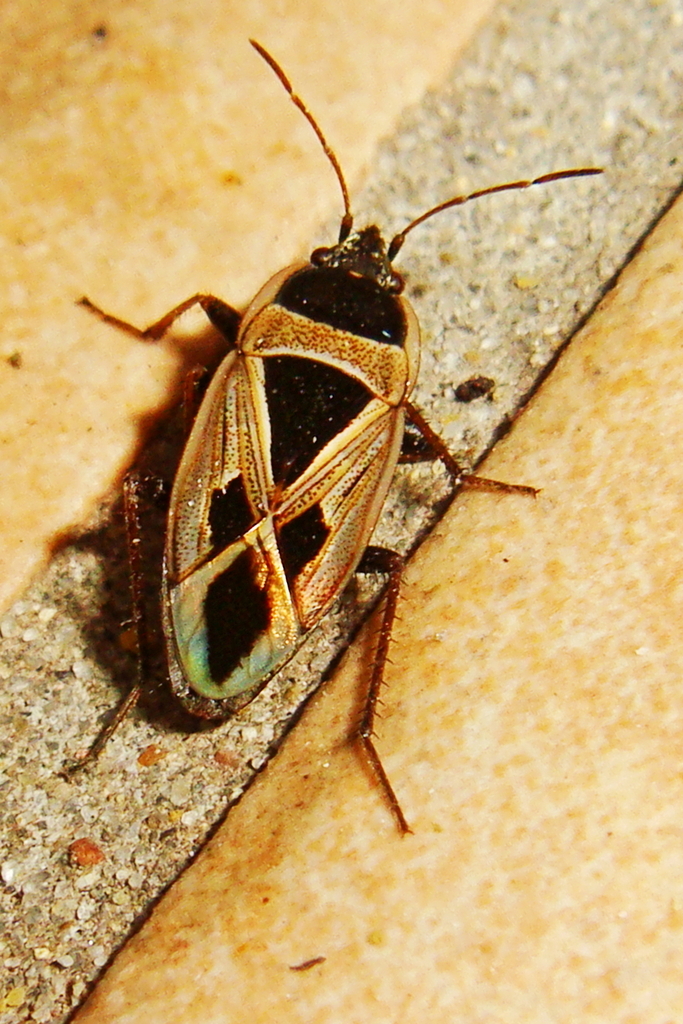
(c) Gianni Del Bufalo bygdb, some rights reserved (CC BY) · licence
Family: Rhyparochromidae · Class: Insecta · Order: Hemiptera
Xanthochilus saturnius (Mediterranean Seed Bug) is a California animal in the Rhyparochromidae family.
The Mediterranean seed bug is a small terrestrial insect in the family Rhyparochromidae, subfamily Rhyparochrominae, tribe Rhyparochromini. As a member of the seed bug family, this species typically measures 3-6 mm in length and displays the characteristic elongated oval body shape common to rhyparochromids. Like other members of its subfamily, it possesses well-developed forewings, functional hindwings, and piercing-sucking mouthparts adapted for feeding on plant materials. The species' common name reflects its Mediterranean origins, though its current distribution in California is not well-documented in available sources. The genus Xanthochilus contains multiple species within North America, with this particular species representing one of 13 known species in the tribe Rhyparochromini according to USFWS taxonomic databases. The genus name Xanthochilus derives from Greek roots meaning "yellow lip," though specific morphological characteristics distinguishing X. saturnius from closely related species require further documentation. Habitat preferences for Mediterranean seed bugs typically include areas with suitable host plants, though specific vegetation associations for X. saturnius have not been well-characterized in the scientific literature. Members of the Rhyparochromidae family generally inhabit ground-level environments including leaf litter, low vegetation, and areas around the base of host plants. Many rhyparochromids show preferences for disturbed or edge habitats, suggesting potential adaptability to human-modified landscapes. Ecologically, seed bugs in this family are primarily phytophagous, feeding on seeds, fruits, and other plant tissues using their piercing-sucking mouthparts. Reproductive biology likely follows the general pattern of other rhyparochromids, with eggs deposited in soil or plant material and multiple generations possible per year in favorable climates. Seasonal activity patterns and specific breeding timing for X. saturnius remain undocumented, representing a significant knowledge gap for this species. The conservation status of the Mediterranean seed bug is currently unassessed, with no federal or state listing designations. This lack of conservation attention likely reflects limited scientific study rather than confirmed population stability. Many small arthropod species, particularly non-native or recently described taxa, receive minimal conservation focus despite potential ecological importance. The species does not appear in standard California arthropod surveys or biodiversity assessments, suggesting either rarity, recent establishment, or taxonomic confusion with similar species. Detailed ecological studies of this species are lacking. The above information synthesizes available taxonomic data from USFWS databases and general biological knowledge of the Rhyparochromidae family. Specific documentation of distribution patterns, host plant relationships, population status, and ecological interactions in California requires additional research. We welcome contributions of verified scientific data, photographs, or field observations to enhance this species account.
Classification
Class: Insecta · Order: Hemiptera · Family: Rhyparochromidae
Frequently asked questions
How is Xanthochilus saturnius classified?
Xanthochilus saturnius belongs to class Insecta, order Hemiptera, family Rhyparochromidae.
What family does Xanthochilus saturnius belong to?
Xanthochilus saturnius is in the Rhyparochromidae family.
What is Xanthochilus saturnius?
The Mediterranean seed bug is a small terrestrial insect in the family Rhyparochromidae, subfamily Rhyparochrominae, tribe Rhyparochromini.
Is Xanthochilus saturnius found in California?
Yes. Xanthochilus saturnius is recorded in California in The California Species Project's catalogue.
Related species
Other California species in the same genus, family, or bioregion.
Data from The California Species Project — 14,000+ California species with verified data from CNPS, CDFW, USFWS, and more.