Xanthorhoe defensaria
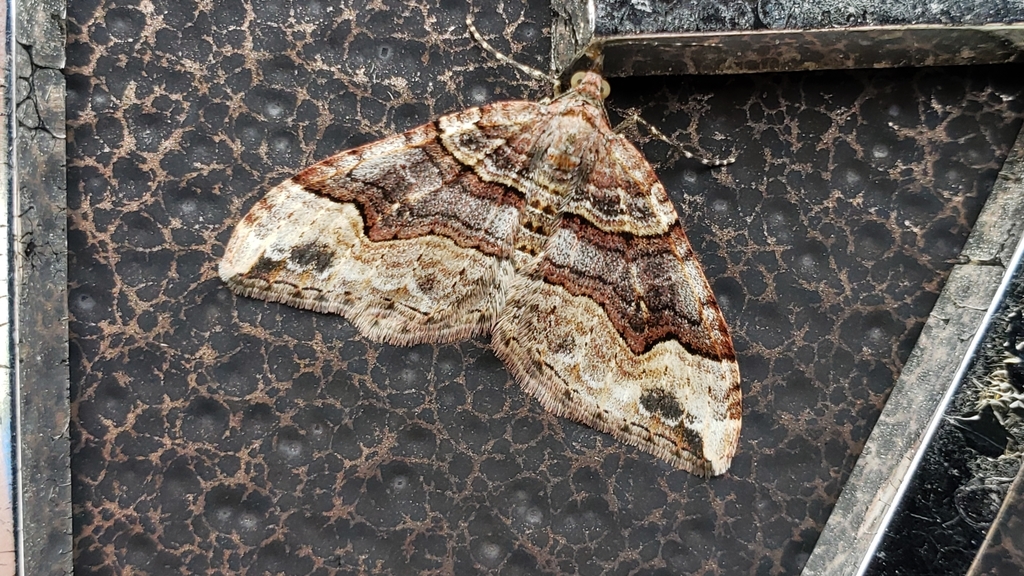
(c) Gavin Slater, some rights reserved (CC BY) · licence
Family: Geometridae · Class: Insecta · Order: Lepidoptera
Xanthorhoe defensaria is a California animal in the Geometridae family.
Xanthorhoe defensaria is a geometrid moth in the family Geometridae, subfamily Larentiinae. This species belongs to a large genus of moths commonly known as carpet moths or wave moths, characterized by their intricate wing patterns and relatively broad forewings. Adult moths typically display cryptic coloration with complex geometric patterns that provide camouflage when resting on bark or vegetation during daylight hours. The wings often exhibit wave-like or zigzag markings in earth tones, though specific morphological details for this species require further documentation. The range and distribution of Xanthorhoe defensaria in California remains poorly documented in current literature. Many species within the genus Xanthorhoe occur across temperate regions of North America, with several species endemic to specific geographic areas or elevation zones. Without verified occurrence records, the California distribution of this species cannot be definitively established. The species may represent a regional endemic or may have a broader distribution that extends beyond California's borders. Habitat requirements for Xanthorhoe defensaria are not well-documented in available sources. Members of the genus Xanthorhoe typically inhabit forested areas, woodland edges, and montane environments where their host plants occur. Many geometrid moths in this group are associated with specific plant communities and may show preferences for particular elevation ranges or moisture regimes. The larvae of related species often feed on herbaceous plants, shrubs, or trees, depending on the specific host plant relationships that have evolved. The life cycle and ecological behavior of Xanthorhoe defensaria follows the typical geometrid pattern of complete metamorphosis. Adult moths are likely nocturnal, attracted to artificial lights, and active during specific seasonal periods. Larvae, commonly called inchworms or loopers, move in a characteristic arching motion due to having fewer prolegs than other moth caterpillars. The timing of adult emergence, number of generations per year, and specific host plant relationships remain undocumented for this species. Overwintering likely occurs in the pupal stage, as is common among temperate geometrid moths. The conservation status of Xanthorhoe defensaria cannot be assessed due to insufficient data regarding its distribution, population size, and ecological requirements. Many geometrid moths face threats from habitat loss, pesticide use, and climate change impacts on their host plants and breeding sites. Light pollution can disrupt the nocturnal behavior patterns essential for mating and reproduction. Without baseline survey data, population trends and conservation needs cannot be determined. The species may benefit from general habitat conservation measures that protect native plant communities and reduce pesticide applications in potential habitat areas. Further taxonomic verification and field surveys are needed to establish the presence, distribution, and ecological requirements of Xanthorhoe defensaria in California. Moth researchers and lepidopterists conducting systematic surveys in appropriate habitats could provide valuable occurrence data and biological information necessary for proper species assessment.
Classification
Class: Insecta · Order: Lepidoptera · Family: Geometridae
Frequently asked questions
How is Xanthorhoe defensaria classified?
Xanthorhoe defensaria belongs to class Insecta, order Lepidoptera, family Geometridae.
What family does Xanthorhoe defensaria belong to?
Xanthorhoe defensaria is in the Geometridae family.
What is Xanthorhoe defensaria?
Xanthorhoe defensaria is a geometrid moth in the family Geometridae, subfamily Larentiinae.
Is Xanthorhoe defensaria found in California?
Yes. Xanthorhoe defensaria is recorded in California in The California Species Project's catalogue.
Related species
Other California species in the same genus, family, or bioregion.
Data from The California Species Project — 14,000+ California species with verified data from CNPS, CDFW, USFWS, and more.