Xanthorhoe offensaria
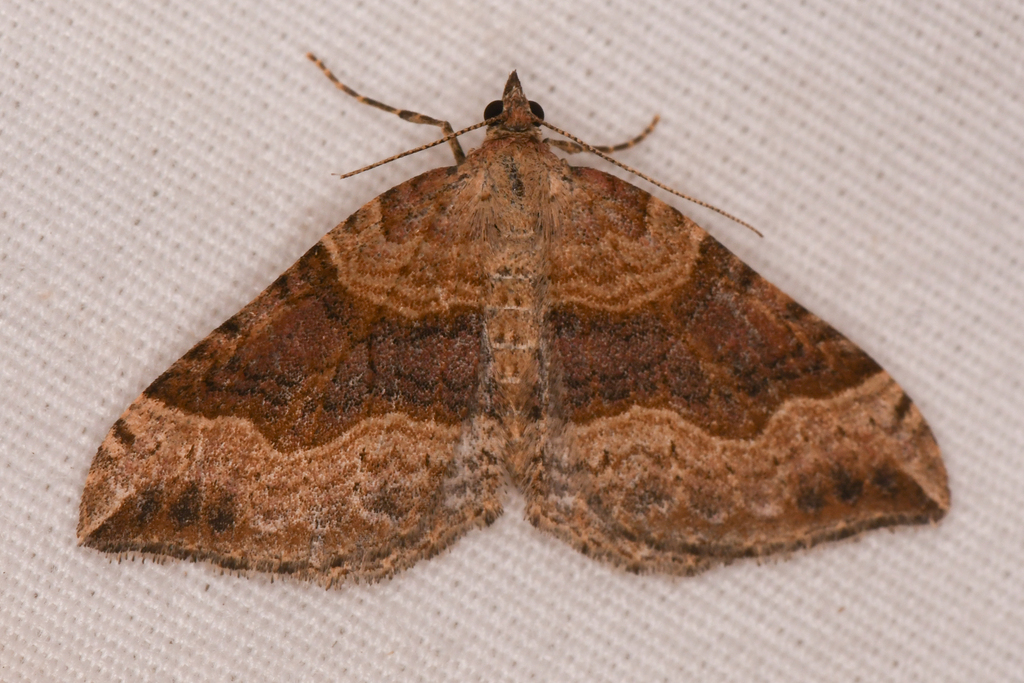
(c) Trevor Van Loon, some rights reserved (CC BY) · licence
Family: Geometridae · Class: Insecta · Order: Lepidoptera
Xanthorhoe offensaria is a California animal in the Geometridae family.
Xanthorhoe offensaria is a geometrid moth species in the family Geometridae, subfamily Larentiinae. This species belongs to the genus Xanthorhoe, which comprises numerous carpet moth species distributed across North America. The taxonomic classification places it within the order Lepidoptera, making it part of the diverse group of moths and butterflies. Detailed physical characteristics of X. offensaria are not well-documented in readily accessible scientific literature, which is common for many lesser-studied geometrid species. Like other members of the genus Xanthorhoe, adults likely display the typical carpet moth wing patterns with subtle earth-tone coloration and geometric markings that provide camouflage when resting on bark or vegetation. Geometridae moths are characterized by their broad wings held horizontally when at rest and their distinctive looping locomotion during the larval stage, earning them the common name "inchworms" or "loopers." The geographic distribution of Xanthorhoe offensaria appears to be poorly documented in current taxonomic databases and species inventories. The species may occur in western North America, consistent with the distribution patterns of related Xanthorhoe species, though specific range information requires verification through systematic surveys and museum specimen records. Many geometrid moths have restricted distributions tied to specific host plant availability and microhabitat requirements. Habitat preferences for X. offensaria remain largely uncharacterized. Geometridae larvae typically feed on the foliage of specific host plants, with many species showing high host specificity. The genus Xanthorhoe includes species associated with various plant families, including Rosaceae, Caprifoliaceae, and herbaceous perennials. Adult moths are generally active during evening and nighttime hours and are attracted to artificial light sources. Ecological information for this species is limited. Geometrid moths typically undergo complete metamorphosis with egg, larval, pupal, and adult stages. Larvae often overwinter in soil or leaf litter as pupae, with adults emerging in spring or early summer. Flight periods vary among species but commonly occur from May through August in temperate regions. Adults are primarily nectar feeders, visiting flowers of various plant species during their active period. The conservation status of Xanthorhoe offensaria is not currently assessed by major conservation organizations. The species lacks federal or state protection status, which may reflect either stable populations or insufficient survey data to determine population trends. Many geometrid moths face threats from habitat loss, pesticide use, and climate change impacts on host plant distributions. Light pollution can also affect moth navigation and reproductive success. The limited available information on X. offensaria highlights the need for comprehensive surveys of geometrid moth diversity, particularly in western North American ecosystems. Taxonomic verification and ecological studies would contribute significantly to understanding this species' distribution, habitat requirements, and conservation needs.
Classification
Class: Insecta · Order: Lepidoptera · Family: Geometridae
Frequently asked questions
How is Xanthorhoe offensaria classified?
Xanthorhoe offensaria belongs to class Insecta, order Lepidoptera, family Geometridae.
What family does Xanthorhoe offensaria belong to?
Xanthorhoe offensaria is in the Geometridae family.
What is Xanthorhoe offensaria?
Xanthorhoe offensaria is a geometrid moth species in the family Geometridae, subfamily Larentiinae.
Is Xanthorhoe offensaria found in California?
Yes. Xanthorhoe offensaria is recorded in California in The California Species Project's catalogue.
Related species
Other California species in the same genus, family, or bioregion.
Data from The California Species Project — 14,000+ California species with verified data from CNPS, CDFW, USFWS, and more.