Xantusia vigilis sierrae
Sierra Night Lizard
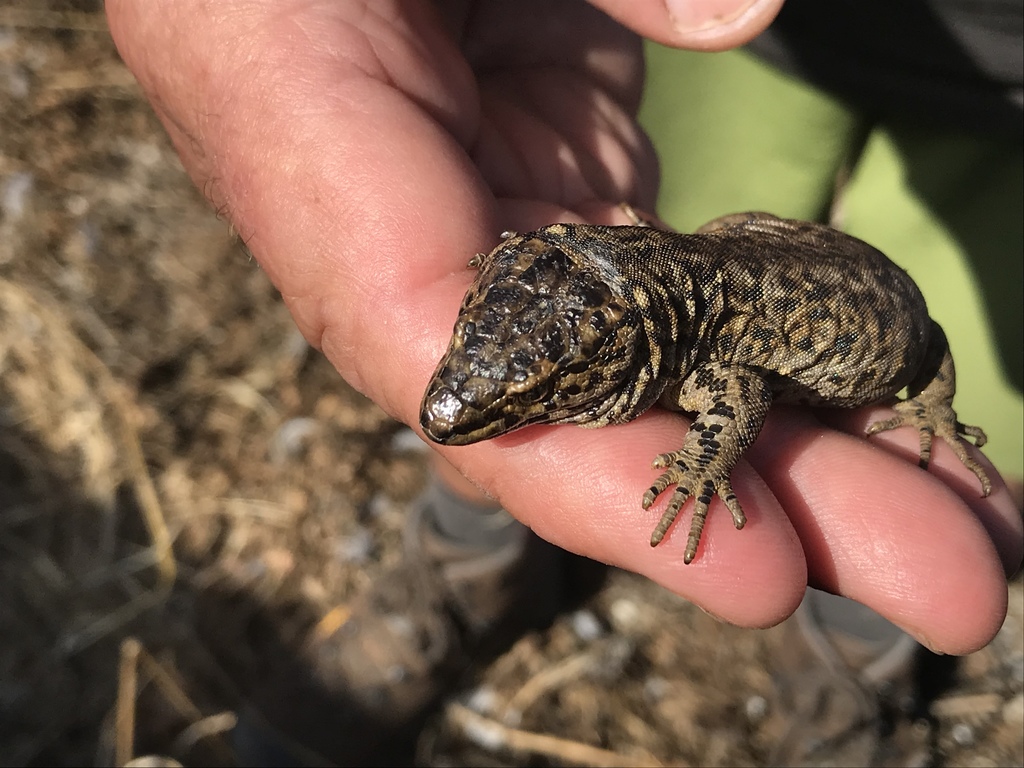
(c) Sula Vanderplank, some rights reserved (CC BY) · licence
Family: Xantusiidae · Class: Reptilia · Order: Squamata
Conservation status: G5T1 S1
Xantusia vigilis sierrae (Sierra Night Lizard) is a California animal in the Xantusiidae family.
The Sierra night lizard is a small, secretive reptile endemic to a highly restricted area in California's southern Sierra Nevada. Adults typically measure 40-50 mm (1.6-2.0 inches) in snout-to-vent length, with a total length reaching approximately 100 mm (4 inches) including the tail. The dorsal surface displays a distinctive pattern of dark blotches that often form a network or reticulated design against a lighter brown or gray background. The ventral surface is cream to pale yellow. Like other night lizards, the species has large scales, no eyelids, and vertical pupils adapted for nocturnal activity. The Sierra night lizard has one of the most restricted distributions of any North American reptile. The species is endemic to California, occurring only in the southwestern foothills of the Sierra Nevada Mountains along the western edge of the Greenhorn Mountains around Granite Station in Kern County. This represents an area of less than 10 square kilometers, making it one of the most geographically restricted vertebrates in North America. This species inhabits rocky outcrops in open grassland with scattered oak woodland and low shrubs. The lizards require specific microhabitat conditions found only in exfoliated and fissured granite outcrops. These rock formations provide the essential crevices and spaces where the lizards shelter during daylight hours and seek refuge from predators and temperature extremes. The habitat occurs at elevations between approximately 600-900 meters (2,000-3,000 feet) in areas receiving moderate annual precipitation. Sierra night lizards are viviparous, giving birth to live young rather than laying eggs. Mating occurs in spring, and females produce small broods of 1-3 offspring born from August to October. The species is primarily nocturnal, emerging at night to forage for small arthropods including spiders, insects, and other invertebrates. During daylight hours, individuals remain hidden deep within rock crevices where temperatures and humidity remain relatively stable. The Sierra night lizard is classified as G5T1 S1, indicating it is critically imperiled. California Department of Fish and Wildlife lists the species as a Species of Special Concern, recognizing its extremely limited range and vulnerability to habitat loss. The primary threats include habitat destruction from rock collecting, off-road vehicle use, and development pressure in the foothills. Because the granite formations require thousands of years to develop the necessary exfoliation and fissuring through natural weathering processes, any damage to the habitat is essentially irreversible on human timescales. California Fish and Game Code prohibits the destruction of rock habitat, but enforcement remains challenging. Climate change poses additional long-term risks through altered precipitation patterns and increased wildfire frequency. The species' extremely restricted range makes it particularly vulnerable to any form of habitat disturbance, as there are no alternative suitable habitats available for recolonization.
Classification
Class: Reptilia · Order: Squamata · Family: Xantusiidae
Conservation status
G5T1 S1
Frequently asked questions
How is Xantusia vigilis sierrae classified?
Xantusia vigilis sierrae belongs to class Reptilia, order Squamata, family Xantusiidae.
What family does Xantusia vigilis sierrae belong to?
Xantusia vigilis sierrae is in the Xantusiidae family.
Is Xantusia vigilis sierrae protected or of conservation concern?
Xantusia vigilis sierrae carries the following status: G5T1 S1.
What is Xantusia vigilis sierrae?
The Sierra night lizard is a small, secretive reptile endemic to a highly restricted area in California's southern Sierra Nevada.
Is Xantusia vigilis sierrae found in California?
Yes. Xantusia vigilis sierrae is recorded in California in The California Species Project's catalogue.
Related species
Other California species in the same genus, family, or bioregion.
Data from The California Species Project — 14,000+ California species with verified data from CNPS, CDFW, USFWS, and more.