Xenoglossa pruinosa
Pruinose Squash Bee
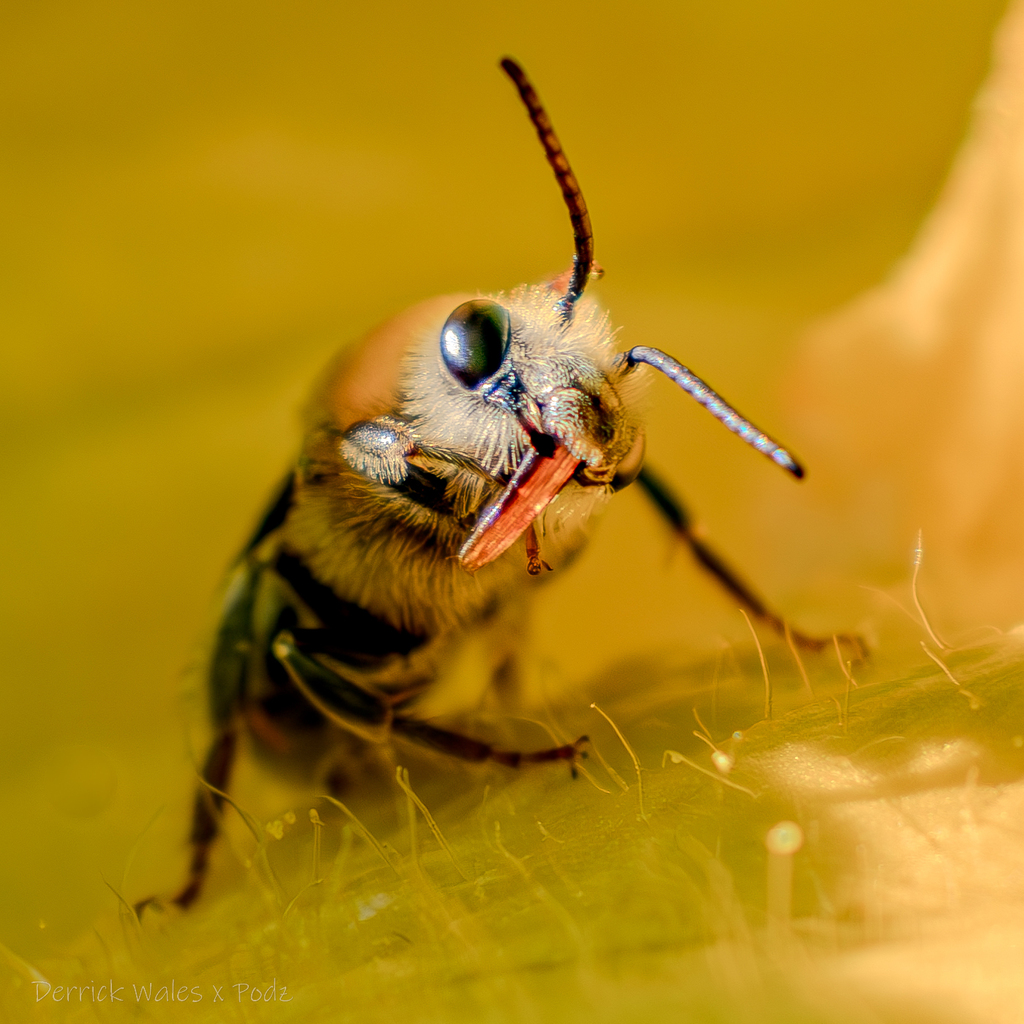
(c) Derrick Wales, some rights reserved (CC BY) · licence
Family: Apidae · Class: Insecta · Order: Hymenoptera
Xenoglossa pruinosa (Pruinose Squash Bee) is a California animal in the Apidae family.
The Pruinose Squash Bee is a medium-sized native bee species in the family Apidae, subfamily Eucerinae. Adults typically measure 12-15 mm in length, with females being slightly larger than males. The body is robust and densely covered with pale, pruinose (frost-like) hairs that give the species its common name. Females have specialized scopae (pollen-carrying hairs) on their hind legs for collecting pollen, while males lack these structures and are generally more slender. Xenoglossa pruinosa occurs throughout much of North America, with populations documented from southern Canada to Mexico. In California, the species is found in agricultural areas, gardens, and natural habitats where native and cultivated cucurbits are present. The distribution follows the availability of host plants rather than specific geographic boundaries, making it particularly common in Central Valley agricultural regions and urban areas with home gardens. This ground-nesting species excavates burrows in sandy or well-drained soils, typically near cucurbit plants. Females create branching tunnel systems that terminate in individual brood cells, each provisioned with a ball of pollen and nectar before egg-laying. Nesting sites are often located directly beneath or adjacent to squash, pumpkin, or gourd plants, allowing females to minimize energy expenditure during foraging trips. The species tolerates various soil types but prefers areas with minimal compaction. Pruinose Squash Bees are oligolectic specialists, collecting pollen almost exclusively from plants in the family Cucurbitaceae (Xerces Society 2018). This includes cultivated crops such as pumpkins, squash, zucchini, and cucumbers, as well as native species like wild gourds. Females are active primarily in early morning hours, often beginning foraging before sunrise and ceasing activity by mid-morning when cucurbit flowers typically close. Males exhibit different behavior, sometimes gathering in groups within large squash blossoms where they spend nights consuming nectar. The species is univoltine in most regions, with adults active from late spring through early fall, coinciding with cucurbit flowering periods. Flight periods vary by latitude and local climate, but typically extend from June through September in most of California. Females provision individual brood cells with pollen loads that can weigh up to 40% of their body weight. After egg-laying, larvae develop through winter and emerge the following season as adults. Currently, Xenoglossa pruinosa has no federal or state conservation listing status. However, like many native bee species, populations face potential threats from habitat loss, pesticide exposure, and agricultural intensification. The species benefits from diverse cucurbit plantings and pesticide-free management practices. Research indicates that squash bees, including X. pruinosa, are among the most effective pollinators of cucurbit crops, often outperforming honey bees in pollination efficiency (Xerces Society 2018). Conservation efforts focus on promoting native bee-friendly farming practices and reducing neonicotinoid pesticide use in agricultural systems where these bees nest and forage.
Classification
Class: Insecta · Order: Hymenoptera · Family: Apidae
Frequently asked questions
How is Xenoglossa pruinosa classified?
Xenoglossa pruinosa belongs to class Insecta, order Hymenoptera, family Apidae.
What family does Xenoglossa pruinosa belong to?
Xenoglossa pruinosa is in the Apidae family.
What is Xenoglossa pruinosa?
The Pruinose Squash Bee is a medium-sized native bee species in the family Apidae, subfamily Eucerinae.
Is Xenoglossa pruinosa found in California?
Yes. Xenoglossa pruinosa is recorded in California in The California Species Project's catalogue.
Related species
Other California species in the same genus, family, or bioregion.
Data from The California Species Project — 14,000+ California species with verified data from CNPS, CDFW, USFWS, and more.