Xerarionta redimita
Wreathed Cactussnail
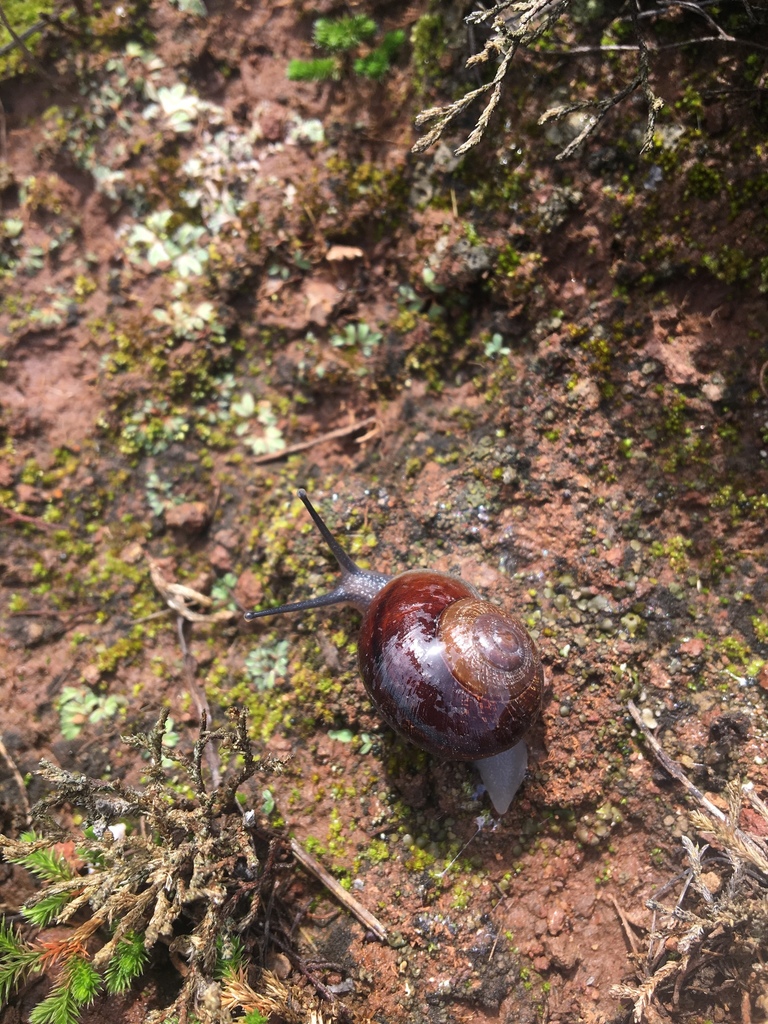
(c) Vincent Weber, some rights reserved (CC BY-SA) · licence
Family: Xanthonychidae · Class: Gastropoda · Order: Stylommatophora
Conservation status: G1G2 S1
Xerarionta redimita (Wreathed Cactussnail) is a California animal in the Xanthonychidae family.
The wreathed cactussnail is a terrestrial gastropod mollusk in the family Xanthonychidae, endemic to California's Channel Islands. This small land snail is distinguished by its characteristic shell morphology, though detailed physical descriptions remain limited in the scientific literature. The species belongs to the genus Xerarionta, which contains multiple species, some of which are of conservation concern to the U.S. Fish and Wildlife Service. Xerarionta redimita has an extremely restricted range, occurring only on San Clemente Island off the coast of Southern California. According to NatureServe documentation, the species was first assessed for conservation status in 1989 (NatureServe 2004). The species shares its island habitat with another rare congener, Xerarionta intercisa (Plain Cactussnail), though the two species likely occupy different microhabitats on the island. The wreathed cactussnail inhabits the unique ecosystem of San Clemente Island, which is characterized by Mediterranean-type climate conditions, maritime chaparral, and coastal sage scrub vegetation. The island's topography includes steep coastal bluffs, interior mesas, and canyon systems. Like other Xerarionta species, this snail likely requires specific microhabitat conditions including appropriate moisture levels, vegetation cover, and substrate characteristics. The species' association with the island's native plant communities suggests it may be sensitive to habitat modifications and invasive plant species that have altered much of San Clemente Island's original vegetation. Specific ecological requirements and behavioral patterns of the wreathed cactussnail have not been well documented in the scientific literature. Based on general terrestrial gastropod biology, the species presumably exhibits seasonal activity patterns correlated with moisture availability, being most active during cooler, more humid periods. Reproduction likely involves the deposition of eggs in suitable microhabitats with adequate moisture and protection. Diet presumably consists of decaying organic matter, fungi, and possibly algae or lichens growing on rock surfaces or vegetation, though specific feeding preferences remain undocumented. The wreathed cactussnail is assigned a global conservation rank of G1, indicating it is critically imperiled throughout its range, and a state rank of S1, designating it as critically imperiled in California (NatureServe 2004). This ranking reflects the species' extremely limited distribution to a single island and small population size. San Clemente Island is managed by the U.S. Navy as a naval reservation, which provides some protection from development but presents unique management challenges. Historical military activities, introduction of non-native species, and grazing by feral animals have significantly altered the island's ecosystem. Current threats likely include habitat degradation from invasive plant species, predation or competition from introduced invertebrates, and potential impacts from climate change affecting the island's moisture regimes. The species' survival depends on continued habitat protection and restoration efforts on San Clemente Island, along with research to better understand its specific ecological requirements and population status.
Classification
Class: Gastropoda · Order: Stylommatophora · Family: Xanthonychidae
Conservation status
G1G2 S1
Frequently asked questions
How is Xerarionta redimita classified?
Xerarionta redimita belongs to class Gastropoda, order Stylommatophora, family Xanthonychidae.
What family does Xerarionta redimita belong to?
Xerarionta redimita is in the Xanthonychidae family.
Is Xerarionta redimita protected or of conservation concern?
Xerarionta redimita carries the following status: G1G2 S1.
What is Xerarionta redimita?
The wreathed cactussnail is a terrestrial gastropod mollusk in the family Xanthonychidae, endemic to California's Channel Islands.
Is Xerarionta redimita found in California?
Yes. Xerarionta redimita is recorded in California in The California Species Project's catalogue.
Related species
Other California species in the same genus, family, or bioregion.
Data from The California Species Project — 14,000+ California species with verified data from CNPS, CDFW, USFWS, and more.