Xerarionta tryoni
Bicolor Cactussnail
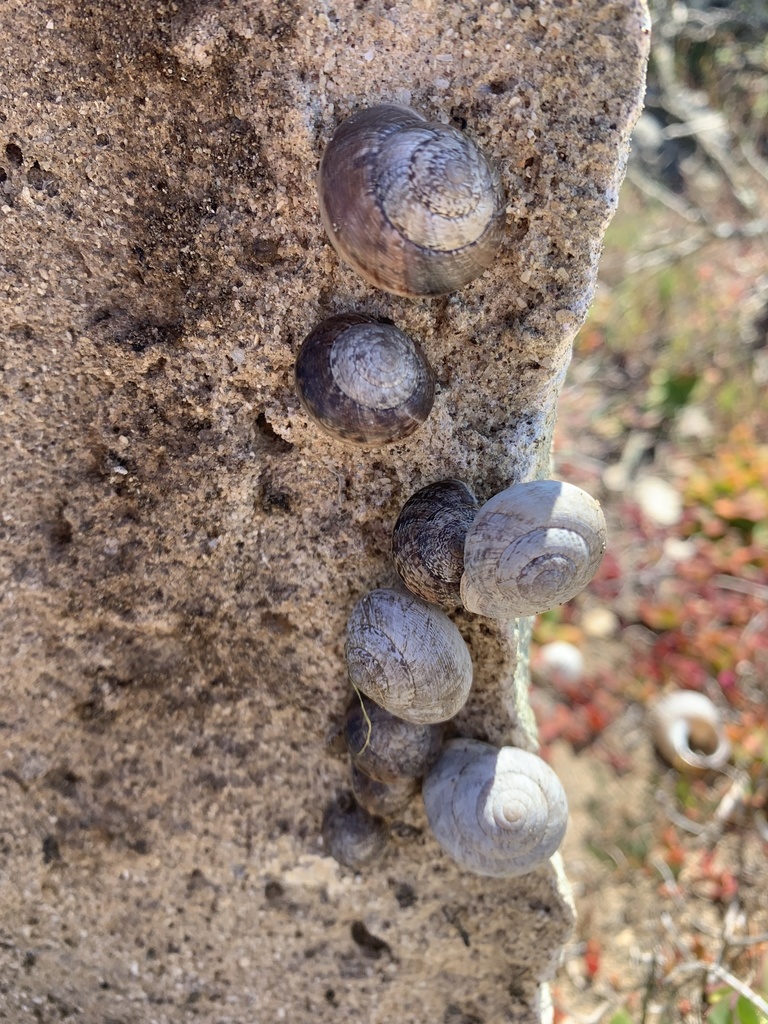
(c) william_hoyer, some rights reserved (CC BY) · licence
Family: Xanthonychidae · Class: Gastropoda · Order: Stylommatophora
Conservation status: G1 S1
Xerarionta tryoni (Bicolor Cactussnail) is a California animal in the Xanthonychidae family.
The Bicolor Cactussnail (Xerarionta tryoni) is a terrestrial gastropod mollusk in the family Xanthonychidae. This small land snail is distinguished by its bicolored shell pattern, though detailed morphological descriptions remain limited in the scientific literature. The species exhibits the typical spiral shell structure of terrestrial gastropods, with coloration that likely provides camouflage in its arid habitat. Xerarionta tryoni is endemic to California, representing one of the state's rarest gastropod species. According to the U.S. Fish and Wildlife Service, this species occurs within specific counties in California, though precise distribution data and population locations have not been comprehensively documented in publicly available sources. The species' extremely limited range contributes to its conservation concern status. As suggested by its common name, the Bicolor Cactussnail inhabits arid environments associated with cactus communities. These terrestrial mollusks typically occupy desert scrub and chaparral habitats where cacti and other drought-adapted vegetation provide both shelter and moisture sources. The species likely requires specific microhabitat conditions including appropriate substrate composition, moisture levels, and vegetation cover that characterize California's arid ecosystems. Like other terrestrial gastropods, Xerarionta tryoni is likely herbivorous, feeding on decaying plant material, fungi, and possibly living plant tissues. Desert-dwelling snails typically exhibit behavioral adaptations to conserve moisture, including reduced activity during hot, dry periods and increased activity during cooler, more humid conditions. Reproductive biology and life cycle characteristics for this species have not been well documented, though most terrestrial snails are hermaphroditic and lay eggs in protected locations within the soil or under vegetation. The Bicolor Cactussnail holds a Global Conservation Status Rank of G1, indicating it is critically imperiled with typically 5 or fewer occurrences or very few remaining individuals. The species also receives a State Conservation Status Rank of S1 in California, reflecting its critical imperilment at the state level. While not currently listed under the federal Endangered Species Act, the species appears as a 'Species of Concern' in U.S. Fish and Wildlife Service databases, indicating it warrants monitoring due to documented or suspected population declines or threats. Primary threats to Xerarionta tryoni likely include habitat loss and fragmentation from urban development, agricultural conversion, and recreational activities in California's desert regions. Climate change poses additional risks through altered precipitation patterns and increased temperatures that could affect the delicate moisture balance required by desert gastropods. The species' extremely limited distribution makes it particularly vulnerable to localized disturbances or environmental changes. Detailed ecological studies and population monitoring are needed to better understand this species' specific habitat requirements, distribution, and conservation needs. The lack of comprehensive biological data highlights the urgent need for targeted research on California's rare gastropod fauna, particularly species with such restricted ranges and high conservation concern rankings.
Classification
Class: Gastropoda · Order: Stylommatophora · Family: Xanthonychidae
Conservation status
G1 S1
Frequently asked questions
How is Xerarionta tryoni classified?
Xerarionta tryoni belongs to class Gastropoda, order Stylommatophora, family Xanthonychidae.
What family does Xerarionta tryoni belong to?
Xerarionta tryoni is in the Xanthonychidae family.
Is Xerarionta tryoni protected or of conservation concern?
Xerarionta tryoni carries the following status: G1 S1.
What is Xerarionta tryoni?
The Bicolor Cactussnail (Xerarionta tryoni) is a terrestrial gastropod mollusk in the family Xanthonychidae.
Is Xerarionta tryoni found in California?
Yes. Xerarionta tryoni is recorded in California in The California Species Project's catalogue.
Related species
Other California species in the same genus, family, or bioregion.
Data from The California Species Project — 14,000+ California species with verified data from CNPS, CDFW, USFWS, and more.