Xerospermophilus mohavensis
Mohave ground squirrel
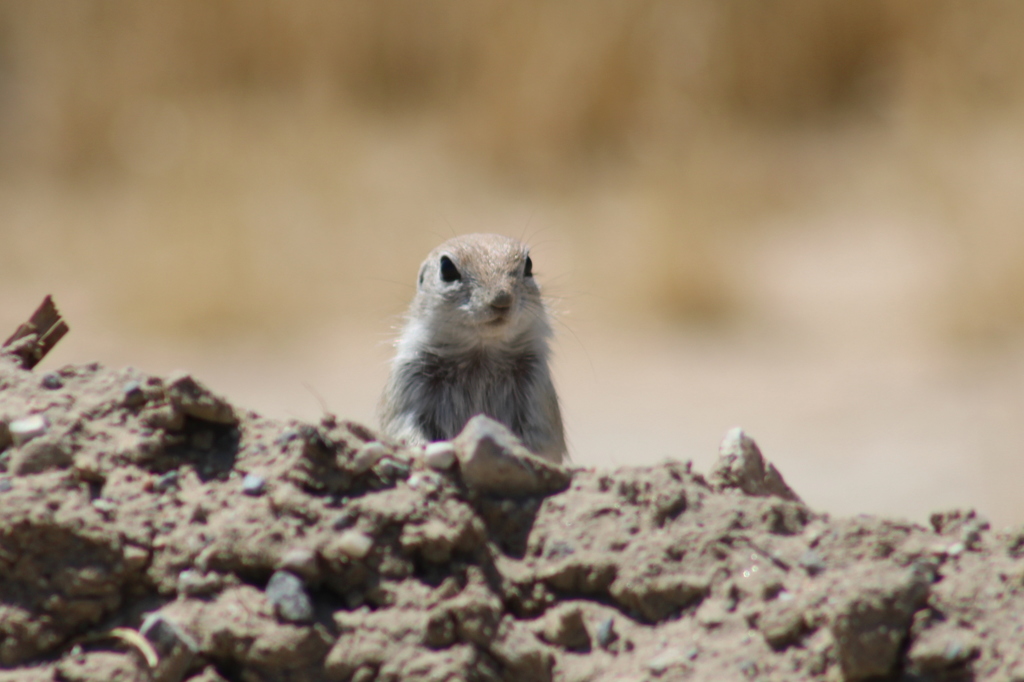
(c) Henrik Kibak, some rights reserved (CC BY) · licence
Family: Sciuridae · Class: Mammalia · Order: Rodentia
Conservation status: ST · G3 S2
Xerospermophilus mohavensis (Mohave ground squirrel) is a California animal in the Sciuridae family.
The Mohave ground squirrel is a small, endemic rodent restricted to the western Mojave Desert of California. Adults measure 150 to 180 mm (5.9 to 7.1 inches) in total length, with body length ranging from 84 to 109 mm (3.3 to 4.3 inches) and tail length from 66 to 87 mm (2.6 to 3.4 inches). Weight ranges from 60 to 105 grams (2.1 to 3.7 ounces). The dorsal pelage is grayish-brown with fine white speckling, while the ventral surface is white to pale buff. The tail is moderately bushy with alternating dark and light bands, distinguishing it from other ground squirrels in its range. The species has one of the most restricted ranges of any North American ground squirrel, occurring only in the western Mojave Desert from the Tehachapi Mountains south to the Antelope Valley and east to the vicinity of Kramer Junction and Boron in Kern, Los Angeles, and San Bernardino counties. The range encompasses approximately 9,000 square kilometers (3,475 square miles), with suitable habitat occurring primarily between elevations of 300 to 2,400 meters (980 to 7,870 feet). Mohave ground squirrels inhabit desert scrub communities dominated by Joshua trees, creosote bush, and saltbush. They show strong preference for areas with sandy or gravelly soils that facilitate burrowing. The species constructs extensive burrow systems up to 1.5 meters (5 feet) deep, which provide protection from predators and extreme temperatures. Burrows typically feature multiple entrances and chambers for nesting and food storage. This species is one of the few true hibernators among North American ground squirrels. Active periods vary with environmental conditions, but typically extend from February through August or September. During active months, Mohave ground squirrels are primarily granivorous, feeding on seeds of shrubs and forbs including desert willow, fairy duster, and various composites. Green vegetation is consumed during spring when available. Breeding occurs shortly after emergence from hibernation, with females producing a single litter of 2 to 10 young after a gestation period of approximately 30 days. The California Department of Fish and Wildlife listed the Mohave ground squirrel as threatened in 1980 due to habitat loss from urban development, agriculture, and renewable energy projects. The species faces ongoing threats from habitat fragmentation, off-road vehicle use, overgrazing, and climate change. Recent surveys suggest the population has declined significantly since listing, with many historical localities no longer supporting the species. Conservation efforts include habitat protection through critical habitat designation, restoration of degraded areas, and research into population genetics and climate adaptation. The restricted range and specialized habitat requirements make this species particularly vulnerable to continued habitat loss and environmental changes in the Mojave Desert region.
Classification
Class: Mammalia · Order: Rodentia · Family: Sciuridae
Conservation status
ST · G3 S2
Frequently asked questions
How is Xerospermophilus mohavensis classified?
Xerospermophilus mohavensis belongs to class Mammalia, order Rodentia, family Sciuridae.
What family does Xerospermophilus mohavensis belong to?
Xerospermophilus mohavensis is in the Sciuridae family.
Is Xerospermophilus mohavensis protected or of conservation concern?
Xerospermophilus mohavensis carries the following status: ST · G3 S2.
What is Xerospermophilus mohavensis?
The Mohave ground squirrel is a small, endemic rodent restricted to the western Mojave Desert of California.
Is Xerospermophilus mohavensis found in California?
Yes. Xerospermophilus mohavensis is recorded in California in The California Species Project's catalogue.
Related species
Other California species in the same genus, family, or bioregion.
Data from The California Species Project — 14,000+ California species with verified data from CNPS, CDFW, USFWS, and more.