Xerospermophilus tereticaudus
Round-tailed Ground Squirrel
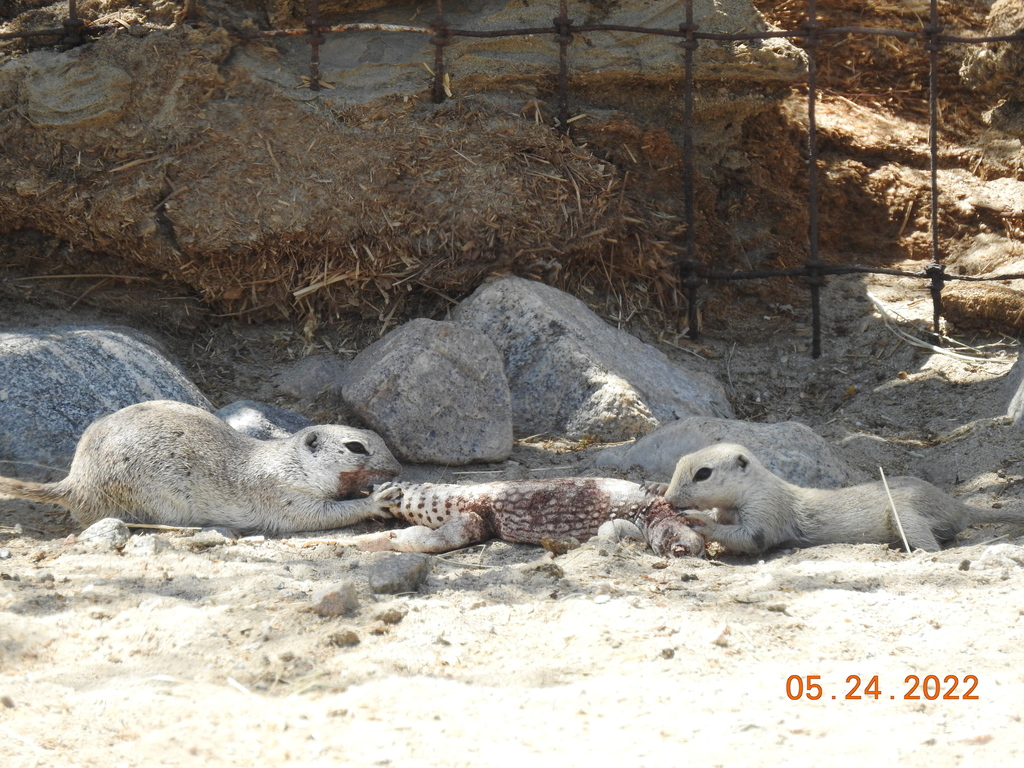
(c) Diana, some rights reserved (CC BY) · licence
Family: Sciuridae · Class: Mammalia · Order: Rodentia
Xerospermophilus tereticaudus (Round-tailed Ground Squirrel) is a California animal in the Sciuridae family.
The round-tailed ground squirrel (Xerospermophilus tereticaudus) is a small, desert-adapted rodent measuring 206 to 278 mm (8.1 to 10.9 inches) in total length, with adults weighing 110 to 170 grams (3.9 to 6.0 ounces). The species is characterized by its distinctive cylindrical tail that lacks the flattened appearance typical of other ground squirrels, measuring 60 to 112 mm (2.4 to 4.4 inches) in length. The dorsal pelage is grayish-brown to pinkish-cinnamon, providing effective camouflage against desert substrates. The underside is whitish to pale buff, and the ears are small and inconspicuous. Unlike many ground squirrels, this species lacks distinct stripes or spots. The round-tailed ground squirrel occurs in the extreme southeastern corner of California, primarily in Imperial and eastern Riverside counties. The species' California range represents the northwestern extent of its broader distribution, which extends through Arizona, Nevada, northwestern Mexico, and Baja California. In California, populations are documented from areas near the Colorado River and the Salton Sea region, including locations around Calexico, El Centro, and the Coachella Valley. This species inhabits low desert environments, typically below 120 meters (400 feet) in elevation, though some populations occur up to 300 meters (1,000 feet). Round-tailed ground squirrels prefer flat desert plains and bajadas with sandy or gravelly soils that facilitate burrowing. The habitat is characterized by sparse desert shrub vegetation, including creosote bush (Larrea tridentata), palo verde (Parkinsonia florida), and various desert annuals. Burrow systems are essential for thermoregulation and predator avoidance, often extending 1 to 3 meters (3 to 10 feet) underground with multiple entrances. Round-tailed ground squirrels are primarily granivorous, feeding on seeds of desert shrubs, forbs, and grasses. During spring, they consume green vegetation and occasionally insects. The species exhibits pronounced seasonal activity patterns, remaining active during cooler months from October through April and entering extended estivation during the hottest summer months. Breeding occurs from February through April, with females producing a single litter of 6 to 12 young after a gestation period of approximately 30 days. Young emerge from burrows at 5 to 6 weeks of age. Currently, the round-tailed ground squirrel holds no federal or state conservation listing status in California. However, the species faces ongoing habitat pressures from agricultural conversion, urban development, and renewable energy projects in the desert regions of southern California. Climate change may pose additional challenges through altered precipitation patterns and increased temperature extremes. The California Department of Fish and Wildlife monitors populations as part of broader desert ecosystem assessments, though comprehensive population surveys are limited by the species' secretive nature and harsh desert habitat.
Classification
Class: Mammalia · Order: Rodentia · Family: Sciuridae
Frequently asked questions
How is Xerospermophilus tereticaudus classified?
Xerospermophilus tereticaudus belongs to class Mammalia, order Rodentia, family Sciuridae.
What family does Xerospermophilus tereticaudus belong to?
Xerospermophilus tereticaudus is in the Sciuridae family.
What is Xerospermophilus tereticaudus?
The round-tailed ground squirrel (Xerospermophilus tereticaudus) is a small, desert-adapted rodent measuring 206 to 278 mm (8.1 to 10.9 inches) in total length, with adults weighing 110 to 170 grams (3.9 to 6.0 ounces).
Is Xerospermophilus tereticaudus found in California?
Yes. Xerospermophilus tereticaudus is recorded in California in The California Species Project's catalogue.
Related species
Other California species in the same genus, family, or bioregion.
Data from The California Species Project — 14,000+ California species with verified data from CNPS, CDFW, USFWS, and more.