Xerospermophilus tereticaudus chlorus
Palm Springs Round-tailed Ground Squirrel
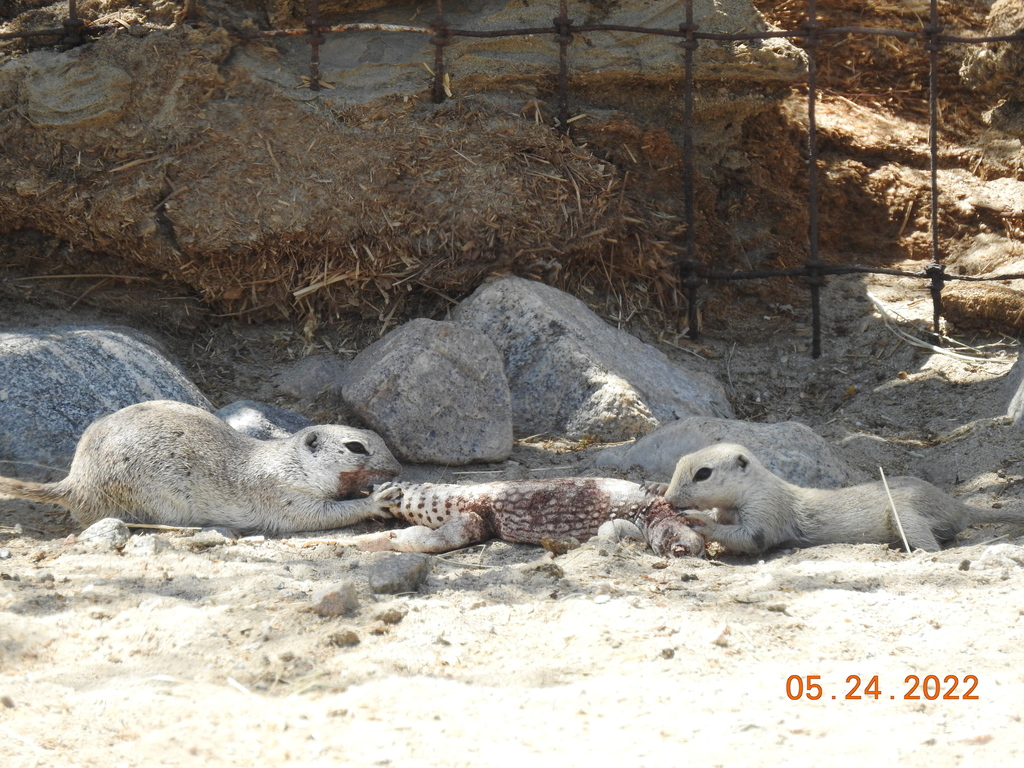
(c) Diana, some rights reserved (CC BY) · licence
Family: Sciuridae · Class: Mammalia · Order: Rodentia
Conservation status: Candidate · G5T2Q S2
Xerospermophilus tereticaudus chlorus (Palm Springs Round-tailed Ground Squirrel) is a California animal in the Sciuridae family.
The Palm Springs round-tailed ground squirrel (Xerospermophilus tereticaudus chlorus) is a small, desert-adapted rodent endemic to the Coachella Valley of southern California. Adults measure 206 to 256 mm (8.1 to 10.1 inches) in total length, with the distinctive round tail comprising 60 to 112 mm (2.4 to 4.4 inches). Body weight ranges from 110 to 170 grams (3.9 to 6.0 ounces). The dorsal pelage is cinnamon-buff to pinkish-cinnamon with fine black speckling, while the ventral surface is white to pale buff. The tail lacks the flattened profile typical of tree squirrels, appearing cylindrical with a slight taper toward the tip. The subspecies chlorus is distinguished from other round-tailed ground squirrel populations by its paler coloration and smaller size. Historically, this subspecies occupied desert floor habitats throughout the Coachella Valley in Riverside County, California. The current range has contracted significantly and is now restricted to fragmented areas within the cities of Palm Springs, Desert Hot Springs, and Cathedral City. According to the U.S. Fish and Wildlife Service, the subspecies has been extirpated from approximately 90% of its historical range due to urban development. Remaining populations are confined to small, isolated habitat patches totaling fewer than 800 hectares. Palm Springs round-tailed ground squirrels inhabit Sonoran Desert scrub communities characterized by sparse vegetation and sandy to gravelly soils. Essential habitat features include creosote bush (Larrea tridentata), white bursage (Ambrosia dumosa), and desert mistletoe (Phoradendron californicum). The species requires areas with adequate burrowing substrate and sufficient plant cover for foraging and predator avoidance. Elevations range from 110 to 500 meters (360 to 1,640 feet) above sea level. This subspecies exhibits a hibernation period from late August through February, remaining underground in extensive burrow systems during extreme heat and resource scarcity. Active season behavior includes crepuscular foraging, with peak activity occurring during early morning and late afternoon hours. The diet consists primarily of green vegetation, seeds, and fruits, with seasonal preferences for mesquite pods, palo verde seeds, and emerging plant shoots following winter rains. Breeding occurs from March through May, with females producing a single annual litter of 6 to 12 young after a gestation period of approximately 28 days. The U.S. Fish and Wildlife Service designated the Palm Springs round-tailed ground squirrel as a candidate species in 2016, indicating that listing as threatened or endangered may be warranted but is precluded by higher priority actions. Primary threats include habitat loss and fragmentation from residential and commercial development, recreational vehicle use, and infrastructure projects. Climate change poses additional risks through altered precipitation patterns and increased temperature extremes. Conservation efforts focus on habitat protection, population monitoring, and coordination with local planning agencies to minimize further habitat impacts through development restrictions and mitigation requirements.
Classification
Class: Mammalia · Order: Rodentia · Family: Sciuridae
Conservation status
Candidate · G5T2Q S2
Frequently asked questions
How is Xerospermophilus tereticaudus chlorus classified?
Xerospermophilus tereticaudus chlorus belongs to class Mammalia, order Rodentia, family Sciuridae.
What family does Xerospermophilus tereticaudus chlorus belong to?
Xerospermophilus tereticaudus chlorus is in the Sciuridae family.
Is Xerospermophilus tereticaudus chlorus protected or of conservation concern?
Xerospermophilus tereticaudus chlorus carries the following status: Candidate · G5T2Q S2.
What is Xerospermophilus tereticaudus chlorus?
The Palm Springs round-tailed ground squirrel (Xerospermophilus tereticaudus chlorus) is a small, desert-adapted rodent endemic to the Coachella Valley of southern California.
Is Xerospermophilus tereticaudus chlorus found in California?
Yes. Xerospermophilus tereticaudus chlorus is recorded in California in The California Species Project's catalogue.
Related species
Other California species in the same genus, family, or bioregion.
Data from The California Species Project — 14,000+ California species with verified data from CNPS, CDFW, USFWS, and more.