Xestia infimatis
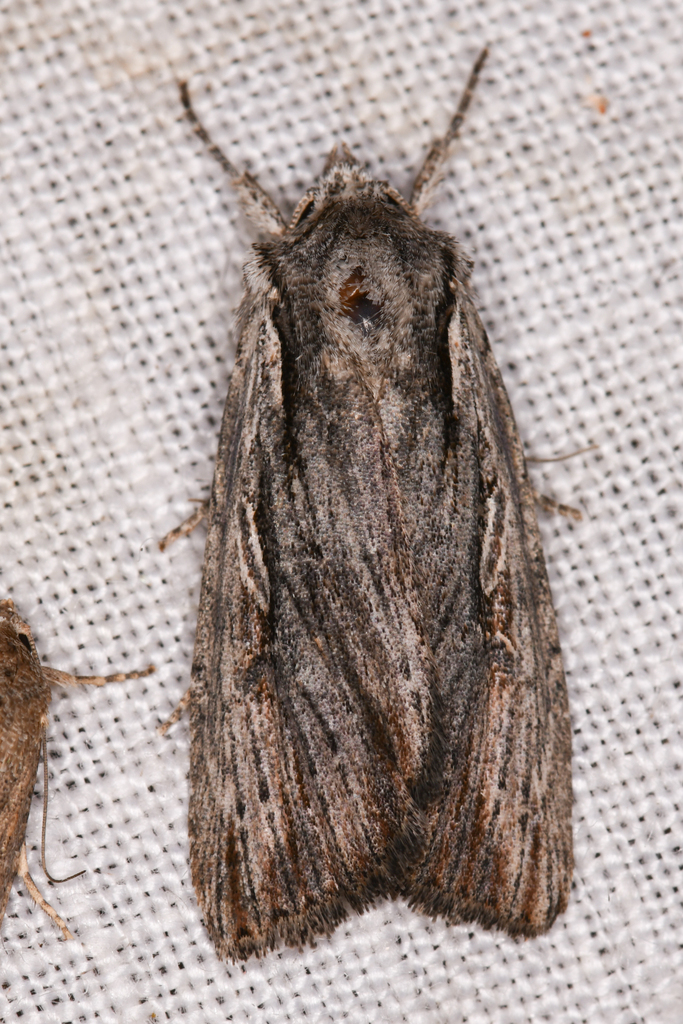
(c) Trevor Van Loon, some rights reserved (CC BY) · licence
Family: Noctuidae · Class: Insecta · Order: Lepidoptera
Xestia infimatis is a California animal in the Noctuidae family.
Xestia infimatis is a moth species in the family Noctuidae, commonly known as cutworm moths or dart moths. This nocturnal lepidopteran belongs to a genus of predominantly northern and montane species distributed across North America and Eurasia. The species exhibits the typical noctuid body plan with a robust thorax, narrow forewings, and broader hindwings adapted for nocturnal flight. Adult moths display muted earth-tone coloration typical of the genus Xestia, with forewings generally brown to gray-brown bearing subtle darker markings and lighter fasciae. The hindwings are typically paler than the forewings, ranging from whitish to light brown. Wing patterns include the characteristic reniform and orbicular spots common to noctuids, though these markings may be indistinct or partially obscured in this species. Wingspan measurements for Xestia infimatis are not well-documented in the literature, but related species in the genus typically range from 35 to 45 millimeters (1.4 to 1.8 inches). The distribution and range of Xestia infimatis remain poorly documented, with limited occurrence records available in scientific databases. The species appears to have a restricted range, though specific geographic boundaries have not been comprehensively mapped. Most Xestia species favor cooler climates and higher elevations, suggesting this species may follow similar distributional patterns in montane or northern regions. Habitat requirements for Xestia infimatis are not well-established, though the genus is typically associated with forested environments, particularly coniferous and mixed forests. Many Xestia species inhabit areas with diverse understory vegetation and occur from sea level to substantial elevations. The species likely requires appropriate host plants for larval development and suitable overwintering sites for pupation. The life cycle follows the typical noctuid pattern with complete metamorphosis through egg, larval, pupal, and adult stages. Adults are presumed to be nocturnal, attracted to artificial lights and active during warmer months. Larvae, commonly called cutworms, likely feed on herbaceous plants and possibly woody vegetation, though specific host plant associations for this species have not been documented. Most Xestia species are univoltine, completing one generation per year, with adults emerging in late summer or early fall. The conservation status of Xestia infimatis is not formally assessed by major conservation organizations. The species lacks federal or state listing status, and its global conservation rank has not been determined. Limited distributional data and taxonomic uncertainty may contribute to inadequate conservation assessment. Many noctuid moths face threats from habitat loss, light pollution, and climate change, though specific threats to this species remain uncharacterized. The lack of comprehensive distributional and ecological data represents a significant knowledge gap that limits effective conservation planning for Xestia infimatis.
Classification
Class: Insecta · Order: Lepidoptera · Family: Noctuidae
Frequently asked questions
How is Xestia infimatis classified?
Xestia infimatis belongs to class Insecta, order Lepidoptera, family Noctuidae.
What family does Xestia infimatis belong to?
Xestia infimatis is in the Noctuidae family.
What is Xestia infimatis?
Xestia infimatis is a moth species in the family Noctuidae, commonly known as cutworm moths or dart moths.
Is Xestia infimatis found in California?
Yes. Xestia infimatis is recorded in California in The California Species Project's catalogue.
Related species
Other California species in the same genus, family, or bioregion.
Data from The California Species Project — 14,000+ California species with verified data from CNPS, CDFW, USFWS, and more.