Xiphister atropurpureus
Black Prickleback
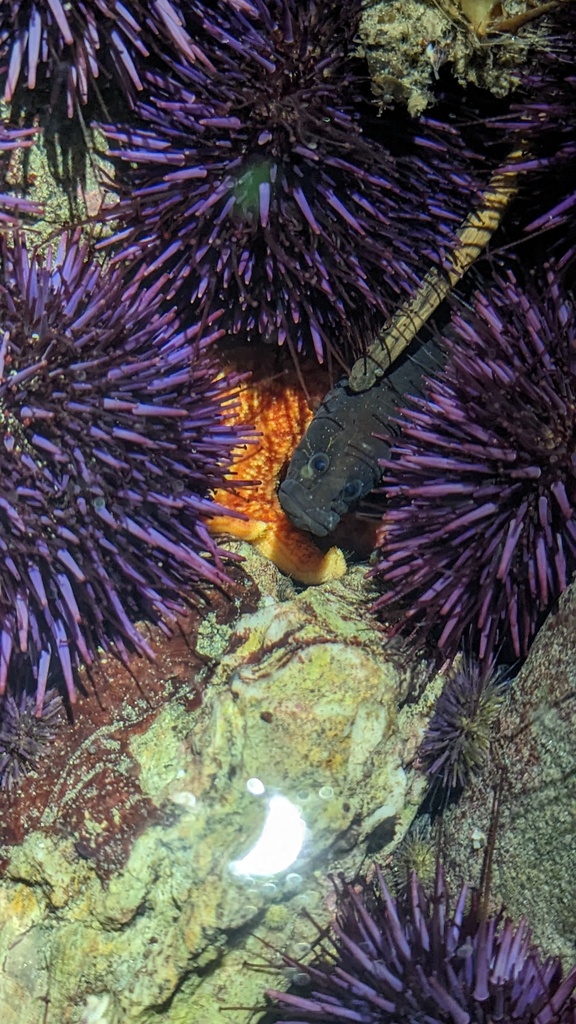
(c) Trevor Van Loon, some rights reserved (CC BY) · licence
Family: Stichaeidae · Class: Actinopterygii · Order: Perciformes
Xiphister atropurpureus (Black Prickleback) is a California animal in the Stichaeidae family.
The black prickleback is an elongated marine fish species native to the rocky intertidal and subtidal zones of the northeastern Pacific Ocean. Adults typically reach lengths of 30 cm (12 inches), though some individuals may grow larger. The species displays a distinctive dark coloration ranging from black to deep purple, which gives it its common name. The body is eel-like and laterally compressed, with a continuous dorsal fin running along most of the back. Small scales are embedded in the skin, and the mouth is relatively small with conical teeth adapted for its feeding habits. Black prickleback occur along the Pacific coast from Alaska to Baja California, with populations documented throughout California's coastal waters. According to California Department of Fish and Wildlife life history data, the species is found in northern, north-central, and south-central regions of the state. The species inhabits depths ranging from the intertidal zone to approximately 24 meters (80 feet), though it is most commonly encountered in shallow waters. The species demonstrates a strong preference for rocky intertidal habitats and rocky reef systems. Juveniles typically inhabit rocky intertidal areas, while adults may occupy both rocky reefs and kelp bed environments. Black prickleback are well-adapted to the dynamic intertidal environment, capable of surviving periodic exposure during low tides by seeking shelter under rocks, in crevices, or among algae. The species shows strong tolerance for varying salinity levels and temperature fluctuations characteristic of intertidal zones. Behavioral patterns during breeding season have been observed, with spawning typically occurring during winter and spring months. Based on Environmental Sensitivity Index data from multiple California coastal regions, reproductive activity appears concentrated from January through April. Females attach adhesive eggs to hard surfaces where parental care behaviors have been documented. The larvae are planktonic with low larval duration and dispersal potential, which contributes to localized population structure. The diet consists primarily of small invertebrates, algae, and detritus. Black prickleback use their small mouths to pick food items from rock surfaces and crevices. The species plays an important ecological role as both predator of small invertebrates and prey for larger fish, seabirds, and marine mammals. Currently, the black prickleback has no federal or state listing status in California and appears to maintain stable populations throughout its range. The species faces typical coastal habitat pressures including coastal development, pollution, and climate change effects on intertidal ecosystems. Ocean acidification and rising sea temperatures may impact prey availability and reproductive success. However, the species' broad distribution range and adaptability to variable environmental conditions suggest resilience to moderate environmental changes. Continued monitoring of intertidal communities remains important for assessing long-term population trends and ecosystem health indicators.
Classification
Class: Actinopterygii · Order: Perciformes · Family: Stichaeidae
Frequently asked questions
How is Xiphister atropurpureus classified?
Xiphister atropurpureus belongs to class Actinopterygii, order Perciformes, family Stichaeidae.
What family does Xiphister atropurpureus belong to?
Xiphister atropurpureus is in the Stichaeidae family.
What is Xiphister atropurpureus?
The black prickleback is an elongated marine fish species native to the rocky intertidal and subtidal zones of the northeastern Pacific Ocean.
Is Xiphister atropurpureus found in California?
Yes. Xiphister atropurpureus is recorded in California in The California Species Project's catalogue.
Related species
Other California species in the same genus, family, or bioregion.
Data from The California Species Project — 14,000+ California species with verified data from CNPS, CDFW, USFWS, and more.