Xylocopa californica
Western Carpenter Bee
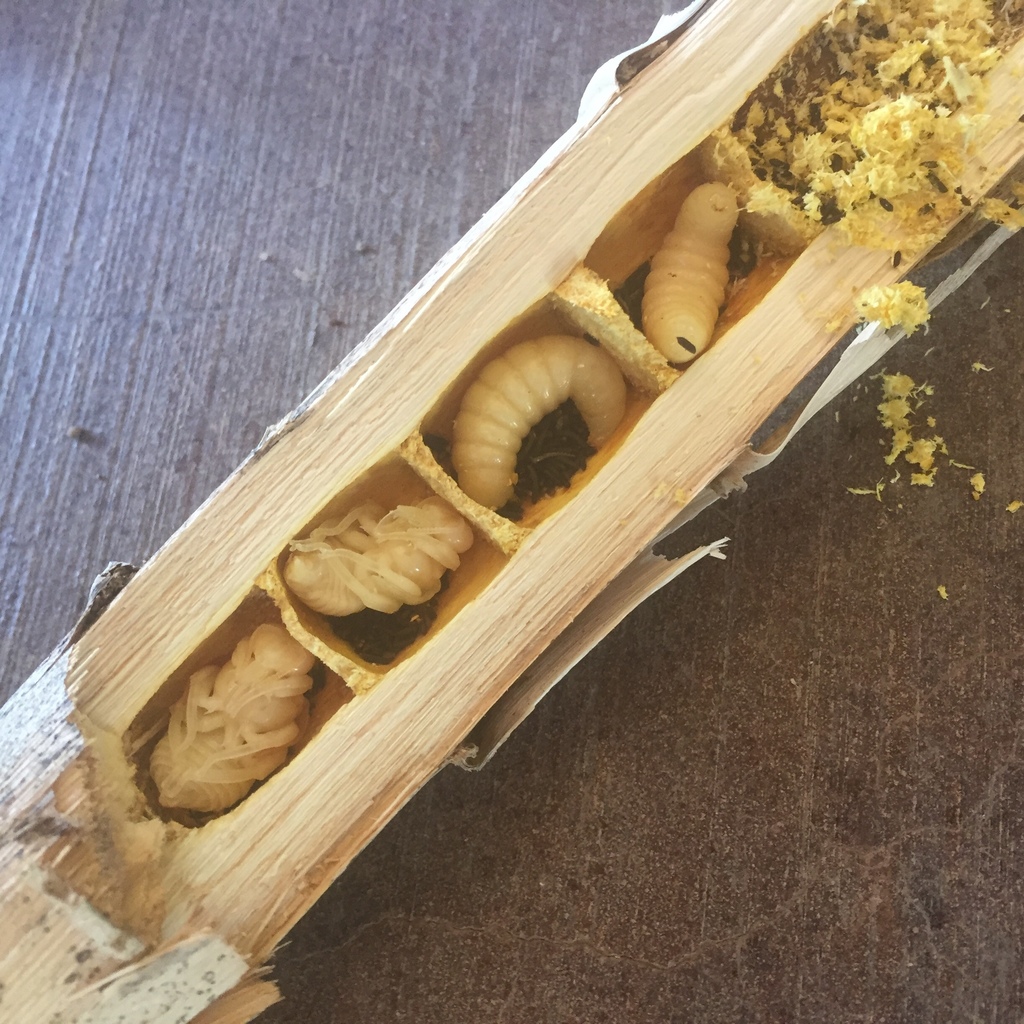
(c) Katherine Parys, some rights reserved (CC BY) · licence
Family: Apidae · Class: Insecta · Order: Hymenoptera
Xylocopa californica (Western Carpenter Bee) is a California animal in the Apidae family.
The Western Carpenter Bee is a robust native bee species measuring 20-25 mm (0.8-1.0 inches) in length, making it among the larger bee species in western North America. Adults display a predominantly black coloration with distinctive bluish or greenish metallic reflections across the body surface. Males can be distinguished by lighter markings on the pronotum and first abdominal segment, while females lack these pale markings. The species exhibits the typical carpenter bee body plan with a large, robust thorax and relatively hairless, shiny black abdomen that distinguishes it from similarly-sized bumble bees. Xylocopa californica ranges across the western United States, including Utah, Nevada, California, Oregon, and extends south into Mexico (BugGuide). Within California, the species occurs throughout much of the state, though specific distribution patterns vary with habitat availability and elevation. The range overlaps with other carpenter bee species, particularly X. varipuncta, requiring careful identification based on morphological characteristics. The species inhabits forested areas and adjacent meadows, showing a preference for woodland edges and areas with abundant flowering plants (BugGuide). Western Carpenter Bees utilize dead or weathered wood for nesting, excavating tunnels in structural timber, fence posts, and dead tree branches. Unlike social bees, carpenter bees are largely solitary, though mothers may share nests with their adult offspring for extended periods (Xerces Society). The species demonstrates fidelity to nesting sites, often returning to the same locations across multiple generations. Adult Western Carpenter Bees are active during late summer months, with peak flight activity occurring from July through September. Females excavate circular tunnels approximately 16 mm (0.6 inches) in diameter in softwood, creating galleries where they provision individual cells with pollen balls for developing larvae. Each cell receives a single egg, and the female seals the chamber before proceeding to construct the next cell. The species functions as an important pollinator for native flowering plants, visiting a diverse array of flowers including native milkweeds and other wildflowers throughout their range. Males are territorial around nesting areas but lack stingers and pose no threat to humans despite their intimidating hovering behavior. Currently, Xylocopa californica does not hold federal or state conservation listing status. However, like many native bee species, populations may face pressure from habitat loss, particularly in areas experiencing urbanization and forest management practices that remove dead wood necessary for nesting. The species benefits from conservation practices that maintain snags and dead wood in forest ecosystems. Climate change may affect the species' distribution and flowering plant resources, though specific population trend data remains limited. As part of California's native pollinator community, the Western Carpenter Bee contributes to ecosystem function and plant reproduction across its range, supporting both native plant communities and some agricultural crops through pollination services.
Classification
Class: Insecta · Order: Hymenoptera · Family: Apidae
Frequently asked questions
How is Xylocopa californica classified?
Xylocopa californica belongs to class Insecta, order Hymenoptera, family Apidae.
What family does Xylocopa californica belong to?
Xylocopa californica is in the Apidae family.
What is Xylocopa californica?
The Western Carpenter Bee is a robust native bee species measuring 20-25 mm (0.8-1.0 inches) in length, making it among the larger bee species in western North America.
Is Xylocopa californica found in California?
Yes. Xylocopa californica is recorded in California in The California Species Project's catalogue.
Related species
Other California species in the same genus, family, or bioregion.
Data from The California Species Project — 14,000+ California species with verified data from CNPS, CDFW, USFWS, and more.