Xylocopa tabaniformis
Horse-fly Carpenter Bee
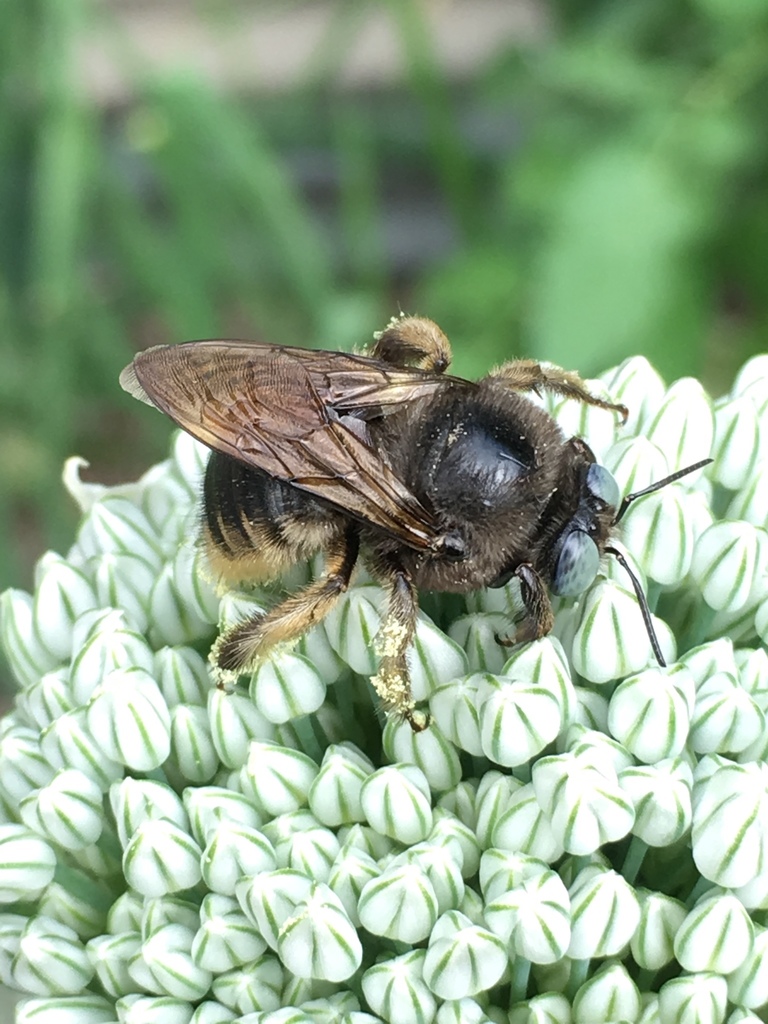
no rights reserved · CC0
Family: Apidae · Class: Insecta · Order: Hymenoptera
Xylocopa tabaniformis (Horse-fly Carpenter Bee) is a California animal in the Apidae family.
The Horse-fly Carpenter Bee (Xylocopa tabaniformis) is a large, robust bee species belonging to the subgenus Notoxylocopa. Adults measure approximately 15-25 mm (0.6-1.0 inches) in length, making them among the larger carpenter bee species in North America. The body is densely covered with yellowish to golden-brown hair, giving the species a furry appearance that resembles a horse fly, hence the common name. Males typically display lighter coloration than females, with the thorax often appearing more golden-yellow. The wings are relatively clear to slightly amber-tinted, and like other carpenter bees, they produce a distinctive loud buzzing sound during flight. Xylocopa tabaniformis occurs across the southwestern United States and extends into Mexico. In California, the species is found primarily in the southern regions, including desert areas and riparian zones. The distribution extends eastward through Arizona, New Mexico, and into Texas. According to BugGuide, subspecies X. t. androleuca has been documented in Arkansas, Louisiana, and New York, suggesting a broader range than previously understood (BugGuide 2025). This species inhabits diverse environments ranging from desert uplands to riparian forests. In Arizona, X. tabaniformis has been observed in typical southwestern riparian habitats dominated by sycamore, cottonwood, and willow trees, often bordered by desert areas with mesquite and hackberry (BugGuide 2025). The bees show a preference for areas where flowering plants are abundant, particularly native species such as Penstemon. Like other carpenter bees, they require suitable nesting substrates including dead wood, plant stems, and bamboo. Horse-fly Carpenter Bees are solitary nesters, with females excavating tunnels in wood or thick-stemmed plants to create brood chambers. Nesting activity typically occurs in spring and early summer. Females provision individual cells with pollen balls mixed with nectar, upon which they lay single eggs. The species exhibits strong site fidelity, often returning to the same nesting areas year after year. Males are territorial and may hover aggressively near nesting sites, though they lack stings and cannot cause harm. Adults are active foragers, visiting a variety of flowering plants for nectar and pollen, making them important pollinators in their native ecosystems. The conservation status of X. tabaniformis has not been comprehensively assessed at the federal level, and the species does not appear on current endangered species lists. However, regional populations may face pressures from habitat loss and fragmentation, particularly in areas undergoing rapid development. The subspecies X. t. androleuca has been included on Species of Greatest Conservation Need lists in Arkansas, Louisiana, and New York, indicating regional conservation concerns (BugGuide 2025). Climate change and altered precipitation patterns in southwestern habitats may also impact future populations. The species would benefit from conservation of native plant communities and maintenance of suitable nesting habitat, particularly dead wood and thick-stemmed native plants in riparian and desert transition zones.
Classification
Class: Insecta · Order: Hymenoptera · Family: Apidae
Frequently asked questions
How is Xylocopa tabaniformis classified?
Xylocopa tabaniformis belongs to class Insecta, order Hymenoptera, family Apidae.
What family does Xylocopa tabaniformis belong to?
Xylocopa tabaniformis is in the Apidae family.
What is Xylocopa tabaniformis?
The Horse-fly Carpenter Bee (Xylocopa tabaniformis) is a large, robust bee species belonging to the subgenus Notoxylocopa.
Is Xylocopa tabaniformis found in California?
Yes. Xylocopa tabaniformis is recorded in California in The California Species Project's catalogue.
Related species
Other California species in the same genus, family, or bioregion.
Data from The California Species Project — 14,000+ California species with verified data from CNPS, CDFW, USFWS, and more.