Xylomoia indirecta
Oblique Brocade
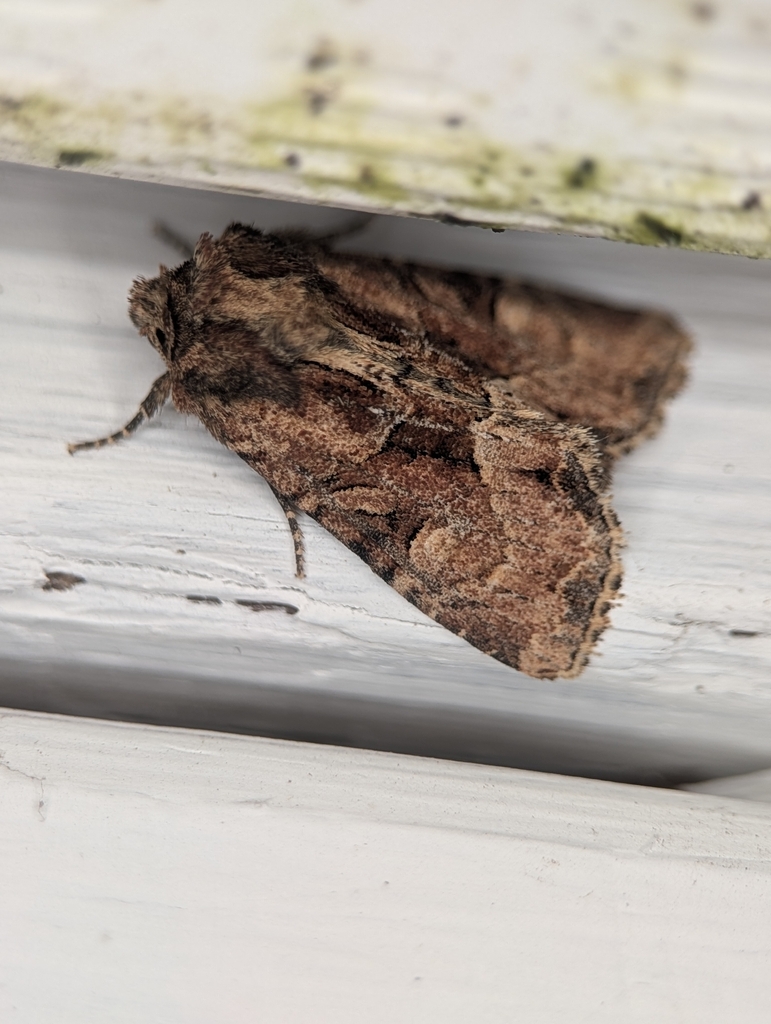
(c) Moe Meikle, some rights reserved (CC BY) · licence
Family: Noctuidae · Class: Insecta · Order: Lepidoptera
Xylomoia indirecta (Oblique Brocade) is a California animal in the Noctuidae family.
The oblique brocade moth (Xylomoia indirecta) is a species of cutworm or dart moth in the family Noctuidae. This nocturid moth belongs to the tribe Apameini within the subfamily Noctuinae, representing one of the many moth species in this diverse family of night-flying lepidopterans. Physical description details for this species are not well documented in current scientific literature. Like other members of the Noctuidae family, oblique brocade moths are typically nocturnal with cryptically colored forewings that provide camouflage during daytime rest periods. The common name "oblique brocade" suggests distinctive wing patterning, though specific morphological characteristics require further documentation. According to PNW Moths database, this species is widely distributed throughout much of western North America in moist forest, grassland, and riparian habitats (PNW Moths). In the Pacific Northwest region, the species occurs across suitable habitat types, though specific distributional data for California populations remains limited. The broad western North American range indicates adaptation to diverse environmental conditions across multiple ecoregions. Habitat requirements include moist forest environments, grasslands, and riparian zones, suggesting the species tolerates varied moisture regimes and vegetation types (PNW Moths). The association with moist habitats may reflect larval host plant requirements or adult nectar source preferences. Riparian corridors likely provide critical habitat connectivity across the species' range, supporting population movement and genetic exchange. Life history and ecological information for Xylomoia indirecta remains poorly documented. As members of the cutworm moth group, larvae likely feed on herbaceous plants, potentially including grasses and forbs common in their grassland and riparian habitats. Adult flight periods, voltinism, and specific host plant relationships have not been well established in the scientific literature. Like other Noctuidae species, adults are presumed to be nocturnal, with mating and feeding activities occurring during nighttime hours. Conservation status has not been formally assessed for this species. No federal or state listing status has been assigned, suggesting either stable populations or insufficient data for status evaluation. The species' broad western distribution may indicate relatively stable populations, though habitat-specific threats such as riparian habitat loss, grassland conversion, or forest management practices could affect local populations. Climate change impacts on moisture-dependent habitats may pose long-term challenges for populations in more arid portions of the range. Scientific documentation for this species remains limited. The information presented here is based on available sources including PNW Moths database and iNaturalist observations. If you have additional verified information about this species' biology, distribution, or ecology, please contact us to help improve this species account.
Classification
Class: Insecta · Order: Lepidoptera · Family: Noctuidae
Frequently asked questions
How is Xylomoia indirecta classified?
Xylomoia indirecta belongs to class Insecta, order Lepidoptera, family Noctuidae.
What family does Xylomoia indirecta belong to?
Xylomoia indirecta is in the Noctuidae family.
What is Xylomoia indirecta?
The oblique brocade moth (Xylomoia indirecta) is a species of cutworm or dart moth in the family Noctuidae.
Is Xylomoia indirecta found in California?
Yes. Xylomoia indirecta is recorded in California in The California Species Project's catalogue.
Related species
Other California species in the same genus, family, or bioregion.
Data from The California Species Project — 14,000+ California species with verified data from CNPS, CDFW, USFWS, and more.