Ypsolopha rubrella
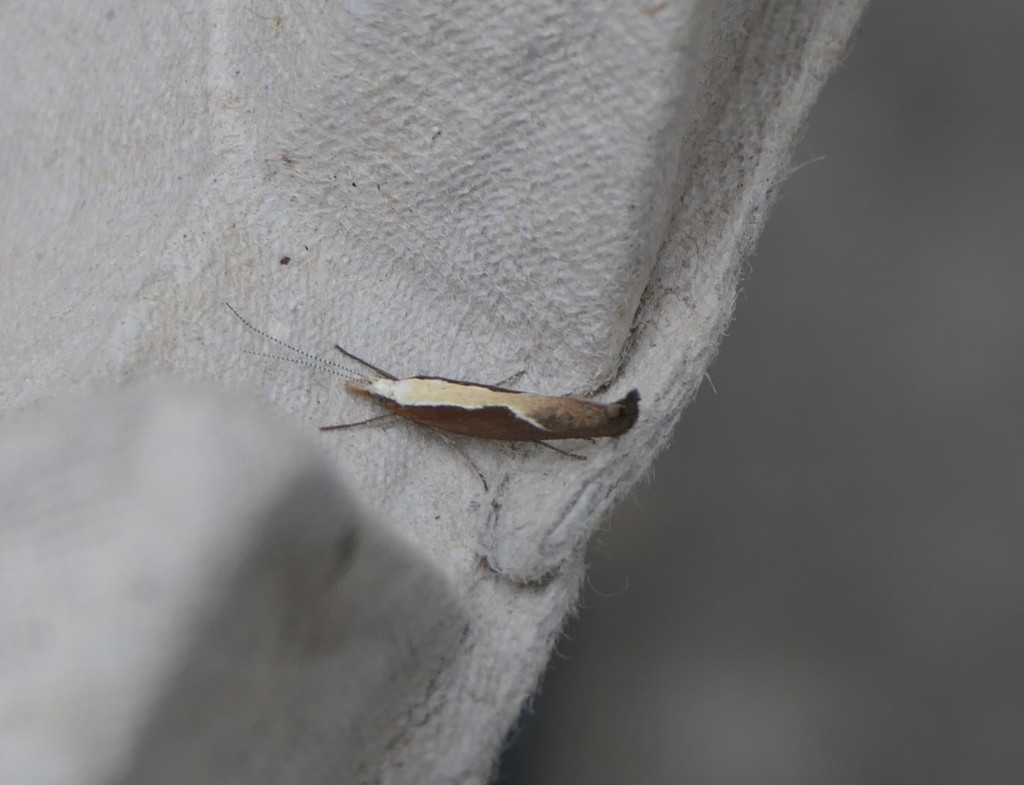
(c) Pete Bradshaw, some rights reserved (CC BY) · licence
Family: Ypsolophidae · Class: Insecta · Order: Lepidoptera
Ypsolopha rubrella is a California animal in the Ypsolophidae family.
Ypsolopha rubrella is a small moth in the family Ypsolophidae, commonly known as the twirler moths. Adult moths typically measure 8 to 12 mm in wingspan, with forewings displaying a characteristic reddish-brown or rust-colored base coloration that gives the species its specific epithet 'rubrella,' meaning 'reddish.' The forewings often exhibit darker brown or blackish markings and may show pale or whitish fasciae crossing the wing surface. The hindwings are typically narrower and lighter in color, ranging from pale brown to grayish. Like other ypsolophids, adults have relatively long antennae and slender bodies. Ypsolopha rubrella occurs across much of North America, with records from Canada south through the United States. In California, the species has been documented from various regions, though detailed distribution records remain limited. The moth appears to have a relatively broad but scattered distribution pattern typical of many microlepidoptera species. The species inhabits areas where its host plants occur, typically in mixed woodlands, forest edges, and riparian zones. Ypsolophidae larvae are generally associated with woody plants, and many species in the genus Ypsolopha are known to feed on deciduous trees and shrubs. The specific host plant associations for Y. rubrella require further documentation, though related species commonly utilize plants in the families Rosaceae, Salicaceae, and Betulaceae. Larvae of Ypsolopha species typically feed as leaf miners or within rolled leaves, creating distinctive feeding galleries or shelters. The larval stage likely overwinters, with adults emerging in spring or early summer. Flight periods for many North American Ypsolopha species occur from May through August, depending on latitude and local climate conditions. Adults are primarily nocturnal and are attracted to artificial lights, making them occasionally observed at moth traps and porch lights. The conservation status of Ypsolopha rubrella has not been formally assessed, and the species lacks federal or state protection status as of December 2025. Like many microlepidoptera, the species faces potential challenges from habitat modification, particularly the loss of native woodland and riparian habitats. Forest management practices that eliminate dead wood and understory vegetation may impact populations, as these microhabitats are important for many small moth species. Climate change may also affect the species through altered precipitation patterns and temperature regimes that influence both the moth and its host plants. The limited ecological knowledge of Y. rubrella reflects a broader challenge in lepidoptera conservation, where many smaller moth species remain poorly studied despite their ecological importance as herbivores and prey species. Additional research is needed to determine specific host plant relationships, population trends, and habitat requirements to better understand the species' conservation needs and ecological role within California's diverse moth fauna.
Classification
Class: Insecta · Order: Lepidoptera · Family: Ypsolophidae
Frequently asked questions
How is Ypsolopha rubrella classified?
Ypsolopha rubrella belongs to class Insecta, order Lepidoptera, family Ypsolophidae.
What family does Ypsolopha rubrella belong to?
Ypsolopha rubrella is in the Ypsolophidae family.
What is Ypsolopha rubrella?
Ypsolopha rubrella is a small moth in the family Ypsolophidae, commonly known as the twirler moths.
Is Ypsolopha rubrella found in California?
Yes. Ypsolopha rubrella is recorded in California in The California Species Project's catalogue.
Related species
Other California species in the same genus, family, or bioregion.
Data from The California Species Project — 14,000+ California species with verified data from CNPS, CDFW, USFWS, and more.