Zalophus californianus
California Sea-lion
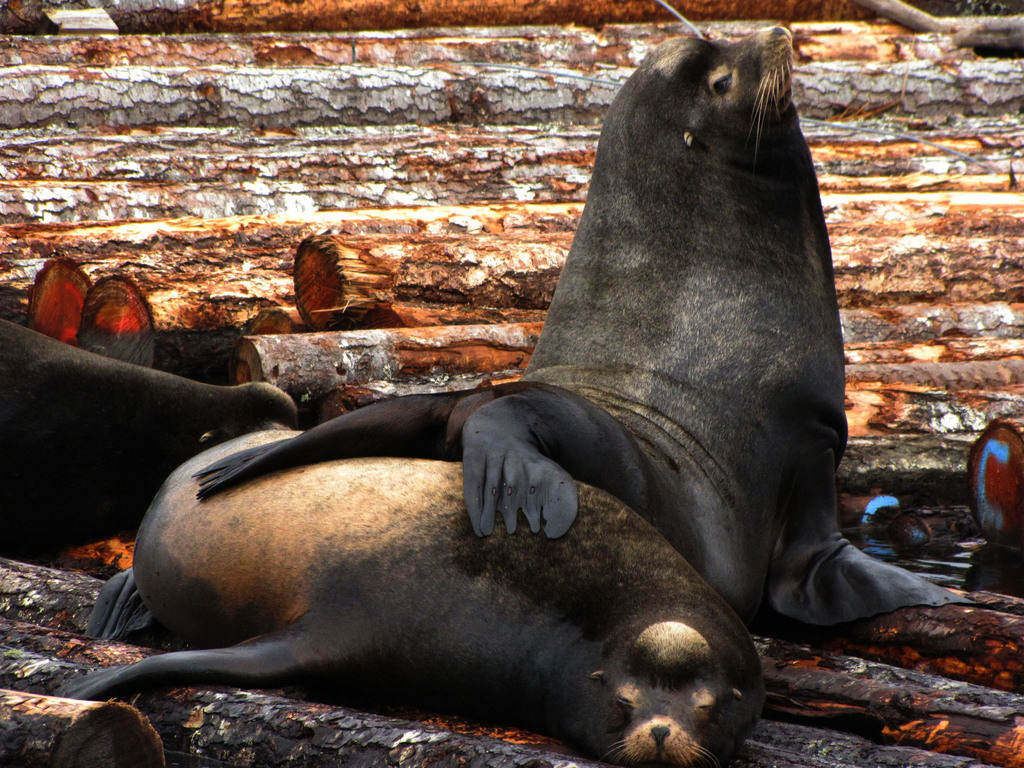
(c) Liam Steele, some rights reserved (CC BY) · licence
Family: Otariidae · Class: Mammalia · Order: Carnivora
Zalophus californianus (California Sea-lion) is a California animal in the Otariidae family.
The California sea lion is a large pinniped marine mammal and the most recognizable member of the eared seal family along the Pacific coast. Adult males reach 2.4 meters (8 feet) in length and weigh 240 to 390 kilograms (530 to 860 pounds), while females are considerably smaller at 1.8 meters (6 feet) and 90 to 110 kilograms (200 to 240 pounds). Males develop a pronounced sagittal crest, a bony ridge atop the skull that creates their characteristic domed head profile. Both sexes display a streamlined body with long fore-flippers and external ear flaps. Coloration ranges from chocolate brown to tan in males, with females typically lighter brown. Pups are born with dark brown to black fur that molts to adult coloration within four to five months. California sea lions range along the Pacific coast from southeastern Alaska to Baja California, Mexico. The species breeds on islands and mainland beaches from the Channel Islands off Southern California south to Mexico. Major breeding colonies in California occur on San Miguel, Santa Barbara, Santa Cruz, San Nicolas, and San Clemente islands. Non-breeding animals disperse widely, with adult males traveling as far north as British Columbia and southeast Alaska during winter months. Year-round populations inhabit central and southern California waters. The species occupies both terrestrial and marine environments. On land, California sea lions haul out on sandy beaches, rocky shores, marina docks, and man-made structures. They prefer areas with direct ocean access and minimal human disturbance for pupping and molting. In marine habitats, they forage from nearshore waters to the continental shelf edge, diving to depths exceeding 600 meters (1,970 feet). The species follows seasonal prey distributions, often associated with upwelling zones and areas of high productivity. California sea lions are highly social, forming large aggregations during breeding season from May through August. Males establish territories on beaches and compete for access to females through aggressive displays and physical confrontations. Females give birth to single pups after an 11-month gestation that includes a three-month delayed implantation. Mothers alternate between foraging trips lasting two to five days and nursing periods ashore. The species exhibits sexual dimorphism in foraging behavior, with males diving deeper and for longer durations than females. Diet consists primarily of sardines, anchovies, mackerel, squid, and seasonal prey including market squid and rockfish. California sea lions are not federally listed under the Endangered Species Act and maintain stable populations estimated at approximately 390,000 individuals as of recent surveys. The species recovered from historical hunting pressure and is currently managed under the Marine Mammal Protection Act, which prohibits harassment, hunting, or killing. Primary threats include entanglement in fishing gear, pollution, climate-driven changes in prey availability, and disease outbreaks. Periodic population fluctuations occur during El Niño events, when warm water conditions reduce prey abundance and increase pup mortality. The species demonstrates adaptability to human-modified environments, though interactions with fishing operations and coastal development require ongoing management.
Classification
Class: Mammalia · Order: Carnivora · Family: Otariidae
Frequently asked questions
How is Zalophus californianus classified?
Zalophus californianus belongs to class Mammalia, order Carnivora, family Otariidae.
What family does Zalophus californianus belong to?
Zalophus californianus is in the Otariidae family.
What is Zalophus californianus?
The California sea lion is a large pinniped marine mammal and the most recognizable member of the eared seal family along the Pacific coast.
Is Zalophus californianus found in California?
Yes. Zalophus californianus is recorded in California in The California Species Project's catalogue.
Related species
Other California species in the same genus, family, or bioregion.
Data from The California Species Project — 14,000+ California species with verified data from CNPS, CDFW, USFWS, and more.