Zapus hudsonius luteus
New Mexico meadow jumping mouse
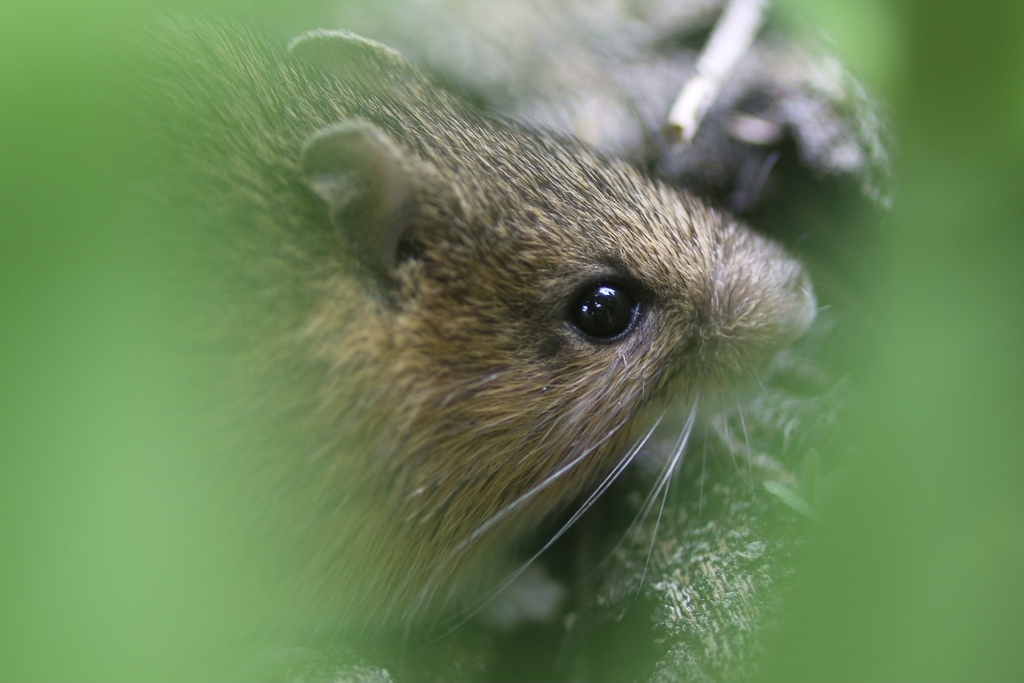
no rights reserved · CC0
Family: Dipodidae · Class: Mammalia · Order: Rodentia
Conservation status: Endangered
Zapus hudsonius luteus (New Mexico meadow jumping mouse) is a California animal in the Dipodidae family.
The New Mexico meadow jumping mouse is a small rodent subspecies measuring 7.4 to 10 inches (188 to 254 mm) in total length. The species displays distinctive coloration with grayish-brown fur on the dorsal surface, yellowish-brown along the sides, and white on the ventral surface (Van Pelt 1993). This jumping mouse is distinguished by its proportionally long hind legs and tail, which comprises approximately 60% of its total body length, enabling its characteristic jumping locomotion. The species historically occurred across montane regions of New Mexico, Arizona, and Colorado, with documented populations in the San Juan Mountains, Sangre de Cristo Mountains, Jemez Mountains, Sacramento Mountains, and Rio Grande Valley of New Mexico. However, the subspecies has experienced severe range contraction, with no confirmed observations in Colorado since 2014 despite ongoing surveys (USFWS 2024). Current populations are concentrated primarily in New Mexico and Arizona, with the largest known population occurring along Nutrioso Creek in Apache County, Arizona. New Mexico meadow jumping mice inhabit shrub riparian areas and wet meadows, typically associated with perennial water sources and dense herbaceous vegetation. The species requires specific microhabitat conditions including persistent moisture, dense ground cover of sedges and rushes, and nearby woody vegetation for cover. These habitat requirements make the subspecies highly sensitive to alterations in hydrology and vegetation structure. The species exhibits hibernation behavior, remaining dormant for approximately eight months of the year from October through May. Active periods occur during summer months when individuals forage primarily on seeds of grasses and forbs, supplemented by green vegetation and occasionally insects. Reproduction occurs during the brief active season, with females typically producing one litter per year containing two to eight young. The species demonstrates low reproductive potential due to its short active season and annual reproductive cycle. The New Mexico meadow jumping mouse was listed as endangered under the Endangered Species Act throughout its range, reflecting severe population declines and habitat loss. Primary threats include habitat degradation from livestock grazing, water diversions, invasive plant species, and climate change effects on montane riparian systems. Drought conditions and altered precipitation patterns have particularly impacted the persistent moisture conditions required by this subspecies. The U.S. Fish and Wildlife Service considers the species extirpated from Colorado as of 2025, with remaining populations confined to isolated riparian areas in New Mexico and Arizona. Critical habitat has been designated to protect essential areas for the subspecies' survival and recovery. Conservation efforts focus on habitat restoration, water management coordination, and monitoring of remaining populations to prevent further decline of this highly specialized riparian obligate.
Classification
Class: Mammalia · Order: Rodentia · Family: Dipodidae
Conservation status
Endangered
Frequently asked questions
How is Zapus hudsonius luteus classified?
Zapus hudsonius luteus belongs to class Mammalia, order Rodentia, family Dipodidae.
What family does Zapus hudsonius luteus belong to?
Zapus hudsonius luteus is in the Dipodidae family.
Is Zapus hudsonius luteus protected or of conservation concern?
Zapus hudsonius luteus carries the following status: Endangered.
What is Zapus hudsonius luteus?
The New Mexico meadow jumping mouse is a small rodent subspecies measuring 7.4 to 10 inches (188 to 254 mm) in total length.
Is Zapus hudsonius luteus found in California?
Yes. Zapus hudsonius luteus is recorded in California in The California Species Project's catalogue.
Related species
Other California species in the same genus, family, or bioregion.
Data from The California Species Project — 14,000+ California species with verified data from CNPS, CDFW, USFWS, and more.