Zapus princeps
Western Jumping Mouse
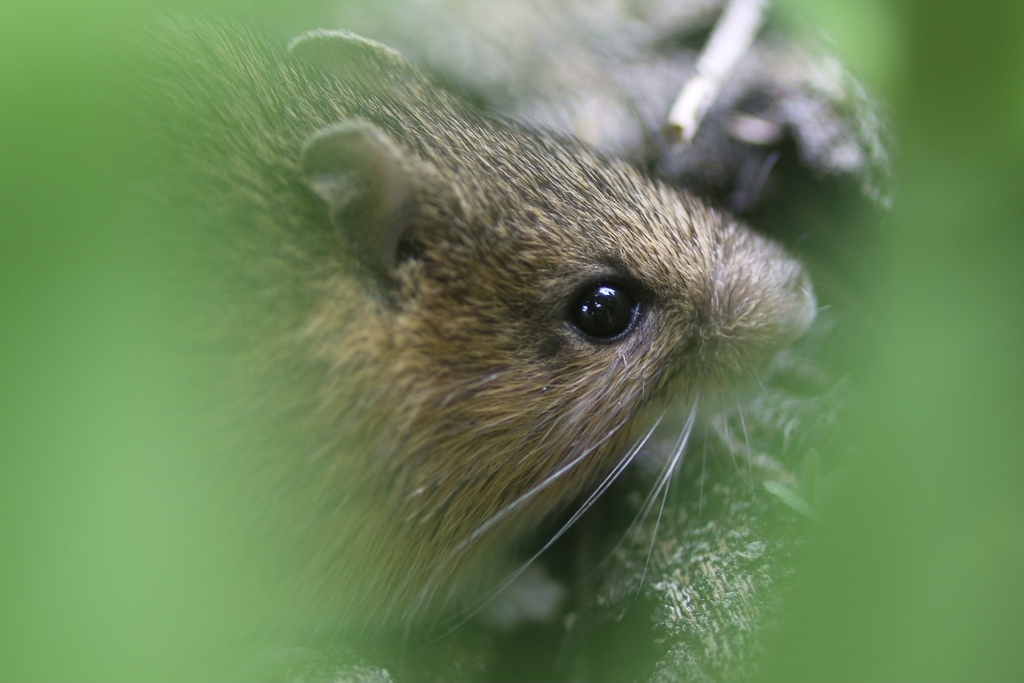
no rights reserved · CC0
Family: Dipodidae · Class: Mammalia · Order: Rodentia
Zapus princeps (Western Jumping Mouse) is a California animal in the Dipodidae family.
The western jumping mouse is a small, long-tailed rodent endemic to western North America. Adults measure 200 to 255 mm (7.9 to 10.0 inches) in total length, with the tail comprising approximately 60% of this measurement at 130 to 160 mm (5.1 to 6.3 inches). Body weight ranges from 17 to 35 grams (0.6 to 1.2 ounces). The species exhibits distinctive tricolored pelage with a dark brown dorsal stripe bordered by yellowish-brown sides and a white to pale gray ventral surface. The hind feet are notably enlarged, measuring 28 to 35 mm (1.1 to 1.4 inches), adapted for the species' characteristic jumping locomotion. The ears are relatively small and dark, while the eyes are prominent and black. Historically, the western jumping mouse occurred throughout montane regions of western North America from southern British Columbia to New Mexico. In California, populations are found in the Sierra Nevada, Cascade Range, and scattered locations in the northern Coast Ranges. The species occurs primarily in Plumas, Sierra, Nevada, Placer, El Dorado, Alpine, Mono, Madera, Fresno, Tulare, and Inyo counties, with elevational distribution ranging from 1,200 to 3,000 meters (3,900 to 9,800 feet). Western jumping mice inhabit riparian areas along streams, springs, and wet meadows within coniferous forests. Essential habitat components include dense herbaceous ground cover, particularly sedges, rushes, and grasses, along with nearby water sources. The species shows strong association with willow thickets, aspen groves, and meadow edges where vegetation provides both food resources and protective cover. Microhabitat selection favors areas with high plant species diversity and structural complexity. The species is primarily nocturnal and crepuscular, with peak activity occurring during twilight hours. Western jumping mice are excellent swimmers and can leap distances exceeding 1.5 meters (5 feet) when escaping predators. The diet consists primarily of seeds from grasses and forbs, supplemented with green vegetation, fungi, and occasionally small invertebrates. Breeding occurs from June through August, with females producing one to two litters annually. Gestation period is 17 to 23 days, and litter size ranges from two to eight young, typically four to six. The species exhibits prolonged hibernation lasting six to nine months, entering dormancy as early as September and emerging in late April or May. Currently, the western jumping mouse lacks federal protection status, though populations face pressure from habitat modification and climate change effects on montane ecosystems. Primary threats include livestock grazing impacts on riparian vegetation, water diversions affecting stream flows, and habitat fragmentation from development and logging activities. Climate change poses additional challenges through altered precipitation patterns and temperature regimes affecting high-elevation habitats. California populations appear stable in protected areas but may be declining in regions experiencing intensive land use practices.
Classification
Class: Mammalia · Order: Rodentia · Family: Dipodidae
Frequently asked questions
How is Zapus princeps classified?
Zapus princeps belongs to class Mammalia, order Rodentia, family Dipodidae.
What family does Zapus princeps belong to?
Zapus princeps is in the Dipodidae family.
What is Zapus princeps?
The western jumping mouse is a small, long-tailed rodent endemic to western North America.
Is Zapus princeps found in California?
Yes. Zapus princeps is recorded in California in The California Species Project's catalogue.
Related species
Other California species in the same genus, family, or bioregion.
Data from The California Species Project — 14,000+ California species with verified data from CNPS, CDFW, USFWS, and more.