Zapus trinotatus
Point Reyes jumping mouse, Pacific Jumping Mouse
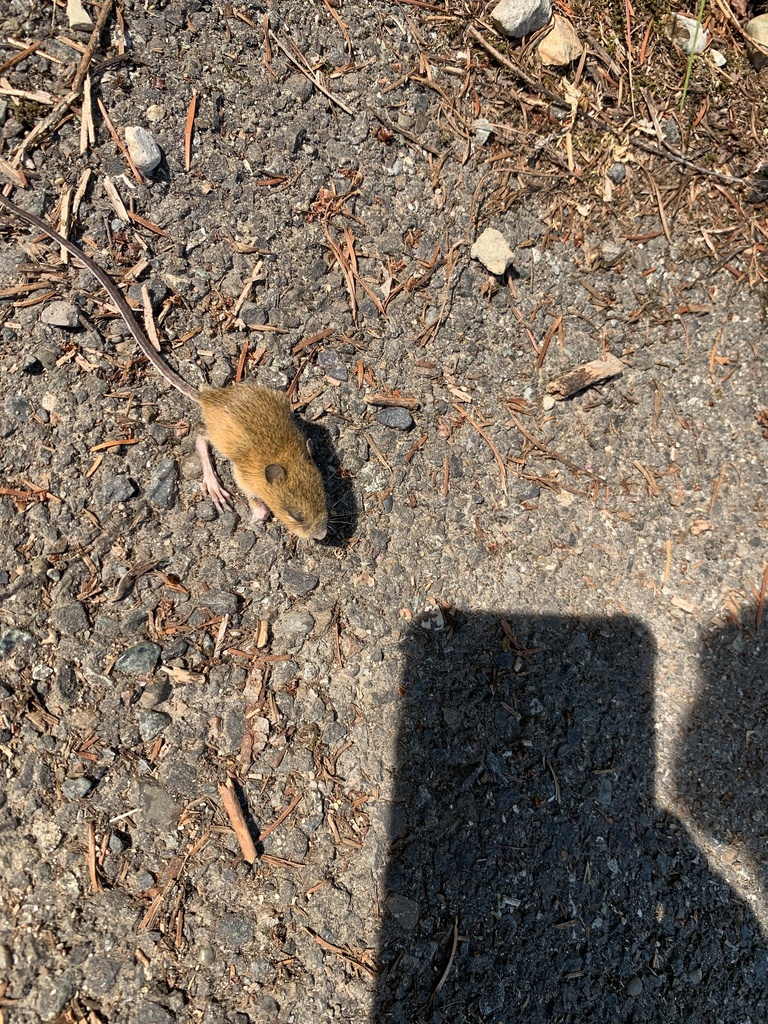
(c) J_Skellington, some rights reserved (CC BY) · licence
Family: Dipodidae · Class: Mammalia · Order: Rodentia
Conservation status: G5T1T3Q S1S3
Zapus trinotatus (Point Reyes jumping mouse, Pacific Jumping Mouse) is a California animal in the Dipodidae family.
The Point Reyes jumping mouse (Zapus trinotatus orarius) is a small rodent subspecies endemic to coastal California. This subspecies of the Pacific jumping mouse is distinguished by its elongated hind legs adapted for jumping, large hind feet, and long tail that typically exceeds body length. Adults measure approximately 80-100 mm in body length with tails reaching 120-160 mm. The dorsal pelage is typically yellowish-brown to dark brown with a distinctive dark stripe running along the back, while the ventral surface is white to pale gray. Historically, the Point Reyes jumping mouse occupied coastal areas from Point Reyes south to the San Francisco Peninsula. The subspecies was once found in suitable habitat throughout Marin and San Francisco counties, with potential occurrence in adjacent areas of San Mateo County. Current distribution is extremely limited, with verified populations restricted to a few locations in Marin County near Point Reyes National Seashore. The dramatic range reduction reflects broader habitat loss throughout the subspecies' historical range. This subspecies inhabits dense, moist grasslands and meadows near freshwater sources, particularly areas with thick vegetation cover including sedges, rushes, and native grasses. Point Reyes jumping mice require habitats with high moisture content and dense ground cover that provides protection from predators and suitable nesting sites. They are typically found in areas with standing or slow-moving water nearby, as these locations support the lush vegetation communities necessary for their survival. Elevation ranges from sea level to approximately 200 meters in coastal hills and valleys. Point Reyes jumping mice are primarily granivorous, feeding on grass seeds, forb seeds, and occasionally green vegetation. Their diet varies seasonally, with seeds comprising the majority of food intake during late summer and fall when they accumulate fat reserves for winter hibernation. Like other jumping mouse subspecies, they enter prolonged hibernation lasting approximately six to eight months, from October through April or May. Reproduction occurs during the active season, with females typically producing one to two litters per year containing three to five young each. The species is nocturnal and semi-fossorial, constructing burrows in dense vegetation for nesting and protection. The Point Reyes jumping mouse faces critical conservation challenges, with a global/state rank of G5T1T3Q S1S3, indicating the subspecies is critically imperiled to vulnerable globally and within California. The 'Q' designation reflects taxonomic uncertainty requiring further research. Primary threats include habitat loss and fragmentation due to urban development, agricultural conversion, and recreational activities. Invasive plant species alter habitat structure and reduce native seed sources. Climate change poses additional risks through altered precipitation patterns that may affect the moist meadow habitats essential for survival. Predation by introduced mammals and habitat degradation from trampling also impact remaining populations. The subspecies' extremely limited current range and small population size make it particularly vulnerable to extinction from stochastic events or continued habitat loss.
Classification
Class: Mammalia · Order: Rodentia · Family: Dipodidae
Conservation status
G5T1T3Q S1S3
Frequently asked questions
How is Zapus trinotatus classified?
Zapus trinotatus belongs to class Mammalia, order Rodentia, family Dipodidae.
What family does Zapus trinotatus belong to?
Zapus trinotatus is in the Dipodidae family.
Is Zapus trinotatus protected or of conservation concern?
Zapus trinotatus carries the following status: G5T1T3Q S1S3.
What is Zapus trinotatus?
The Point Reyes jumping mouse (Zapus trinotatus orarius) is a small rodent subspecies endemic to coastal California.
Is Zapus trinotatus found in California?
Yes. Zapus trinotatus is recorded in California in The California Species Project's catalogue.
Related species
Other California species in the same genus, family, or bioregion.
Data from The California Species Project — 14,000+ California species with verified data from CNPS, CDFW, USFWS, and more.