Zapus trinotatus orarius
Point Reyes Jumping Mouse
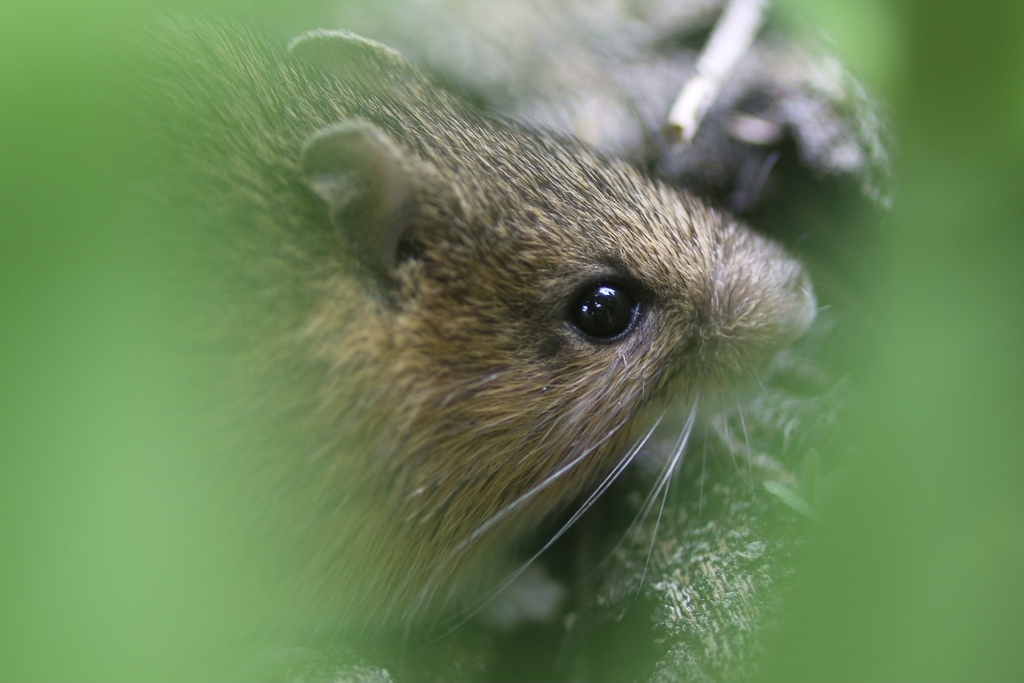
no rights reserved · CC0
Family: Dipodidae · Class: Mammalia · Order: Rodentia
Conservation status: G5T2 S2
Zapus trinotatus orarius (Point Reyes Jumping Mouse) is a California animal in the Dipodidae family.
The Point Reyes jumping mouse is a subspecies of the Pacific jumping mouse endemic to coastal California. Adults measure approximately 90 to 100 mm (3.5 to 3.9 inches) in head and body length, with a distinctive tail that exceeds body length by 150 to 180 percent. The dorsal pelage is yellowish-brown with a distinct dark stripe running along the back, while the ventral surface is white to pale gray. The hind legs are notably elongated for saltatorial locomotion, and the species possesses grooved upper incisors characteristic of the family Dipodidae. Historically, this subspecies was known from a limited range along the central California coast, primarily in Marin and Sonoma counties. Current distribution appears restricted to Point Reyes National Seashore and adjacent areas, representing one of the most geographically constrained mammalian subspecies in North America. The subspecies is distinguished from other Zapus trinotatus populations by subtle morphological characteristics and its isolated coastal distribution. Point Reyes jumping mice inhabit wet, grassy areas and marsh margins in coastal prairie and riparian environments. They show strong preference for areas with dense herbaceous cover near permanent water sources, including seasonal wetlands, creek margins, and seepage areas. The species typically occurs at elevations below 300 meters, in areas characterized by high moisture retention and abundant grass seed production. Habitat requirements include both foraging areas with diverse grass and forb communities and nearby dense cover for nesting and hibernation. This subspecies exhibits typical jumping mouse ecology, with a pronounced seasonal activity pattern. Active periods extend from late spring through early fall, followed by extended hibernation lasting approximately six to eight months. Diet consists primarily of grass seeds, particularly from native perennial grasses, supplemented by green vegetation and occasionally small invertebrates. Reproduction occurs during the brief active season, with females typically producing one to two litters of three to six young. The species constructs spherical nests of grass and plant fibers, either above ground in dense vegetation or in shallow burrows. The Point Reyes jumping mouse faces significant conservation challenges due to its extremely limited range and specific habitat requirements. The subspecies has a Global/State Rank of G5T2 S2, indicating it is imperiled both globally as a subspecies and within California. This species is included on the California Department of Fish and Wildlife's Special Animals List. Primary threats include habitat degradation from invasive plant species, particularly European beach grass and other non-native vegetation that alters native plant communities. Water management practices, recreational activities, and coastal development pressure further threaten remaining habitat. Climate change poses additional risks through altered precipitation patterns and potential sea-level rise affecting low-lying coastal habitats. The isolated nature of remaining populations makes the subspecies particularly vulnerable to local extinctions and limits opportunities for natural recolonization. Conservation efforts focus on habitat restoration within Point Reyes National Seashore and monitoring of population trends, though detailed population estimates remain limited due to the species' secretive nature and brief annual activity period.
Classification
Class: Mammalia · Order: Rodentia · Family: Dipodidae
Conservation status
G5T2 S2
Frequently asked questions
How is Zapus trinotatus orarius classified?
Zapus trinotatus orarius belongs to class Mammalia, order Rodentia, family Dipodidae.
What family does Zapus trinotatus orarius belong to?
Zapus trinotatus orarius is in the Dipodidae family.
Is Zapus trinotatus orarius protected or of conservation concern?
Zapus trinotatus orarius carries the following status: G5T2 S2.
What is Zapus trinotatus orarius?
The Point Reyes jumping mouse is a subspecies of the Pacific jumping mouse endemic to coastal California.
Is Zapus trinotatus orarius found in California?
Yes. Zapus trinotatus orarius is recorded in California in The California Species Project's catalogue.
Related species
Other California species in the same genus, family, or bioregion.
Data from The California Species Project — 14,000+ California species with verified data from CNPS, CDFW, USFWS, and more.