Zarhipis integripennis
Western Banded Glowworm
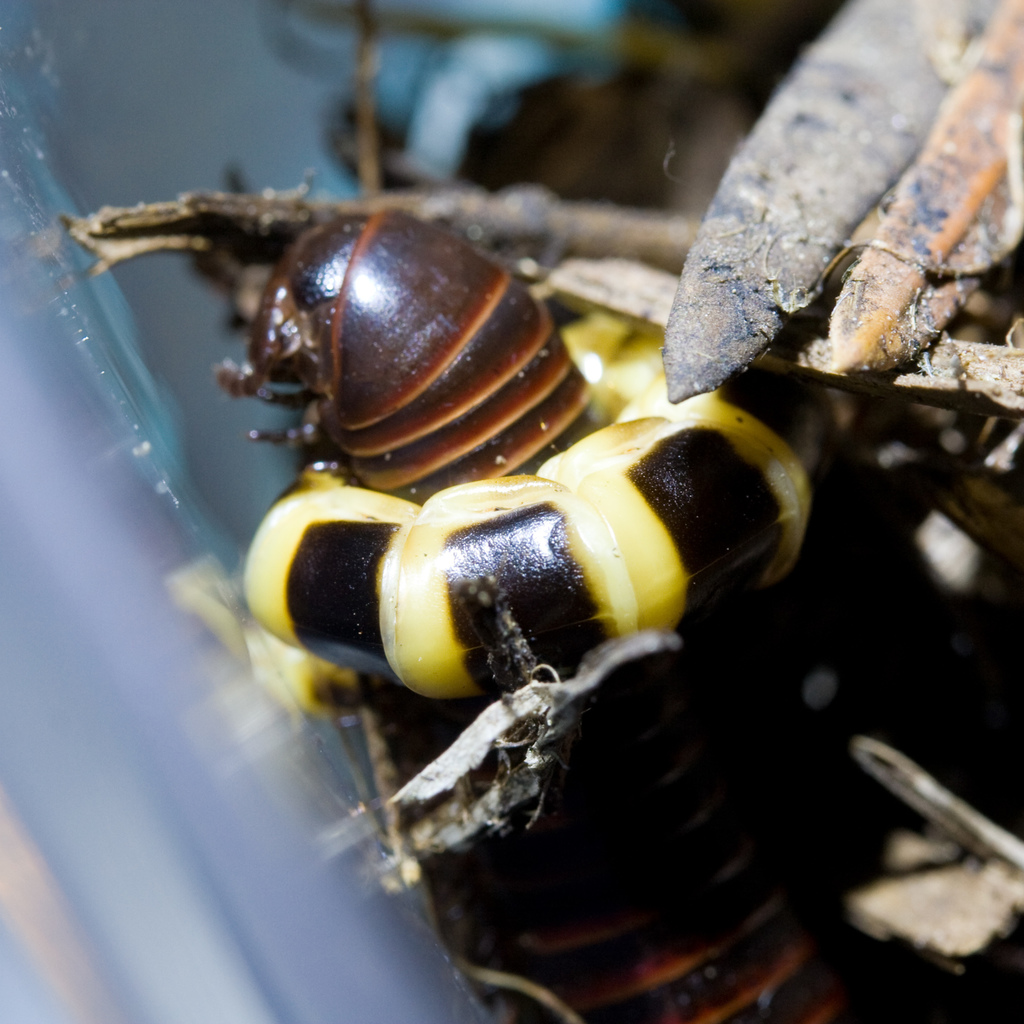
(c) Ken-ichi Ueda, some rights reserved (CC BY) · licence
Family: Phengodidae · Class: Insecta · Order: Coleoptera
Zarhipis integripennis (Western Banded Glowworm) is a California animal in the Phengodidae family.
The Western Banded Glowworm is a beetle belonging to the family Phengodidae, a group of insects commonly known as glowworms or railroad worms. Adults exhibit the characteristic body form of phengodid beetles, with males possessing feathery antennae and the ability to fly, while females are typically wingless and larviform in appearance. The species displays sexual dimorphism typical of the family, with females retaining a grub-like appearance throughout their adult lives and possessing bioluminescent capabilities. Zarhipis integripennis occurs along the Pacific Coast of North America, with documented populations in California, Oregon, and Washington. The species' range extends from coastal areas inland to mountainous regions, though specific elevation limits have not been well documented in the scientific literature. Within California, the species has been recorded from various counties, though comprehensive distribution surveys remain incomplete. The Western Banded Glowworm inhabits forested environments, particularly areas with abundant woody debris and leaf litter. Like other members of Phengodidae, this species likely requires microhabitats that support populations of soft-bodied invertebrates, which serve as prey for the predaceous larvae. The species appears to prefer areas with moderate moisture levels and organic matter accumulation, though specific habitat requirements have not been thoroughly studied. The life cycle follows the typical phengodid pattern, with larvae spending extended periods in soil and leaf litter as active predators. Larvae are elongated and segmented, feeding on various soft-bodied invertebrates including snails, slugs, and other small arthropods. Adult emergence timing and seasonal activity patterns have not been well documented for this species. Females use bioluminescence to attract males for mating, producing a steady glow rather than the flashing patterns characteristic of true fireflies (Lampyridae). Males are attracted to the female's light display and locate them for reproduction. The conservation status of Zarhipis integripennis has not been formally assessed by federal or state agencies. The species does not appear on any official threatened or endangered species lists as of December 2025. However, like many forest-dwelling invertebrates, the Western Banded Glowworm may face threats from habitat loss, forest management practices, and urban development within its range. The use of pesticides and light pollution could potentially impact populations, as both factors are known to affect other bioluminescent insects. Detailed ecological studies of this species are lacking, and much of its basic biology remains poorly understood. The Western Banded Glowworm represents one of many invertebrate species in Pacific Coast forests that would benefit from additional research to better understand distribution patterns, habitat requirements, and conservation needs. Current knowledge is largely based on scattered collection records and general understanding of phengodid biology rather than species-specific studies.
Classification
Class: Insecta · Order: Coleoptera · Family: Phengodidae
Frequently asked questions
How is Zarhipis integripennis classified?
Zarhipis integripennis belongs to class Insecta, order Coleoptera, family Phengodidae.
What family does Zarhipis integripennis belong to?
Zarhipis integripennis is in the Phengodidae family.
What is Zarhipis integripennis?
The Western Banded Glowworm is a beetle belonging to the family Phengodidae, a group of insects commonly known as glowworms or railroad worms.
Is Zarhipis integripennis found in California?
Yes. Zarhipis integripennis is recorded in California in The California Species Project's catalogue.
Related species
Other California species in the same genus, family, or bioregion.
Data from The California Species Project — 14,000+ California species with verified data from CNPS, CDFW, USFWS, and more.