Zenaida macroura
Mourning Dove
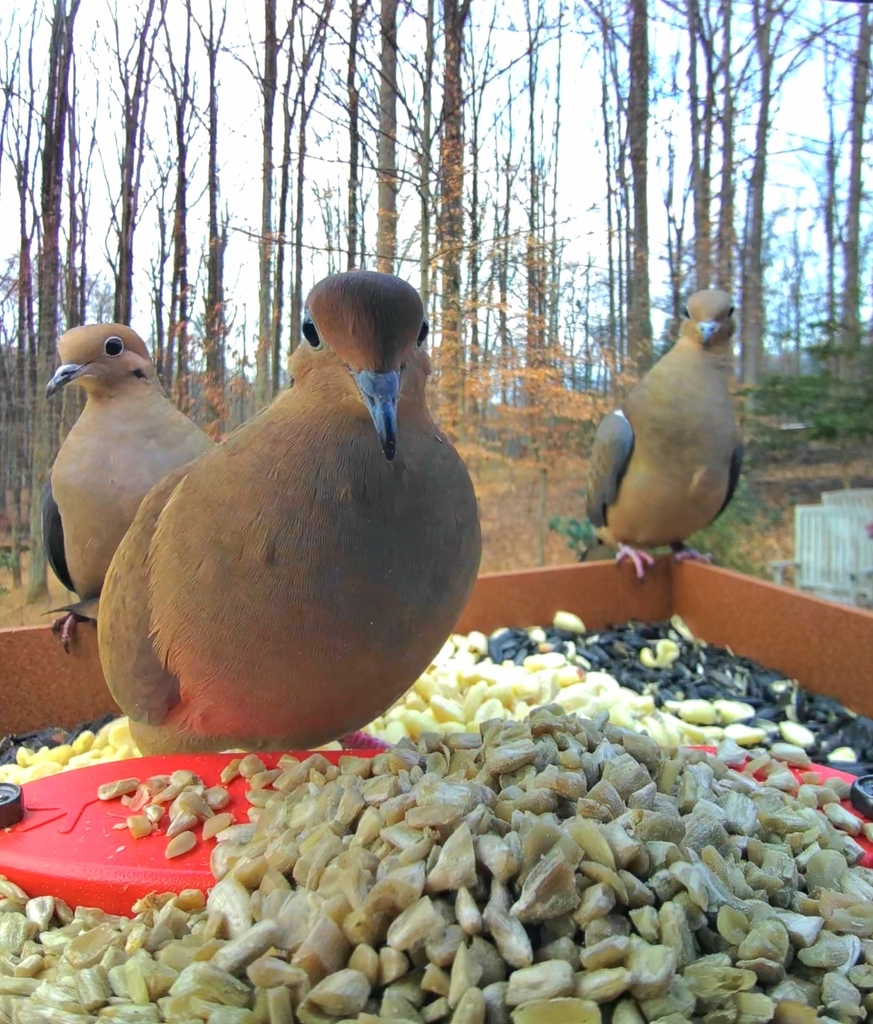
(c) froggymum, some rights reserved (CC BY) · licence
Family: Columbidae · Class: Aves · Order: Columbiformes
Zenaida macroura (Mourning Dove) is a California animal in the Columbidae family.
The Mourning Dove is a medium-sized dove measuring 23 to 34 cm (9 to 13 inches) in length with a wingspan of 37 to 45 cm (15 to 18 inches). Adults weigh 96 to 170 grams (3.4 to 6.0 ounces). The species displays subtle sexual dimorphism, with males slightly larger and more colorful than females. Both sexes have pale brown to buff-colored plumage with darker flight feathers and a distinctive long, pointed tail with white outer feathers visible in flight. The head features a small, rounded profile with a thin, dark bill and bright red to orange legs and feet. Males exhibit a slight iridescent sheen on the neck and more pronounced blue-gray coloring on the crown and nape. Mourning Doves occur throughout California, from sea level to elevations exceeding 2,100 meters (6,900 feet). The species breeds across all bioregions of the state, including the Central Valley, coastal regions, desert areas, and montane zones. Their range extends from southern Canada through Central America, making them one of North America's most widely distributed native birds. In California, populations are year-round residents in lower elevations, while those breeding at higher elevations may migrate to warmer areas during winter. The species occupies diverse habitats including agricultural lands, urban and suburban areas, oak woodlands, riparian corridors, desert scrub, and grasslands. Mourning Doves prefer open or semi-open environments with scattered trees or shrubs for nesting and perching. They commonly utilize agricultural fields for foraging, particularly those containing grains and seeds. Urban populations frequently nest in residential areas with mature trees and shrubs, adapting well to human-modified landscapes. Mourning Doves are primarily granivorous, consuming seeds from grasses, forbs, and agricultural crops. Their diet consists of approximately 99% plant material, with corn, wheat, millet, and various weed seeds comprising major food sources. The species possesses a specialized muscular crop that allows storage and initial processing of seeds. Breeding occurs from February through October in California, with peak activity during spring and early summer. Females typically lay two white eggs in a simple platform nest constructed of twigs, grass, and pine needles, usually placed 1.5 to 6 meters (5 to 20 feet) above ground in trees or shrubs. Incubation lasts 14 to 15 days, with both parents sharing duties. Young fledge approximately 12 to 15 days after hatching, and pairs commonly produce multiple broods per season. Mourning Doves are classified as a game species in California and are not federally or state-listed as threatened or endangered. According to the North American Breeding Bird Survey, populations have remained relatively stable over the past several decades, though some regional variations exist. The species benefits from agricultural practices that provide abundant food sources and from urban development that creates edge habitats. Primary conservation concerns include habitat loss in some regions, window strikes in urban areas, and potential impacts from pesticide use on agricultural lands where they forage extensively.
Classification
Class: Aves · Order: Columbiformes · Family: Columbidae
Frequently asked questions
How is Zenaida macroura classified?
Zenaida macroura belongs to class Aves, order Columbiformes, family Columbidae.
What family does Zenaida macroura belong to?
Zenaida macroura is in the Columbidae family.
What is Zenaida macroura?
The Mourning Dove is a medium-sized dove measuring 23 to 34 cm (9 to 13 inches) in length with a wingspan of 37 to 45 cm (15 to 18 inches).
Is Zenaida macroura found in California?
Yes. Zenaida macroura is recorded in California in The California Species Project's catalogue.
Related species
Other California species in the same genus, family, or bioregion.
Data from The California Species Project — 14,000+ California species with verified data from CNPS, CDFW, USFWS, and more.