Zerene eurydice
California Dogface
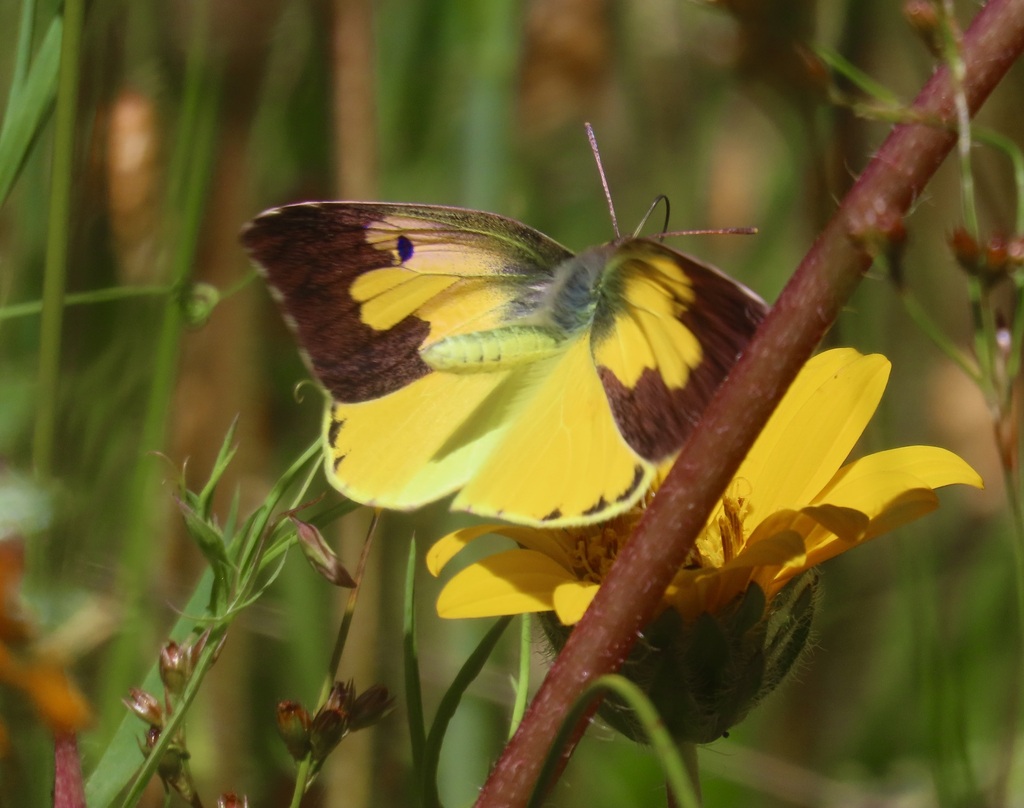
(c) John Hibbard, some rights reserved (CC BY) · licence
Family: Pieridae · Class: Insecta · Order: Lepidoptera
Zerene eurydice (California Dogface) is a California animal in the Pieridae family.
The California dogface butterfly (Zerene eurydice) is a medium-sized pierid butterfly and the official state insect of California. Males display distinctive orange-yellow forewings with prominent black borders and a black silhouette resembling a dog's head in profile, which gives the species its common name. The 'dog's face' pattern includes a black 'eye' spot and curved black markings that form the profile. Females are primarily yellow with reduced black markings and lack the pronounced dogface pattern. Both sexes have bright yellow hindwings with minimal black markings. The wingspan ranges from 5.1 to 6.4 centimeters (2.0 to 2.5 inches). The California dogface occurs in north-central California south to Baja California, distributed west of the central mountains and deserts. The species is found throughout the Coast Ranges, Central Valley foothills, and southern California mountains below approximately 1,500 meters (5,000 feet) elevation. Historical records indicate the butterfly was once more widespread, but urban development and habitat conversion have reduced its range in some areas, particularly in the Los Angeles Basin and San Francisco Bay Area. This species inhabits open woodlands, chaparral, foothill canyons, and riparian areas where its primary host plant occurs. California dogface butterflies are closely associated with false indigo (Amorpha californica) in the pea family (Fabaceae), though they may occasionally utilize other native legumes. Adults are typically found in areas with partial shade and access to nectar sources, including ceanothus, buckwheat, and dogbane species. The butterfly prefers elevations from sea level to 1,500 meters, particularly in areas with Mediterranean climate conditions. California dogface butterflies are multivoltine, producing two to three generations per year depending on local conditions and elevation. Adults are most active from March through October, with peak flight periods occurring in late spring and early fall. Males exhibit territorial behavior, perching on prominent objects and patrolling for females. Females deposit single eggs on young leaves and growing tips of false indigo plants. Larvae are green with lateral white stripes and feed exclusively on the host plant foliage. The species overwinters in the pupal stage attached to host plant stems or nearby vegetation. The California dogface is not federally or state listed as threatened or endangered, though populations have experienced localized declines due to habitat loss and fragmentation. Urban development, agricultural conversion, and invasive plant species pose ongoing threats to both the butterfly and its host plant. Fire suppression has altered natural disturbance regimes that historically maintained suitable habitat conditions. Conservation efforts focus on protecting and restoring native plant communities, particularly riparian and foothill woodland habitats that support false indigo populations. The species benefits from habitat management that maintains diverse native plant communities and controls invasive species that compete with host plants.
Classification
Class: Insecta · Order: Lepidoptera · Family: Pieridae
Frequently asked questions
How is Zerene eurydice classified?
Zerene eurydice belongs to class Insecta, order Lepidoptera, family Pieridae.
What family does Zerene eurydice belong to?
Zerene eurydice is in the Pieridae family.
What is Zerene eurydice?
The California dogface butterfly (Zerene eurydice) is a medium-sized pierid butterfly and the official state insect of California.
Is Zerene eurydice found in California?
Yes. Zerene eurydice is recorded in California in The California Species Project's catalogue.
Related species
Other California species in the same genus, family, or bioregion.
Data from The California Species Project — 14,000+ California species with verified data from CNPS, CDFW, USFWS, and more.