Zonotrichia albicollis
White-throated Sparrow
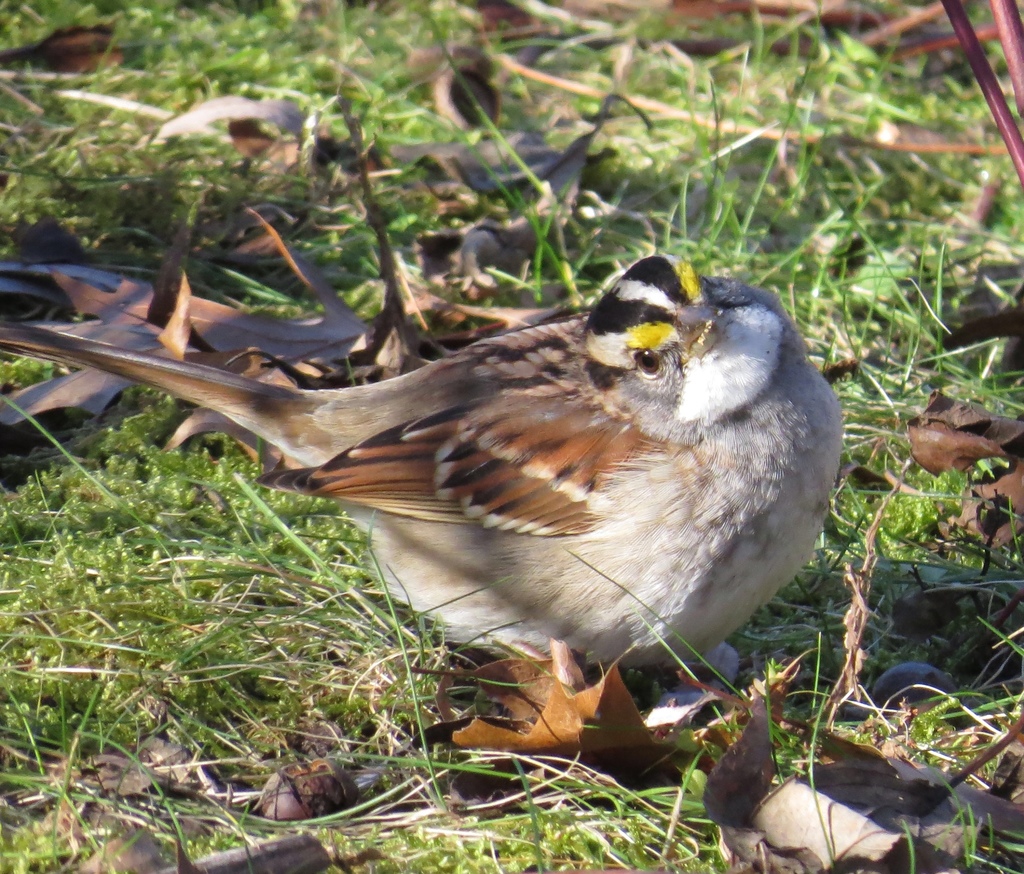
(c) Sandy Wolkenberg, some rights reserved (CC BY) · licence
Family: Emberizidae · Class: Aves · Order: Passeriformes
Zonotrichia albicollis (White-throated Sparrow) is a California animal in the Emberizidae family.
The White-throated Sparrow is a medium-sized songbird measuring 15-19 cm (6.0-7.5 inches) in length with a wingspan of 23 cm (9.1 inches) and weighing 22-32 grams. Two distinct color morphs occur within this species: white-striped and tan-striped forms. White-striped individuals display bold black and white head stripes with a bright white throat patch and yellow lores. Tan-striped morphs have brown and buff head stripes with a less distinct grayish-white throat. Both forms exhibit gray faces, brown backs with dark streaking, and grayish underparts. The bill is dark gray to black, and legs are pinkish-brown. The species breeds across the boreal forests of Canada and the northern United States, from British Columbia east to Newfoundland and south through New England, the Great Lakes region, and parts of the northern Rocky Mountains. In California, White-throated Sparrows are uncommon to rare migrants and winter visitors, primarily occurring along the coast and in the Central Valley from October through April. They are recorded most frequently in northern California counties including Marin, Sonoma, and Alameda, with scattered records south to San Diego County. During migration and winter in California, White-throated Sparrows inhabit dense understory of mixed woodlands, riparian areas, parks, and suburban gardens with thick shrub cover. They prefer areas with leaf litter for foraging and dense vegetation for cover. The species shows a strong preference for edge habitats where woodland meets open areas, typically at elevations below 500 meters in California. White-throated Sparrows are primarily ground-dwelling birds that forage by scratching through leaf litter with both feet, using a distinctive double-scratch technique. Their diet consists of seeds from grasses, sedges, and forbs, supplemented with berries and insects during breeding season. The species exhibits complex social behavior related to their dimorphic plumage, with white-striped and tan-striped individuals showing different behavioral patterns and mating preferences. During winter, they form loose flocks and may associate with other sparrow species. Their song is a clear, whistled melody often described as "Old Sam Peabody-Peabody-Peabody" or "Sweet Sweet Canada-Canada-Canada." The White-throated Sparrow is not federally or state listed and maintains stable populations across most of its range. The species is classified as Least Concern by the International Union for Conservation of Nature. However, like many migratory songbirds, populations face pressures from habitat loss, climate change affecting breeding and wintering grounds, and collisions with buildings and communication towers during migration. In California, the species benefits from habitat conservation efforts in riparian corridors and urban green spaces that provide stopover sites during migration. Breeding Bird Survey data indicates relatively stable long-term population trends, though some regional declines have been documented in portions of the breeding range.
Classification
Class: Aves · Order: Passeriformes · Family: Emberizidae
Frequently asked questions
How is Zonotrichia albicollis classified?
Zonotrichia albicollis belongs to class Aves, order Passeriformes, family Emberizidae.
What family does Zonotrichia albicollis belong to?
Zonotrichia albicollis is in the Emberizidae family.
What is Zonotrichia albicollis?
The White-throated Sparrow is a medium-sized songbird measuring 15-19 cm (6.0-7.5 inches) in length with a wingspan of 23 cm (9.1 inches) and weighing 22-32 grams.
Is Zonotrichia albicollis found in California?
Yes. Zonotrichia albicollis is recorded in California in The California Species Project's catalogue.
Related species
Other California species in the same genus, family, or bioregion.
Data from The California Species Project — 14,000+ California species with verified data from CNPS, CDFW, USFWS, and more.