Zonotrichia atricapilla
Golden-crowned Sparrow
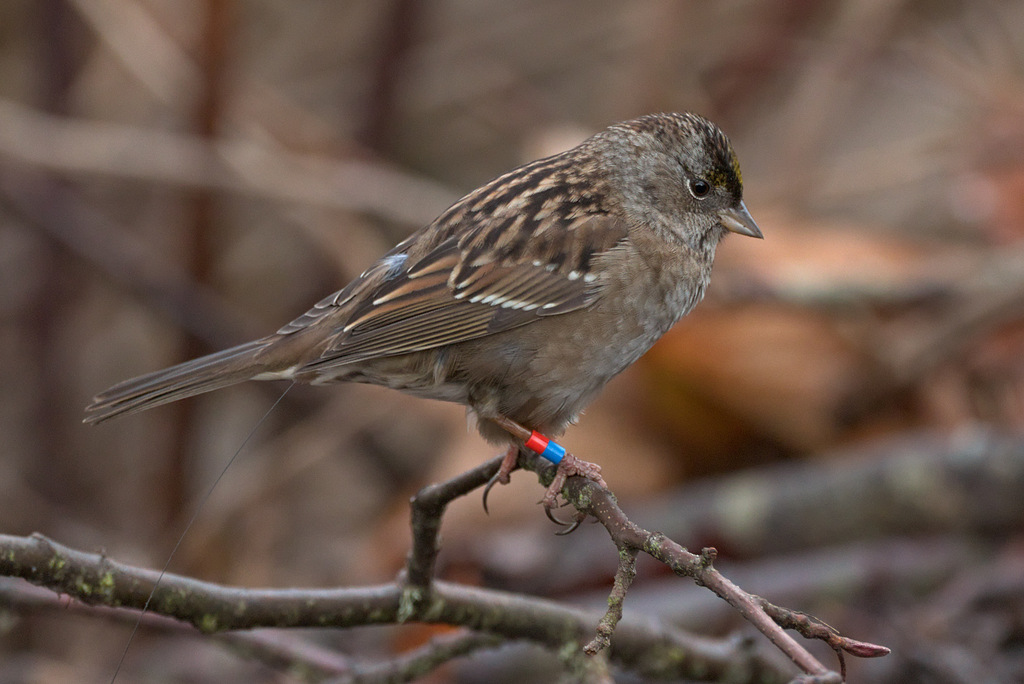
(c) Kevin Krebs, some rights reserved (CC BY) · licence
Family: Emberizidae · Class: Aves · Order: Passeriformes
Zonotrichia atricapilla (Golden-crowned Sparrow) is a California animal in the Emberizidae family.
The Golden-crowned Sparrow is a medium-sized songbird measuring 15 to 18 cm (6 to 7 inches) in length with a wingspan of 24 to 25 cm (9.5 to 10 inches). Adults weigh between 19 to 35 grams. The species is distinguished by its distinctive black and yellow head pattern during breeding season, with a bright golden-yellow crown stripe bordered by black lateral stripes extending from the bill through the eye to the nape. Non-breeding adults and juveniles display duller plumage with brownish-gray crowns and less distinct markings. The back and wings are brown with darker streaking, while the underparts are grayish-white with brown flanking on the sides. The bill is dark gray to black, and the legs are pale brown. The Golden-crowned Sparrow breeds in Alaska and western Canada, primarily in shrubland habitats from sea level to treeline. During winter migration, the species travels along the Pacific Coast to wintering grounds extending from southern British Columbia through California and into Baja California, Mexico. In California, Golden-crowned Sparrows are common winter residents throughout the state, particularly in coastal areas, Central Valley, and foothills of the Sierra Nevada and Coast Ranges. The species typically arrives in California in September and departs by May. Wintering habitat in California includes chaparral, oak woodlands, riparian areas, parks, gardens, and brushy areas with dense shrub cover. The species shows preference for areas with mixed vegetation structure, including both open ground for foraging and dense shrubs for cover. Golden-crowned Sparrows are commonly found at elevations from sea level to approximately 2,000 meters (6,500 feet) in California's mountains. Golden-crowned Sparrows are primarily ground foragers, using a distinctive double-scratch technique to uncover food beneath leaf litter and debris. Their diet consists mainly of seeds, berries, buds, and green vegetation, with insects comprising a smaller portion, particularly during breeding season. The species exhibits social behavior during winter, forming loose flocks that may associate with other sparrow species including White-crowned Sparrows and Dark-eyed Juncos. Breeding occurs on northern breeding grounds from May through August, with females constructing cup-shaped nests on or near the ground in dense shrubs. Typical clutch size ranges from 3 to 5 eggs, with an incubation period of 11 to 14 days. The Golden-crowned Sparrow is not federally or state-listed as threatened or endangered. According to the North American Breeding Bird Survey, populations have remained relatively stable over recent decades, though some regional variations exist. The species is considered secure throughout most of its range. Primary conservation concerns include habitat loss in wintering areas due to urban development and agricultural conversion, particularly in California's coastal regions and Central Valley. Climate change may affect breeding habitat in northern regions and alter migration timing. The species benefits from habitat conservation efforts in parks, open space preserves, and restoration of native shrubland communities.
Classification
Class: Aves · Order: Passeriformes · Family: Emberizidae
Frequently asked questions
How is Zonotrichia atricapilla classified?
Zonotrichia atricapilla belongs to class Aves, order Passeriformes, family Emberizidae.
What family does Zonotrichia atricapilla belong to?
Zonotrichia atricapilla is in the Emberizidae family.
What is Zonotrichia atricapilla?
The Golden-crowned Sparrow is a medium-sized songbird measuring 15 to 18 cm (6 to 7 inches) in length with a wingspan of 24 to 25 cm (9.5 to 10 inches).
Is Zonotrichia atricapilla found in California?
Yes. Zonotrichia atricapilla is recorded in California in The California Species Project's catalogue.
Related species
Other California species in the same genus, family, or bioregion.
Data from The California Species Project — 14,000+ California species with verified data from CNPS, CDFW, USFWS, and more.