Zonotrichia leucophrys
White-crowned Sparrow
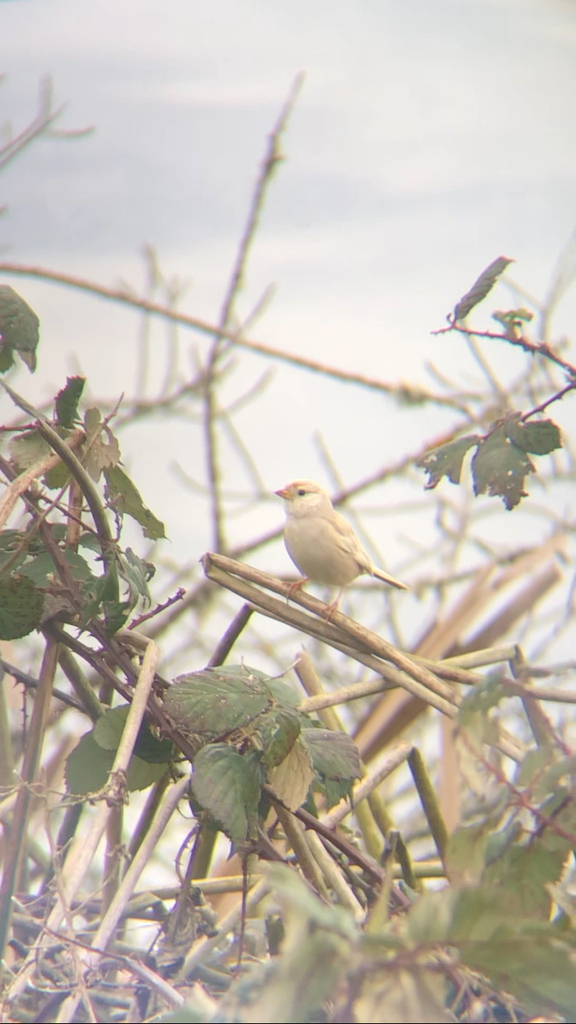
(c) Leo "Jake" Jacobsen, some rights reserved (CC BY) · licence
Family: Emberizidae · Class: Aves · Order: Passeriformes
Zonotrichia leucophrys (White-crowned Sparrow) is a California animal in the Emberizidae family.
The White-crowned Sparrow is a medium-sized songbird measuring 15 to 18 cm (5.9 to 7.1 inches) in length with a wingspan of 21 to 24 cm (8.3 to 9.4 inches). Adults weigh 22 to 44 grams (0.8 to 1.6 ounces). The species is distinguished by its distinctive black and white striped crown pattern, with alternating black and white stripes running longitudinally across the head. The face, throat, and underparts are pale gray, while the back displays brown and gray streaking. The bill is orange-yellow to pinkish, and the legs are dark pink to brown. Juveniles lack the distinctive crown pattern, instead showing brown and buff striped heads. White-crowned Sparrows breed across Alaska, western and northern Canada, and the western United States, including much of California. The species occurs year-round along the California coast and in montane regions, with breeding populations in the Sierra Nevada, Cascade Range, and northern Coast Ranges. During winter, populations expand throughout California's lowlands and desert regions. Five distinct subspecies are recognized, with different populations following specific migratory routes along the Pacific coast or through interior western North America. Breeding habitat includes dense shrublands, forest edges, alpine meadows, and chaparral, typically at elevations ranging from sea level to 3,500 meters (11,500 feet) in montane areas. The species favors areas with dense understory vegetation for nesting and nearby open areas for foraging. During winter and migration, White-crowned Sparrows utilize a broader range of habitats including suburban parks, agricultural fields, riparian areas, and coastal scrub. White-crowned Sparrows are primarily granivorous, feeding on seeds from grasses, forbs, and shrubs. During the breeding season, they supplement their diet with insects, particularly when feeding nestlings. The species forages by scratching through leaf litter and gleaning from vegetation surfaces. Breeding occurs from April through August, with females constructing cup-shaped nests 0.3 to 1.2 meters (1 to 4 feet) above ground in dense shrubs. Clutch size ranges from 3 to 5 eggs, with an incubation period of 11 to 14 days. Young fledge 8 to 10 days after hatching, and pairs may produce up to three broods per season in favorable conditions. The White-crowned Sparrow is not federally or state-listed and maintains stable populations across most of its range. According to the North American Breeding Bird Survey, populations have remained relatively stable over the past 50 years, though some regional declines have been documented in urban areas and agricultural landscapes. Primary conservation concerns include habitat loss due to development, agricultural intensification, and climate change effects on montane breeding habitats. The species benefits from shrubland management and maintenance of native plant communities that provide seed resources and nesting sites.
Classification
Class: Aves · Order: Passeriformes · Family: Emberizidae
Frequently asked questions
How is Zonotrichia leucophrys classified?
Zonotrichia leucophrys belongs to class Aves, order Passeriformes, family Emberizidae.
What family does Zonotrichia leucophrys belong to?
Zonotrichia leucophrys is in the Emberizidae family.
What is Zonotrichia leucophrys?
The White-crowned Sparrow is a medium-sized songbird measuring 15 to 18 cm (5.9 to 7.1 inches) in length with a wingspan of 21 to 24 cm (8.3 to 9.4 inches).
Is Zonotrichia leucophrys found in California?
Yes. Zonotrichia leucophrys is recorded in California in The California Species Project's catalogue.
Related species
Other California species in the same genus, family, or bioregion.
Data from The California Species Project — 14,000+ California species with verified data from CNPS, CDFW, USFWS, and more.