Zootermopsis nevadensis
Nevada Dampwood Termite
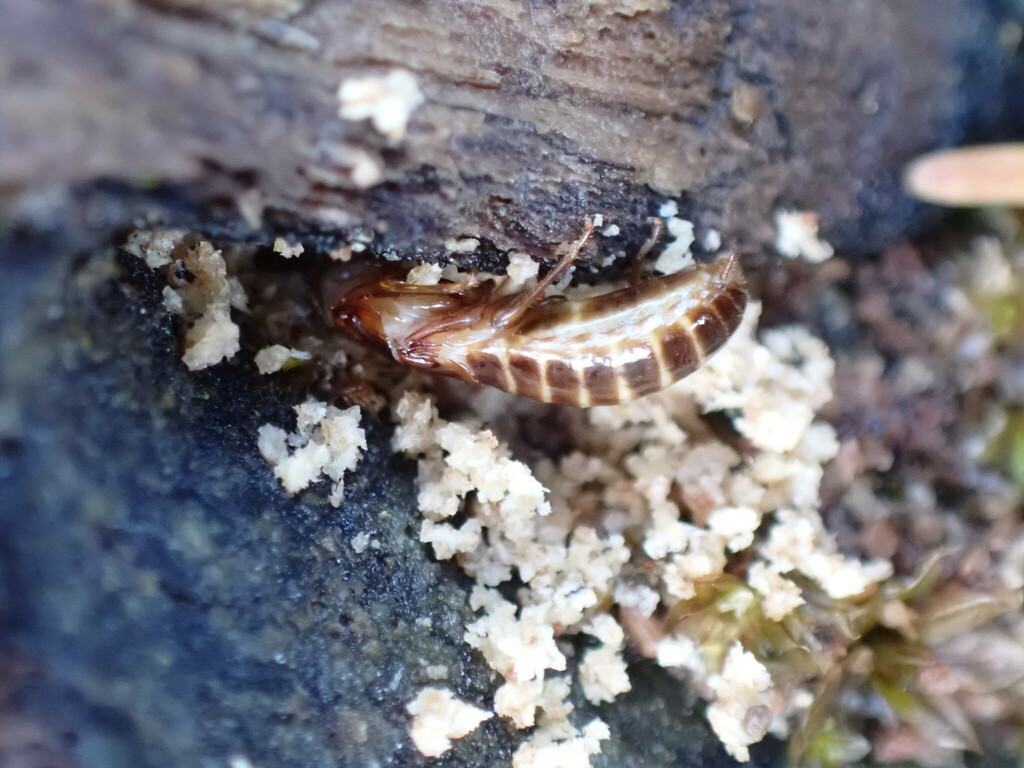
no rights reserved · CC0
Family: Archotermopsidae · Class: Insecta · Order: Blattodea
Zootermopsis nevadensis (Nevada Dampwood Termite) is a California animal in the Archotermopsidae family.
The Nevada dampwood termite is a large dampwood termite species endemic to western North America. Alates (winged reproductive forms) measure approximately 20 mm (0.8 inches) in total length with wings and 11-13 mm (0.4-0.5 inches) without wings, while soldiers reach up to 20 mm in length at their largest size (BugGuide). The species exhibits the typical dampwood termite body plan with a robust build and relatively large size compared to subterranean termites. Reproductive forms possess functional wings during dispersal flights, while soldiers are characterized by enlarged mandibles and heads adapted for colony defense. Zootermopsis nevadensis has the most extensive distribution of any species in its genus, ranging from southern California northward through western Nevada, Oregon, Washington, northwestern Idaho, and Montana, extending into British Columbia, Canada. The northernmost recorded occurrence is at 53.3°N latitude near Dunkley, British Columbia (Thorne et al.). In California, the species occurs throughout much of the state's forested regions, particularly in areas with suitable dead wood substrates. This species inhabits coniferous and mixed forests where it colonizes dead and decaying wood, including fallen logs, stumps, and standing dead trees. Unlike subterranean termites, dampwood termites do not require soil contact and obtain necessary moisture directly from the wood they consume. The species prefers wood with higher moisture content, typically found in areas with adequate rainfall or humidity. Colonies are established within the wood substrate itself, with galleries excavated along the grain. Nevada dampwood termites are social insects living in colonies consisting of reproductives, soldiers, and workers. The species exhibits a typical termite caste system where different morphological forms perform specialized functions. Reproductive individuals (alates) emerge during dispersal flights to establish new colonies, typically occurring during favorable weather conditions. Workers maintain the colony by foraging for cellulose, caring for young, and expanding gallery systems within wood substrates. Soldiers defend the colony using their enlarged mandibles against predators and competing insects. The species feeds exclusively on dead wood, playing an important ecological role in forest nutrient cycling by decomposing fallen timber. Zootermopsis nevadensis is not federally or state listed as threatened or endangered, and appears to maintain stable populations throughout most of its range as of December 2025. The species faces typical forest-dwelling insect challenges including habitat loss from logging, fire suppression altering natural forest dynamics, and climate change potentially affecting moisture regimes essential for colony survival. However, the widespread distribution and adaptability to various forest types suggest the species is not currently at significant conservation risk. The species has demonstrated some invasive potential, having been introduced and established in Kawanishi City, Hyogo Prefecture, Japan (BugGuide). Management considerations focus primarily on maintaining healthy forest ecosystems with adequate dead wood components to support natural populations and ecological functions.
Classification
Class: Insecta · Order: Blattodea · Family: Archotermopsidae
Frequently asked questions
How is Zootermopsis nevadensis classified?
Zootermopsis nevadensis belongs to class Insecta, order Blattodea, family Archotermopsidae.
What family does Zootermopsis nevadensis belong to?
Zootermopsis nevadensis is in the Archotermopsidae family.
What is Zootermopsis nevadensis?
The Nevada dampwood termite is a large dampwood termite species endemic to western North America.
Is Zootermopsis nevadensis found in California?
Yes. Zootermopsis nevadensis is recorded in California in The California Species Project's catalogue.
More California species
This species has no close relatives in our California data — here are other species to explore.
Data from The California Species Project — 14,000+ California species with verified data from CNPS, CDFW, USFWS, and more.