Zophobas atratus
Giant Mealworm Beetle
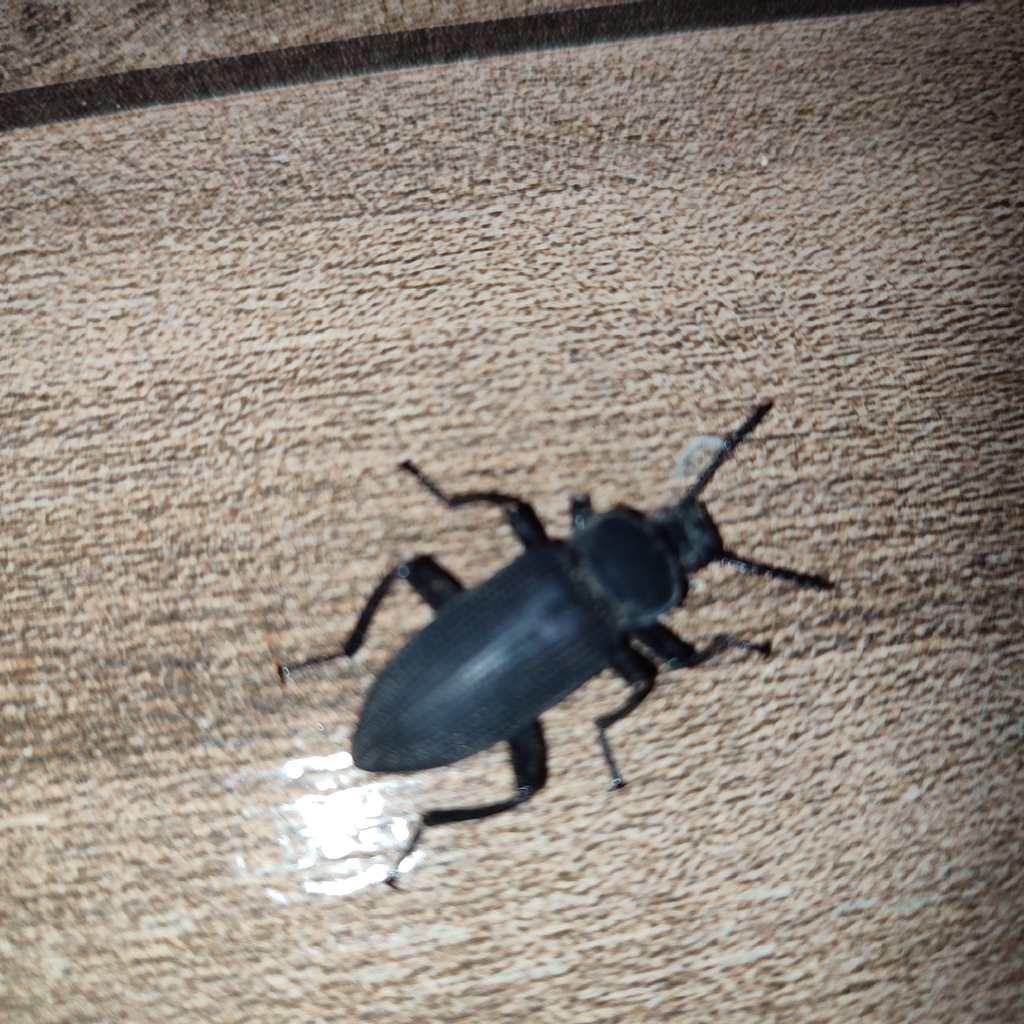
(c) Maike Letícia Link Bianchini, some rights reserved (CC BY) · licence
Family: Tenebrionidae · Class: Insecta · Order: Coleoptera
Zophobas atratus (Giant Mealworm Beetle) is a California animal in the Tenebrionidae family.
The Giant Mealworm Beetle (Zophobas atratus) is a large darkling beetle in the family Tenebrionidae. Adults typically measure 20-35 mm (0.8-1.4 inches) in length, making them among the larger members of their family. The beetle displays a characteristic dark brown to black coloration with a robust, elongated body form. The elytra (wing covers) are smooth and slightly glossy, while the thorax is broader than the head. Adults possess well-developed legs adapted for walking and burrowing. This species has a cosmopolitan distribution, occurring across tropical and subtropical regions worldwide. According to BugGuide, Z. atratus is widely distributed across North America, having been introduced from its native range. In California, populations are established in warmer coastal and inland areas, though specific county-level distribution data remains limited. The species has been documented in urban and suburban environments throughout much of the southern United States. Giant Mealworm Beetles inhabit diverse environments but show preference for areas with decaying organic matter. Adults are commonly found in compost piles, rotting wood, stored grain facilities, and areas with accumulated plant debris. The species thrives in warm, humid conditions and is frequently associated with human-modified environments. Larvae, known commercially as "superworms," develop in substrates rich in organic matter, including decaying vegetation, stored products, and animal waste. This species exhibits complete metamorphosis with egg, larval, pupal, and adult stages. Larvae are cylindrical, segmented, and can reach 50-60 mm (2.0-2.4 inches) in length before pupation. The larval stage is economically significant, as superworms are extensively cultured as feeder insects for reptiles, birds, and fish. Adult beetles are primarily nocturnal and exhibit negative phototaxis, seeking dark hiding places during daylight hours. Both larvae and adults are scavengers, feeding on decaying plant matter, fungi, and occasionally other insects. Reproduction is continuous in favorable conditions, with females depositing eggs in suitable organic substrates. Zophobas atratus is not listed under federal or state endangered species legislation and faces no significant conservation concerns. As an introduced species, it is considered naturalized rather than native to North America. The species has adapted successfully to human-modified environments and may even benefit from urbanization and agriculture. Its widespread distribution and tolerance for various habitats suggest stable populations throughout its range. The commercial breeding industry has further ensured the species' persistence, though wild populations maintain themselves independently of human intervention. No specific monitoring programs exist for this species, as it is not considered threatened or of particular conservation interest.
Classification
Class: Insecta · Order: Coleoptera · Family: Tenebrionidae
Frequently asked questions
How is Zophobas atratus classified?
Zophobas atratus belongs to class Insecta, order Coleoptera, family Tenebrionidae.
What family does Zophobas atratus belong to?
Zophobas atratus is in the Tenebrionidae family.
What is Zophobas atratus?
The Giant Mealworm Beetle (Zophobas atratus) is a large darkling beetle in the family Tenebrionidae.
Is Zophobas atratus found in California?
Yes. Zophobas atratus is recorded in California in The California Species Project's catalogue.
Related species
Other California species in the same genus, family, or bioregion.
Data from The California Species Project — 14,000+ California species with verified data from CNPS, CDFW, USFWS, and more.