Zophodia grossulariella
Gooseberry Fruitworm Moth
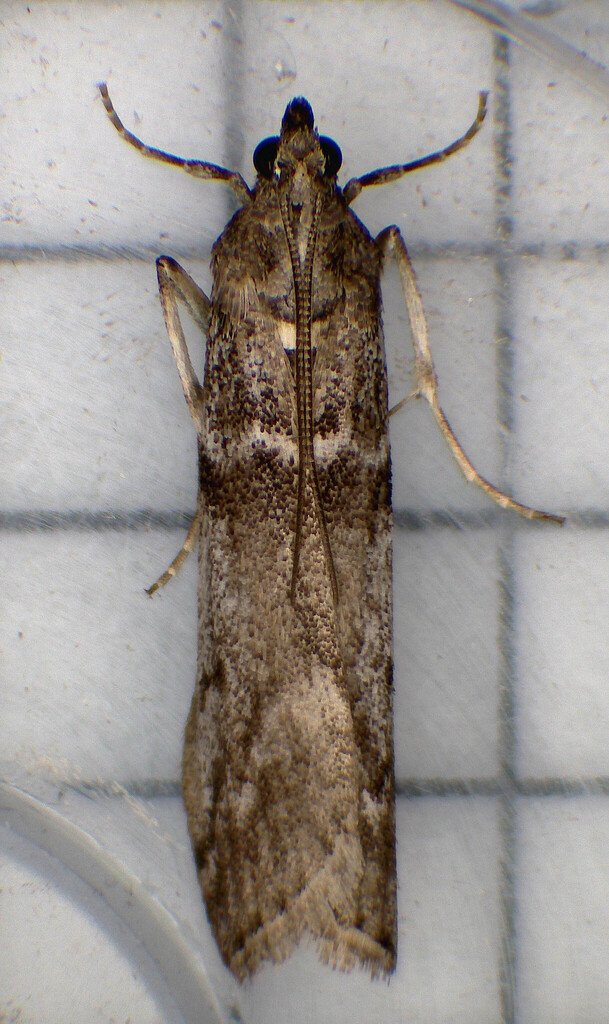
(c) Ron de Goede, some rights reserved (CC BY) · licence
Family: Pyralidae · Class: Insecta · Order: Lepidoptera
Zophodia grossulariella (Gooseberry Fruitworm Moth) is a California animal in the Pyralidae family.
The Gooseberry Fruitworm Moth (Zophodia grossulariella) is a small pyralid moth in the family Pyralidae. Adults have a wingspan of 16-20 mm (0.6-0.8 inches), with forewings that are pale gray to brownish-gray with darker crosslines and scattered dark scales. The hindwings are lighter, typically whitish to pale gray with a faint iridescent sheen. The moth's head bears prominent labial palps that curve upward, and the antennae are simple in both sexes. At rest, the wings are held in a triangular position over the body, giving the moth a distinctive tent-like appearance. This species occurs across much of North America, from southern Canada through the United States. In California, the Gooseberry Fruitworm Moth is found in areas where its host plants occur, including the Central Valley, coastal regions, and mountain areas up to moderate elevations. The species has been documented in multiple counties throughout the state, particularly in areas with cultivated or wild Ribes species. The moth inhabits diverse environments where currants and gooseberries (Ribes spp.) grow, including riparian zones, forest edges, gardens, and agricultural areas. Host plants include both wild species such as golden currant (Ribes aureum) and cultivated varieties of gooseberries and currants. The species can be found from sea level to approximately 2,000 meters (6,500 feet) elevation, adapting to various climate conditions from Mediterranean to montane environments. Gooseberry Fruitworm Moths are univoltine, producing one generation per year. Adults emerge in late spring to early summer, typically from May through July, depending on local climate conditions. Females lay eggs singly on developing fruit or nearby leaves of host plants. The larvae, known as gooseberry fruitworms, bore into the developing berries where they feed on seeds and pulp. A single larva can damage multiple berries by moving between fruits connected by silken threads. Mature larvae pupate in cocoons constructed in soil or plant debris beneath host plants. The species overwinters as pupae. The moth is primarily nocturnal, with adults attracted to artificial lights. Mating occurs shortly after emergence, and females can detect suitable host plants through chemical cues. The larvae are considered minor agricultural pests of commercial gooseberry and currant crops, though damage is typically not severe enough to warrant extensive control measures in most situations. No specific conservation status has been assigned to this species at state or federal levels. The Gooseberry Fruitworm Moth appears to maintain stable populations across its range and faces no immediate conservation threats. Its association with both wild and cultivated Ribes species provides multiple habitat options, and the moth's adaptability to various elevations and climate conditions suggests resilience to environmental changes. The species benefits from the continued cultivation of currants and gooseberries in home gardens and small-scale agricultural operations throughout California.
Classification
Class: Insecta · Order: Lepidoptera · Family: Pyralidae
Frequently asked questions
How is Zophodia grossulariella classified?
Zophodia grossulariella belongs to class Insecta, order Lepidoptera, family Pyralidae.
What family does Zophodia grossulariella belong to?
Zophodia grossulariella is in the Pyralidae family.
What is Zophodia grossulariella?
The Gooseberry Fruitworm Moth (Zophodia grossulariella) is a small pyralid moth in the family Pyralidae.
Is Zophodia grossulariella found in California?
Yes. Zophodia grossulariella is recorded in California in The California Species Project's catalogue.
Related species
Other California species in the same genus, family, or bioregion.
Data from The California Species Project — 14,000+ California species with verified data from CNPS, CDFW, USFWS, and more.