Zoropsis spinimana
Mediterranean Spiny False Wolf Spider
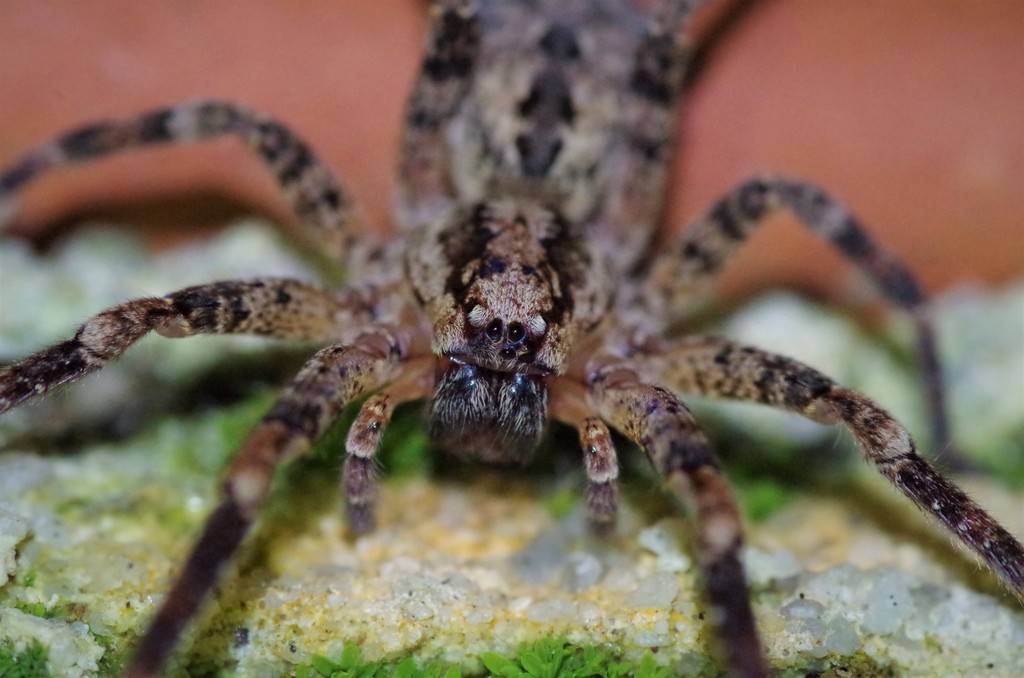
(c) Ludivine Lamare, some rights reserved (CC BY) · licence
Family: Zoropsidae · Class: Arachnida · Order: Araneae
Zoropsis spinimana (Mediterranean Spiny False Wolf Spider) is a California animal in the Zoropsidae family.
Zoropsis spinimana is a medium to large spider in the family Zoropsidae, commonly known as false wolf spiders. Adult females reach body lengths of approximately 12-20 millimeters (0.47-0.79 inches), while males are smaller at about 12 millimeters (0.47 inches) in body length (BugGuide.Net). The species exhibits sexual dimorphism typical of many spiders, with females being notably larger and more robust than males. The body coloration is typically brown to gray with darker markings, and the species possesses the characteristic robust build that gives zoropsids their common name of false wolf spiders. This Mediterranean native has established populations in the San Francisco Bay Area of California, representing a recent introduction to North America (BugGuide.Net). Documented occurrences include Santa Clara County, San Francisco County, and surrounding Bay Area locations. The species' native range encompasses Mediterranean coastal regions of Europe and North Africa. In California, observations have been recorded from urban and suburban environments, particularly in the South Bay and San Francisco metropolitan areas. Zoropsis spinimana appears to adapt readily to human-modified environments, with documented occurrences in residential areas including indoor locations such as bathrooms and other domestic spaces (BugGuide.Net). The species demonstrates tolerance for urbanized habitats and appears capable of establishing populations in buildings and landscaped areas. Specific microhabitat preferences in its introduced California range have not been extensively documented, though observations suggest the species can exploit various sheltered locations in residential and commercial structures. As members of the Zoropsidae family, these spiders are active hunters rather than web-builders, though they may construct retreat webs. The species exhibits nocturnal activity patterns typical of many zoropsids. Reproductive behavior follows the general pattern of other zoropsids, with males seeking females for mating. Specific details regarding prey preferences, seasonal activity cycles, and reproductive timing in the California introduced population require further documentation. The species likely feeds on various arthropod prey available in its urban habitat. Zoropsis spinimana does not hold any federal or state conservation listing status. As an introduced species to California, it represents a non-native establishment rather than a conservation concern. The species' ability to colonize urban environments and establish reproducing populations suggests successful adaptation to California conditions. However, the full extent of its California distribution and potential ecological impacts on native spider communities have not been comprehensively assessed. The species appears to be expanding its range within the Bay Area since initial detection, though systematic monitoring of population trends and distribution expansion is limited. Current knowledge of this species' California ecology is primarily based on citizen science observations and casual collection records rather than formal ecological studies.
Classification
Class: Arachnida · Order: Araneae · Family: Zoropsidae
Frequently asked questions
How is Zoropsis spinimana classified?
Zoropsis spinimana belongs to class Arachnida, order Araneae, family Zoropsidae.
What family does Zoropsis spinimana belong to?
Zoropsis spinimana is in the Zoropsidae family.
What is Zoropsis spinimana?
Zoropsis spinimana is a medium to large spider in the family Zoropsidae, commonly known as false wolf spiders.
Is Zoropsis spinimana found in California?
Yes. Zoropsis spinimana is recorded in California in The California Species Project's catalogue.
Related species
Other California species in the same genus, family, or bioregion.
Data from The California Species Project — 14,000+ California species with verified data from CNPS, CDFW, USFWS, and more.