Zosteropoda hirtipes
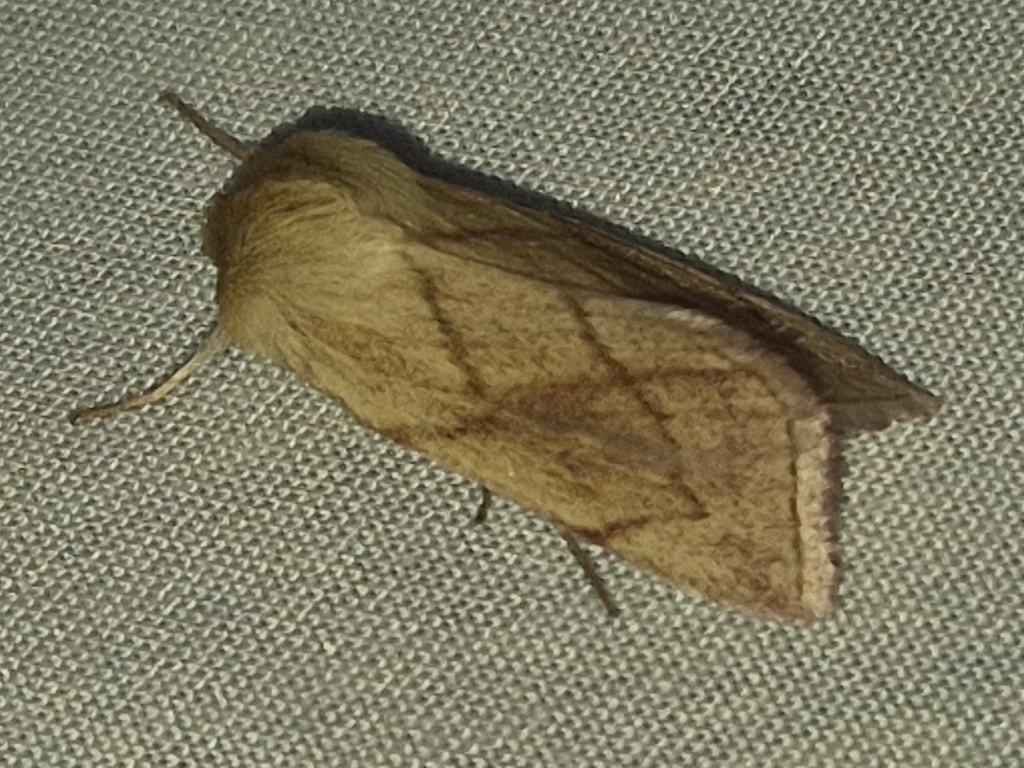
(c) Syd Cannings, some rights reserved (CC BY) · licence
Family: Noctuidae · Class: Insecta · Order: Lepidoptera
Zosteropoda hirtipes is a California animal in the Noctuidae family.
Zosteropoda hirtipes is a moth species in the family Noctuidae, commonly known as owlet moths or cutworm moths. This lepidopteran belongs to a diverse family that includes over 11,000 described species worldwide. The taxonomic placement within Noctuidae indicates this species shares characteristics typical of the family, including nocturnal activity patterns and cryptic coloration. Limited information is available regarding the specific physical characteristics of Z. hirtipes. As a member of Noctuidae, the species likely exhibits the family's typical features: forewings that are generally brownish or grayish with subtle patterns, hindwings that are often lighter in coloration, and a robust body structure. The specific epithet 'hirtipes' suggests the presence of hairy or bristly legs, which may be a distinguishing morphological feature. Adult wingspan measurements and detailed coloration patterns require verification from specialized lepidopteran literature. The geographic range and distribution of Zosteropoda hirtipes remain poorly documented in readily accessible sources. Without verified occurrence records, the species' presence in California and its specific regional distribution cannot be confirmed. Many noctuuid moths have restricted ranges, particularly those adapted to specific host plants or microhabitats. Further research into museum collections and regional surveys would be necessary to establish accurate distribution data. Habitat requirements for Z. hirtipes are not well-documented in current literature. Noctuidae moths typically occupy diverse habitats ranging from forests and grasslands to desert environments. Many species in this family are associated with specific plant communities that serve as larval host plants. The larvae of noctuuid moths commonly feed on herbaceous plants, grasses, or shrubs, with some species being agricultural pests while others remain in natural ecosystems. Behavioral and ecological information for Zosteropoda hirtipes is limited. Like most Noctuidae, adults are presumably nocturnal, attracted to artificial lights, and active during warmer months. The life cycle likely follows the typical lepidopteran pattern with egg, larval, pupal, and adult stages. Larvae probably feed on specific host plants, though these associations have not been documented. Adult flight periods, mating behaviors, and overwintering strategies remain unknown without additional research. The conservation status of Zosteropoda hirtipes has not been formally assessed by major conservation organizations. The species is not listed under federal or California state endangered species legislation. The lack of readily available ecological and distributional data suggests either limited research attention or potential rarity. Many moth species remain poorly studied compared to butterflies and other more conspicuous insects. Without population data or trend information, conservation needs cannot be adequately evaluated. Further taxonomic and ecological research would be essential to determine whether Z. hirtipes faces any conservation concerns or requires protective measures.
Classification
Class: Insecta · Order: Lepidoptera · Family: Noctuidae
Frequently asked questions
How is Zosteropoda hirtipes classified?
Zosteropoda hirtipes belongs to class Insecta, order Lepidoptera, family Noctuidae.
What family does Zosteropoda hirtipes belong to?
Zosteropoda hirtipes is in the Noctuidae family.
What is Zosteropoda hirtipes?
Zosteropoda hirtipes is a moth species in the family Noctuidae, commonly known as owlet moths or cutworm moths.
Is Zosteropoda hirtipes found in California?
Yes. Zosteropoda hirtipes is recorded in California in The California Species Project's catalogue.
Related species
Other California species in the same genus, family, or bioregion.
Data from The California Species Project — 14,000+ California species with verified data from CNPS, CDFW, USFWS, and more.