Abronia villosa var. aurita
Chaparral sand-verbena, Chaparral Sand-Verbena, chaparral sand-verbena, chaparral sand-verbena
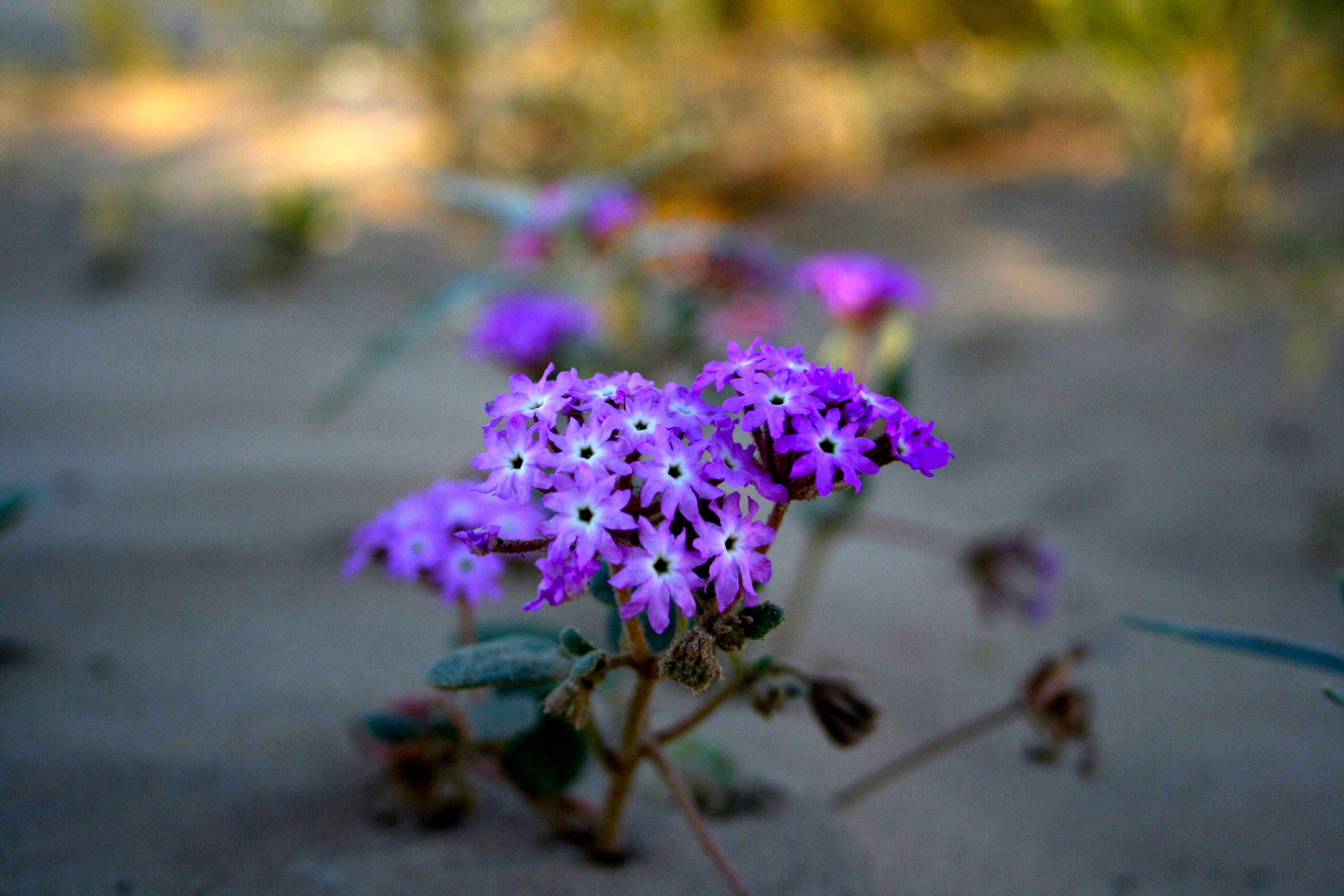
Photo: parent species Abronia villosa · Photo by Chez Brungraber
Family: Nyctaginaceae · Type: Herb · Native
Conservation status: CNPS 1B.1
Abronia villosa var. aurita (Chaparral sand-verbena) is a native California herb in the Nyctaginaceae family, recognized by largest flowers and smooth fruit diagnostic within villosa group.
Chaparral sand-verbena is a rare (CNPS 1B.1) California native annual found in central and southern California coastal areas and western desert regions in sandy coastal-sage scrub and chaparral habitats at elevations below 1,600 meters. Flowering from March to August, this plant produces pink to rose-colored flowers with a perianth tube 2 to 3.5 centimeters long and flower limbs up to 1.8 centimeters wide. Growing with slender branching stems that spread across sandy ground, it forms low-growing clusters typically 10 to 30 centimeters in diameter. Its leaves are oval to rounded, arranged opposite along the stems, with soft, slightly succulent texture. The fruit develops distinctive winged structures that extend beyond the smooth central body, providing effective seed dispersal in its arid habitat.
Identification and appearance
Key characters: 4 sympatric species - largest flowers and smooth fruit diagnostic within villosa group
Habitat and range
Habitat: Sandy places in coastal-sage scrub, chaparral
Elevation: < 1600 m
California counties: San Diego, Riverside, Orange, Los Angeles
Bloom period
Abronia villosa var. aurita blooms Mar-Aug.
Conservation status
CNPS 1B.1
How to tell it apart
vs Lantana: Abronia flowers have no true petals (colorful sepals); Lantana has small tubular flowers with 4-5 petals.; vs Calystegia: Abronia has small flowers in dense rounded heads; Calystegia has large solitary funnel-shaped flowers.; vs Verbena: Abronia flowers are in dense rounded heads on trailing stems; Verbena has flowers in spikes.; vs Mirabilis: Abronia flowers lack the cup of fused bracts; Mirabilis has 5 bracts forming a cup around flowers.; vs Glandularia: Abronia has dense rounded flower heads and thick-winged fruits; Glandularia has spiked clusters and dry capsules.
Frequently asked questions
Is Abronia villosa var. aurita native to California?
Yes. Abronia villosa var. aurita is native to California (recorded as native).
When does Abronia villosa var. aurita bloom?
Abronia villosa var. aurita blooms Mar-Aug.
Where in California does Abronia villosa var. aurita grow?
Abronia villosa var. aurita occurs in San Diego, Riverside, Orange, Los Angeles, at elevations of < 1600 m.
What plant family does Abronia villosa var. aurita belong to?
Abronia villosa var. aurita is in the Nyctaginaceae family, genus Abronia.
Is Abronia villosa var. aurita rare or endangered?
Abronia villosa var. aurita carries California Rare Plant Rank 1B.1, state rank S2.
Related species
Other California species in the same genus, family, or bioregion.
- Abronia villosa var. villosa — Desert sand verbena
- Abronia alpina — Ramshaw meadows abronia
- Abronia latifolia — Coastal sand verbena
- Abronia maritima — Red sand-verbena
- Abronia nana var. covillei — Coville's dwarf abronia
- Abronia pogonantha — Mohave sand verbena
- Acleisanthes longiflora — Angel trumpets
- Acleisanthes nevadensis — Desert wing-fruit
- Acleisanthes sp. — Trumpets
Sources: Jepson eFlora · CNPS Rare Plant Inventory · Index of California Plant Names · CalPhotos · CDFW CNDDB
Last updated 2026-10-07
Data from The California Species Project — 14,000+ California species with verified data from CNPS, CDFW, USFWS, Cal-IPC, and more.