Abutilon theophrasti
Velvet-leaf
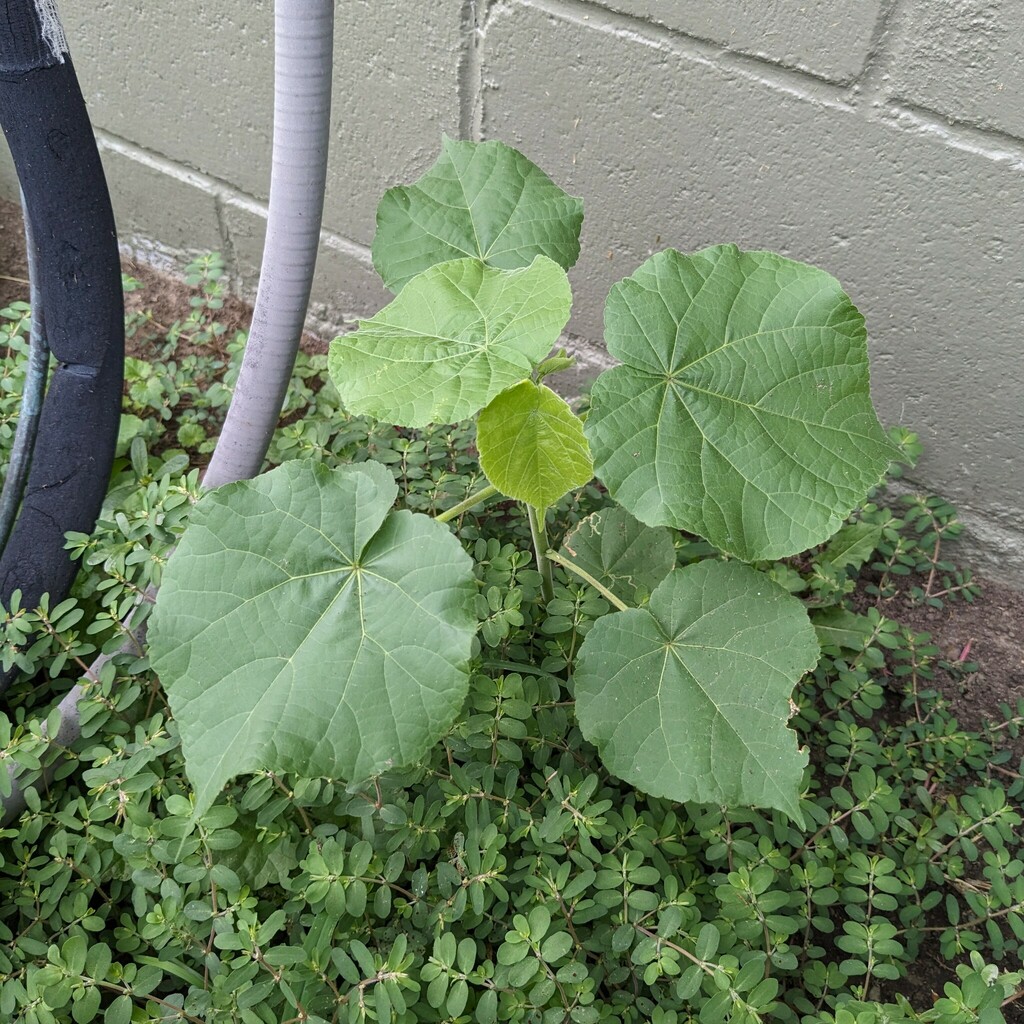
no rights reserved · CC0
Family: Malvaceae · Type: Herb · Not Native
Abutilon theophrasti (Velvet-leaf) is a non-native California herb in the Malvaceae family, recognized by annual habit, large leaves, yellow flowers.
Velvet-leaf is a naturalized annual found in northern California Interior, Great Valley (especially Sacramento Valley), southern Coastal Range, southwest California, and desert regions in disturbed, relatively moist places at elevations generally below 100 meters. Flowering from July to September, this plant produces yellow to orange flowers 6 to 8 millimeters long in axillary clusters. Growing with erect stems 10 to 20 decimeters tall that are few-branched and glandular, it has a distinctive velvety appearance. Its large leaves are 10 to 20 centimeters wide, deeply textured with stellate hairs, and have shallow crenate edges. When bruised, the plant releases a noticeable scent and produces a fruit with 12 to 15 segments covered in long soft hairs.
Identification and appearance
Key characters: 2 sympatric species; distinguished by annual habit, large leaves, yellow flowers
Habitat and range
Habitat: Disturbed, relatively moist places, uncommon in hotter, drier areas
Elevation: generally < 100 m
California counties: Sonoma, Santa Cruz, Orange, Riverside, San Bernardino, Los Angeles, San Diego, Imperial, Yuba, Colusa, San Joaquin, Sutter, Marin, Solano, Napa, Sacramento, Yolo, Glenn, Butte, Tehama, Contra Costa, Mendocino, San Mateo, San Luis Obispo, Santa Barbara, Ventura, Stanislaus
Outside California: widespread worldwide, native to southern Asia
Bloom period
Abutilon theophrasti blooms Jul-Sep.
How to tell it apart
vs Callianthe: Abutilon completely lacks bracts; Callianthe has 3 conspicuous bracts beneath each flower.; vs Sphaeralcea: Abutilon has zero bracts ever; Sphaeralcea has 1-3 small bracts that may fall off but leave scars.; vs Allowissadula: Abutilon has no bracts and 3-9 seeds per segment; Allowissadula has 3 bracts and typically 1 seed per segment.; vs Hibiscus: Abutilon lacks bracts entirely; Hibiscus has 5-12 prominent persistent bracts and much larger flowers.; vs Paulownia: Abutilon has typical mallow flowers; Paulownia is a tree with large tubular foxglove-like flowers in upright clusters.
Frequently asked questions
Is Abutilon theophrasti native to California?
No. Abutilon theophrasti is not native to California (recorded as not native).
When does Abutilon theophrasti bloom?
Abutilon theophrasti blooms Jul-Sep.
Where in California does Abutilon theophrasti grow?
Abutilon theophrasti occurs in Sonoma, Santa Cruz, Orange, Riverside, San Bernardino, Los Angeles, San Diego, Imperial and other counties, at elevations of generally < 100 m.
What plant family does Abutilon theophrasti belong to?
Abutilon theophrasti is in the Malvaceae family, genus Abutilon.
What habitat does Abutilon theophrasti grow in?
Abutilon theophrasti grows in Disturbed, relatively moist places, uncommon in hotter, drier areas.
Related species
Other California species in the same genus, family, or bioregion.
Sources: Jepson eFlora · Index of California Plant Names · CalPhotos
Last updated 2026-10-07
Data from The California Species Project — 14,000+ California species with verified data from CNPS, CDFW, USFWS, Cal-IPC, and more.