Acacia cyclops
Western coastal wattle, Western Coastal Wattle
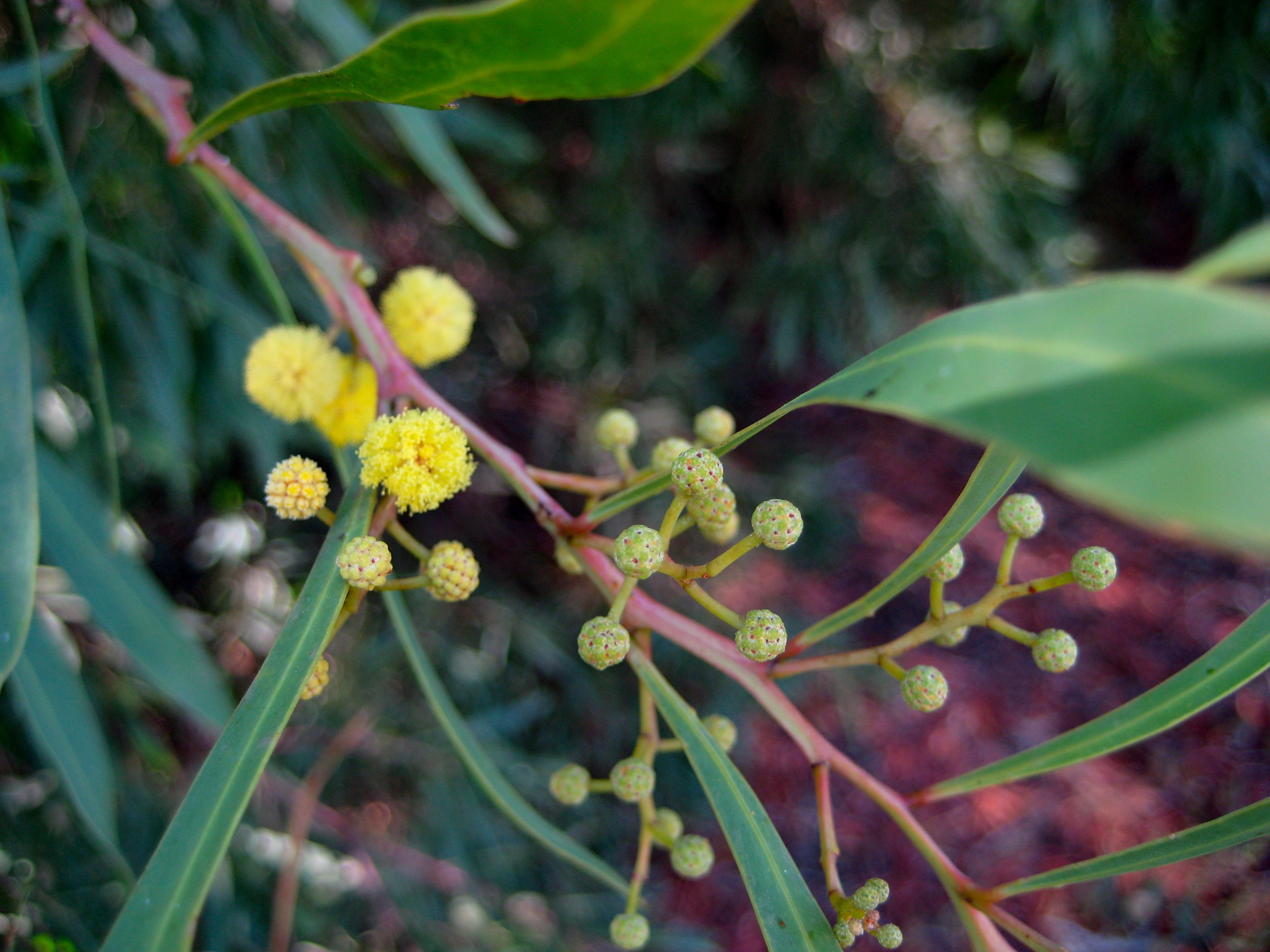
Photo by Chez Brungraber
Family: Fabaceae · Type: Shrub · Not Native
Conservation status: Cal-IPC Yes
Acacia cyclops (Western coastal wattle) is a non-native California shrub in the Fabaceae family, recognized by distinctive simple leaves and sickle-shaped persistent pods.
Western coastal wattle is a naturalized shrub found in southern coastal and Peninsular Ranges areas in disturbed coastal environments and dunes at elevations below 100 meters. Flowering from December to March, this plant produces golden yellow flowers in small raceme clusters. Growing as an unarmed shrub to 6 meters tall with slightly angled twigs, it features simple leaves 4 to 10 centimeters long that are narrowly oblong to obovate with 3 to 5 prominent longitudinal veins. Its distinctive leaves have a slightly oblique tip with a blunt point and measure 4 to 15 millimeters wide. The fruit is a sickle-shaped, leathery pod 5 to 13 centimeters long, often persisting after seed release, with seeds bearing bright orange to scarlet arils.
Identification and appearance
Key characters: 13 sympatric species; distinctive simple leaves and sickle-shaped persistent pods
Habitat and range
Habitat: Uncommon. Disturbed areas, coastal dunes
Elevation: < 100 m
Outside California: native to southwestern Australia
Bloom period
Acacia cyclops blooms Dec-Mar.
Conservation status
Cal-IPC Yes
How to tell it apart
vs Salix: Acacia has yellow ball-shaped flowers; Salix has catkins with small individual flowers and visible scales.; vs Paraserianthes: Acacia has simple blade-like leaves; Paraserianthes has twice-compound feathery leaves.; vs Eucalyptus: Acacia has yellow ball flowers; Eucalyptus has white to cream flowers with prominent stamens from a cap.; vs Vachellia: Acacia has simple blade-like leaves and no spines; Vachellia has feathery leaves and paired spines.; vs Quercus: Acacia has yellow fuzzy ball flowers; Quercus has separate male catkins and tiny female flowers.
Frequently asked questions
Is Acacia cyclops native to California?
No. Acacia cyclops is not native to California (recorded as not native).
When does Acacia cyclops bloom?
Acacia cyclops blooms Dec-Mar.
What plant family does Acacia cyclops belong to?
Acacia cyclops is in the Fabaceae family, genus Acacia.
Is Acacia cyclops invasive in California?
Acacia cyclops is listed by Cal-IPC with an invasiveness rating of Yes.
What habitat does Acacia cyclops grow in?
Acacia cyclops grows in Uncommon. Disturbed areas, coastal dunes.
Related species
Other California species in the same genus, family, or bioregion.
Sources: Jepson eFlora · CalPhotos
Last updated 2026-10-07
Data from The California Species Project — 14,000+ California species with verified data from CNPS, CDFW, USFWS, Cal-IPC, and more.