Acacia paradoxa
Kangaroo thorn
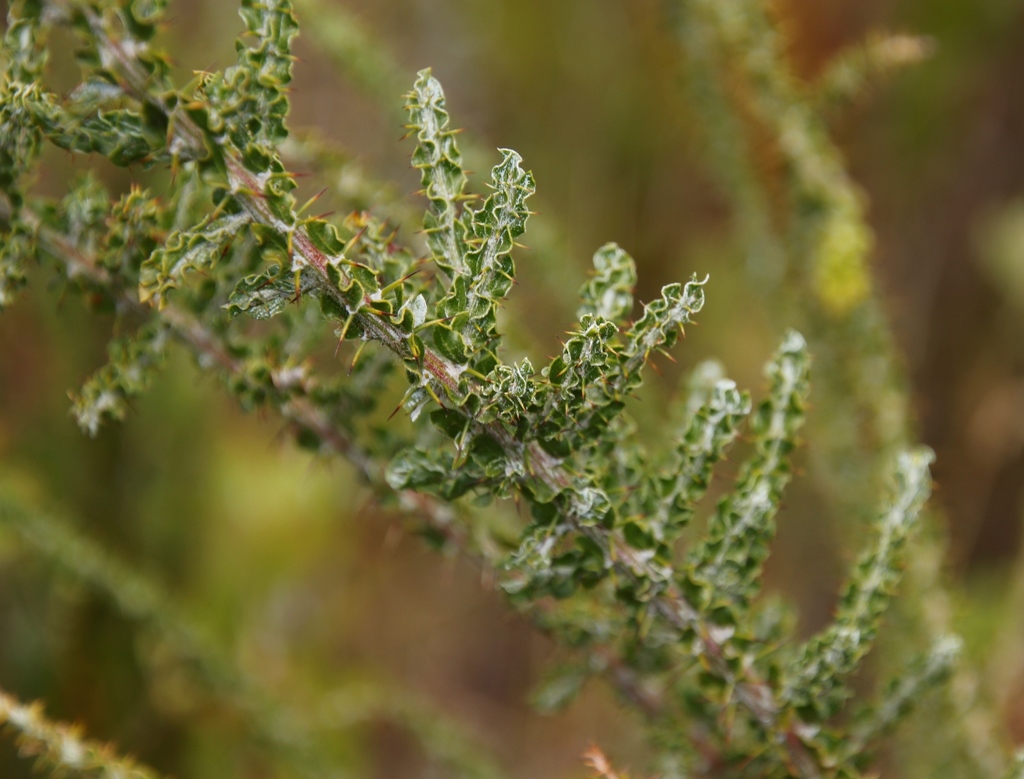
(c) Tony Rebelo, some rights reserved (CC BY-SA) · licence
Family: Fabaceae · Type: Shrub · Not Native
Conservation status: Cal-IPC Yes
Acacia paradoxa (Kangaroo thorn) is a non-native California shrub in the Fabaceae family, recognized by spines and small wavy-margined leaves are unique.
Kangaroo thorn is a naturalized shrub found in coastal California regions including central and southern coastal areas, typically in plantings and occasionally spreading to disturbed areas at elevations below 300 meters. Flowering from January to March, this shrub produces bright yellow flowers in small, stalked heads. Growing as a small shrub up to 4 meters tall with distinctively angled, densely hairy twigs and sharp stipular spines less than 12 millimeters long. Its simple leaves are lanceolate to oblong-elliptic, 1 to 2 centimeters long with wavy margins and a sharply pointed tip. The fruit is a light brown, slightly papery pod 3 to 6 centimeters long, covered in soft hairs.
Identification and appearance
Key characters: 13 sympatric species; spines and small wavy-margined leaves are unique
Habitat and range
Habitat: Plantings, occasionally spreading to other disturbed areas
Elevation: < 300 m
Outside California: native to southeastern Australia, Tasmania
Bloom period
Acacia paradoxa blooms Jan-Mar.
Conservation status
Cal-IPC Yes
How to tell it apart
vs Salix: Acacia has yellow ball-shaped flowers; Salix has catkins with small individual flowers and visible scales.; vs Paraserianthes: Acacia has simple blade-like leaves; Paraserianthes has twice-compound feathery leaves.; vs Eucalyptus: Acacia has yellow ball flowers; Eucalyptus has white to cream flowers with prominent stamens from a cap.; vs Vachellia: Acacia has simple blade-like leaves and no spines; Vachellia has feathery leaves and paired spines.; vs Quercus: Acacia has yellow fuzzy ball flowers; Quercus has separate male catkins and tiny female flowers.
Frequently asked questions
Is Acacia paradoxa native to California?
No. Acacia paradoxa is not native to California (recorded as not native).
When does Acacia paradoxa bloom?
Acacia paradoxa blooms Jan-Mar.
What plant family does Acacia paradoxa belong to?
Acacia paradoxa is in the Fabaceae family, genus Acacia.
Is Acacia paradoxa invasive in California?
Acacia paradoxa is listed by Cal-IPC with an invasiveness rating of Yes.
What habitat does Acacia paradoxa grow in?
Acacia paradoxa grows in Plantings, occasionally spreading to other disturbed areas.
Related species
Other California species in the same genus, family, or bioregion.
Sources: Jepson eFlora · CalPhotos
Last updated 2026-10-07
Data from The California Species Project — 14,000+ California species with verified data from CNPS, CDFW, USFWS, Cal-IPC, and more.