Acanthomintha duttonii
San mateo thornmint, San Mateo thorn-mint, San Mateo thorn-mint
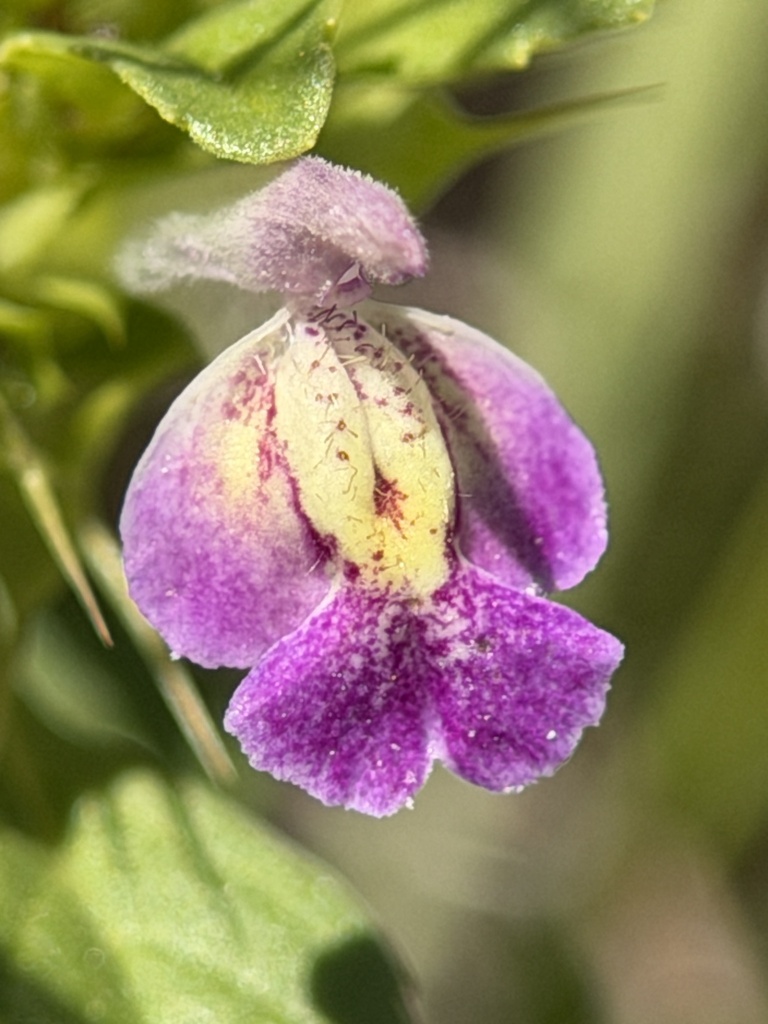
no rights reserved · CC0
Family: Lamiaceae · Type: Herb · Native
Conservation status: CNPS 1B.1 · Endangered
Acanthomintha duttonii (San mateo thornmint) is a native California herb in the Lamiaceae family, recognized by (A. lanceolata); differentiated by size, branching, and flower characteristics.
San mateo thornmint is a rare (CNPS 1B.1) California native annual found in the Central Coast and San Francisco Bay Area bioregions, specifically in San Mateo County, in serpentine grassland habitats at elevations below 300 meters. Flowering from April to June, this plant produces white to lavender flowers with distinctive pink-red anthers, approximately 12 to 16 millimeters long. Growing with slender, generally unbranched stems less than 20 centimeters tall, it forms compact clusters with minimal branching. Its lance-oblong to obovate leaves measure 8 to 12 millimeters long, with margins occasionally serrate and without spiny edges. The plant's inflorescence features distinctive bracts 5 to 11 millimeters long with 5, 7, or 9 marginal spines measuring 3 to 7 millimeters.
Identification and appearance
Key characters: 1 sympatric species (A. lanceolata); differentiated by size, branching, and flower characteristics
Habitat and range
Habitat: Serpentine grassland
Elevation: < 300 m
California counties: San Mateo
Bloom period
Acanthomintha duttonii blooms Apr-Jun.
Conservation status
CNPS 1B.1 · Endangered
How to tell it apart
vs Lycopus: Acanthomintha has spiny flower bracts and grows in dry grasslands, while Lycopus lacks spines and grows in wetlands.; vs Salvia: Acanthomintha has prominent spiny-margined bracts beneath flowers, while Salvia has plain bracts.; vs Monarda: Acanthomintha is annual with spiny bracts, while Monarda is perennial with smooth bracts.; vs Hedeoma: Acanthomintha is annual with spiny bracts, while Hedeoma is perennial with smooth bracts and swollen calyx.; vs Pogogyne: Acanthomintha has spiny-margined bracts, while Pogogyne has smooth bracts and densely head-like flower clusters.
Frequently asked questions
Is Acanthomintha duttonii native to California?
Yes. Acanthomintha duttonii is native to California (recorded as native).
When does Acanthomintha duttonii bloom?
Acanthomintha duttonii blooms Apr-Jun.
Where in California does Acanthomintha duttonii grow?
Acanthomintha duttonii occurs in San Mateo, at elevations of < 300 m.
What plant family does Acanthomintha duttonii belong to?
Acanthomintha duttonii is in the Lamiaceae family, genus Acanthomintha.
Is Acanthomintha duttonii rare or endangered?
Acanthomintha duttonii carries California Rare Plant Rank 1B.1, state rank S1.
Related species
Other California species in the same genus, family, or bioregion.
Sources: Jepson eFlora · CNPS Rare Plant Inventory · Index of California Plant Names · CalPhotos · CDFW CNDDB
Last updated 2026-10-07
Data from The California Species Project — 14,000+ California species with verified data from CNPS, CDFW, USFWS, Cal-IPC, and more.