Acmispon dendroideus var. traskiae
San clemente island lotus, San Clemente Island lotus, San Clemente Island lotus
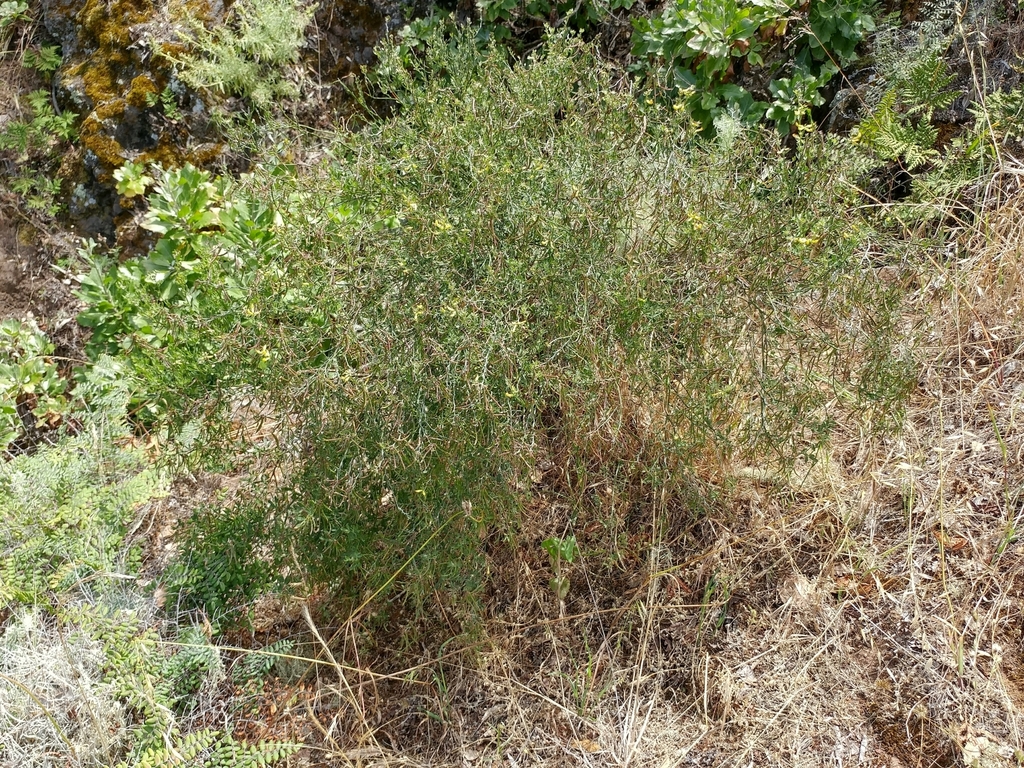
Photo: parent species Acmispon dendroideus · (c) Casey H. Richart, some rights reserved (CC BY) · licence
Family: Fabaceae · Type: Subshrub · Native
Conservation status: CNPS 1B.3 · Delisted
Acmispon dendroideus var. traskiae (San clemente island lotus) is a native California subshrub in the Fabaceae family, recognized by San Clemente endemic with long pods.
San clemente island lotus is a rare (CNPS 1B.3) California native perennial found in southern Channel Islands, specifically on San Clemente Island, in bluffs and inland canyons near the ocean at elevations below 350 meters. Flowering from February to August, this plant produces yellow flowers in small clusters with distinctive bracted peduncles. Growing with slender stems up to 50 centimeters tall, it forms a delicate herbaceous structure with spreading branches. Its leaves have 3 to 5 leaflets, each finely hairy and appearing a soft, nearly green color. The fruit develops 2.5 to 5 centimeters long, adding to the plant's distinctive structural character.
Identification and appearance
Key characters: 16 sympatric species; San Clemente endemic with long pods
Habitat and range
Habitat: Bluffs, inland canyons, open sites near ocean
Elevation: < 350 m
California counties: Los Angeles
Bloom period
Acmispon dendroideus var. traskiae blooms Feb-Aug.
Conservation status
CNPS 1B.3 · Delisted
How to tell it apart
vs Lotus: Same genus - Lotus is an older name for Acmispon, now considered synonymous.; vs Ottleya: Acmispon has yellow pea-shaped flowers in umbels; Ottleya (a buckwheat relative) has tiny white/pink flowers without pea shape.; vs Eriogonum: Acmispon has compound leaves with 3 leaflets; buckwheats (Eriogonum) have simple leaves.; vs Genista: Acmispon leaves are compound with 3 leaflets; Genista (broom) has simple or very small trifoliate leaves on ridged green stems.; vs Hosackia: Acmispon has tiny gland-like stipules; Hosackia has conspicuous papery or leaf-like stipules at leaf bases.
Frequently asked questions
Is Acmispon dendroideus var. traskiae native to California?
Yes. Acmispon dendroideus var. traskiae is native to California (recorded as native).
When does Acmispon dendroideus var. traskiae bloom?
Acmispon dendroideus var. traskiae blooms Feb-Aug.
Where in California does Acmispon dendroideus var. traskiae grow?
Acmispon dendroideus var. traskiae occurs in Los Angeles, at elevations of < 350 m.
What plant family does Acmispon dendroideus var. traskiae belong to?
Acmispon dendroideus var. traskiae is in the Fabaceae family, genus Acmispon.
Is Acmispon dendroideus var. traskiae rare or endangered?
Acmispon dendroideus var. traskiae carries California Rare Plant Rank 1B.3, state rank S3.
Related species
Other California species in the same genus, family, or bioregion.
Sources: Jepson eFlora · CNPS Rare Plant Inventory · Index of California Plant Names · CalPhotos · CDFW CNDDB
Last updated 2026-10-07
Data from The California Species Project — 14,000+ California species with verified data from CNPS, CDFW, USFWS, Cal-IPC, and more.