Adenocaulon bicolor
Trail plant, Trail Plant
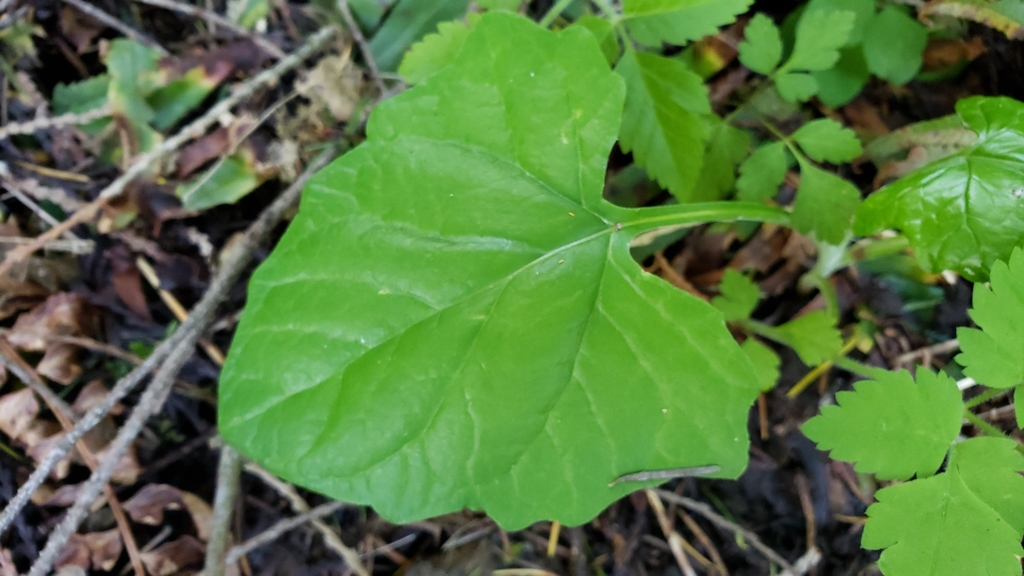
(c) Gavin Slater, some rights reserved (CC BY) · licence
Family: Asteraceae · Type: Herb · Native
Adenocaulon bicolor (Trail plant) is a native California herb in the Asteraceae family, recognized by North Pacific genus with one species in California representing a distinctive woodland lineage.
Trail plant is a California native perennial found in northwestern California, the California Ranges, Sierra Nevada, northern central Coast Ranges, and San Francisco Bay Area in shaded woodland and forest habitats at elevations below 2,000 meters. Flowering from June to October, this plant produces white flowers in small heads that develop delicate stalked glandular clusters. Growing with openly branched stems 30 to 100 centimeters tall that are slightly tomentose near the base and glandular toward the tips, it develops a distinctive appearance. Its large leaves are triangular to ovate, 3 to 25 centimeters long, with white-woolly undersides and smooth upper surfaces, featuring bases that range from truncate to heart-shaped. The fruit is club-shaped and 5 to 9 millimeters long, contributing to the plant's unique woodland character.
Identification and appearance
Key characters: North Pacific genus with one species in California representing a distinctive woodland lineage
Habitat and range
Habitat: Generally in shade, woodland, forest
Elevation: < 2000 m
Outside California: to British Columbia, north-central United States
Bloom period
Adenocaulon bicolor blooms Jun-Oct.
How to tell it apart
vs Rubus: Adenocaulon has broad triangular leaves white underneath; Rubus has compound leaves with 3-7 leaflets and thorny stems.; vs Hedera: Adenocaulon is an upright forest herb with white flowers; Hedera is a climbing vine with lobed evergreen leaves and greenish flowers.; vs Sonchus: Adenocaulon has white flowers and triangular leaves white below; Sonchus has yellow dandelion-like flowers and milky sap.; vs Solanum: Adenocaulon has white underneath leaves and sticky-glandular fruits; Solanum has green leaves and smooth berries, often with star-shaped flowers.; vs Cardamine: Adenocaulon has triangular leaves and sticky fruits; Cardamine has 4-petaled flowers and narrow seed pods that pop open.
Frequently asked questions
Is Adenocaulon bicolor native to California?
Yes. Adenocaulon bicolor is native to California (recorded as native).
When does Adenocaulon bicolor bloom?
Adenocaulon bicolor blooms Jun-Oct.
What plant family does Adenocaulon bicolor belong to?
Adenocaulon bicolor is in the Asteraceae family, genus Adenocaulon.
What habitat does Adenocaulon bicolor grow in?
Adenocaulon bicolor grows in Generally in shade, woodland, forest.
Related species
Other California species in the same genus, family, or bioregion.
Sources: Jepson eFlora · Index of California Plant Names · CalPhotos
Last updated 2026-10-07
Data from The California Species Project — 14,000+ California species with verified data from CNPS, CDFW, USFWS, Cal-IPC, and more.