Aeschynomene rudis
Rough jointvetch, Rough Jointvetch
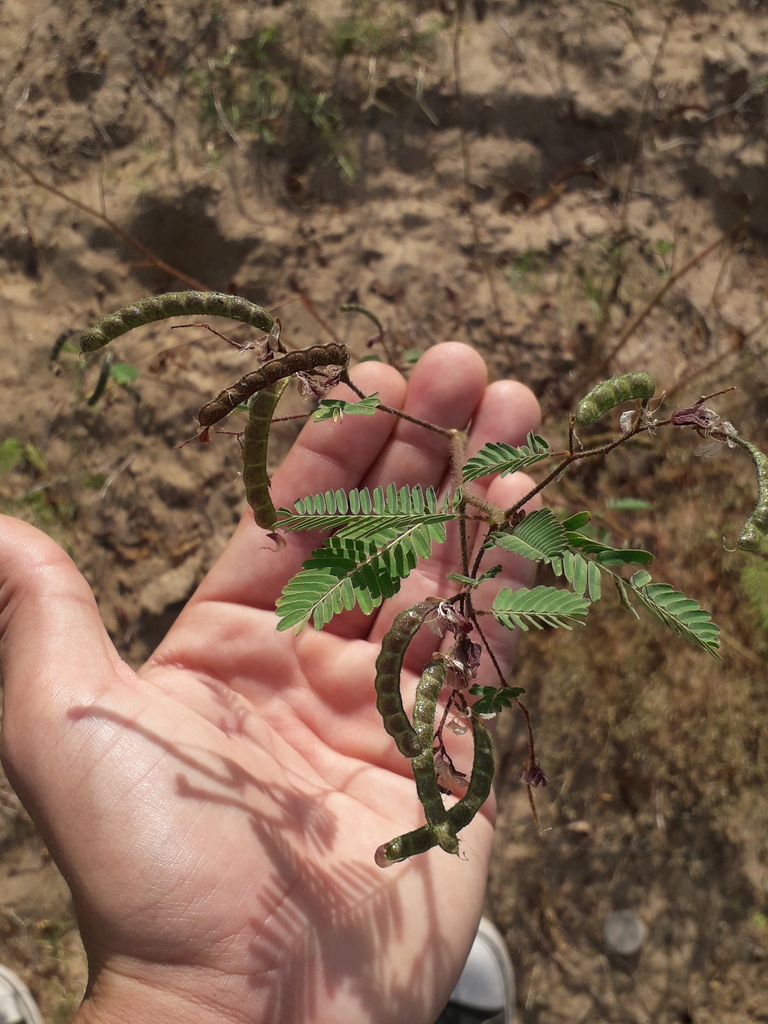
(c) Eduardo Luis Beltrocco, some rights reserved (CC BY) · licence
Family: Fabaceae · Type: Herb · Not Native
Aeschynomene rudis (Rough jointvetch) is a non-native California herb in the Fabaceae family, recognized by South American genus introduced as rice field weed, representing a specialized aquatic legume lineage.
Rough jointvetch is a naturalized perennial found in the northeastern Colusa County area of the Sacramento Valley in rice fields at elevations below 20 meters. Flowering from July to September, this plant produces white flowers with purple tints, approximately 8 to 15 millimeters long. Growing with emergent stems that are bristly-hairy and finely gland-dotted, it spreads in agricultural settings. Its leaves feature distinctive stipules with rounded to fringed basal lobes and generally 9 to 10 millimeter leaflets that are entire or minutely serrate. The fruit develops with a stalk-like base 4 to 10 millimeters long and is 4 to 7 millimeters wide.
Identification and appearance
Key characters: South American genus introduced as rice field weed, representing a specialized aquatic legume lineage
Habitat and range
Habitat: Rice fields
Elevation: < 20 m
Outside California: southeastern United States, native to South America
Bloom period
Aeschynomene rudis blooms Jul-Sep.
Frequently asked questions
Is Aeschynomene rudis native to California?
No. Aeschynomene rudis is not native to California (recorded as not native).
When does Aeschynomene rudis bloom?
Aeschynomene rudis blooms Jul-Sep.
What plant family does Aeschynomene rudis belong to?
Aeschynomene rudis is in the Fabaceae family, genus Aeschynomene.
What habitat does Aeschynomene rudis grow in?
Aeschynomene rudis grows in Rice fields.
Related species
Other California species in the same genus, family, or bioregion.
Sources: Jepson eFlora · CalPhotos
Last updated 2026-10-07
Data from The California Species Project — 14,000+ California species with verified data from CNPS, CDFW, USFWS, Cal-IPC, and more.