Agastache urticifolia
Horse mint
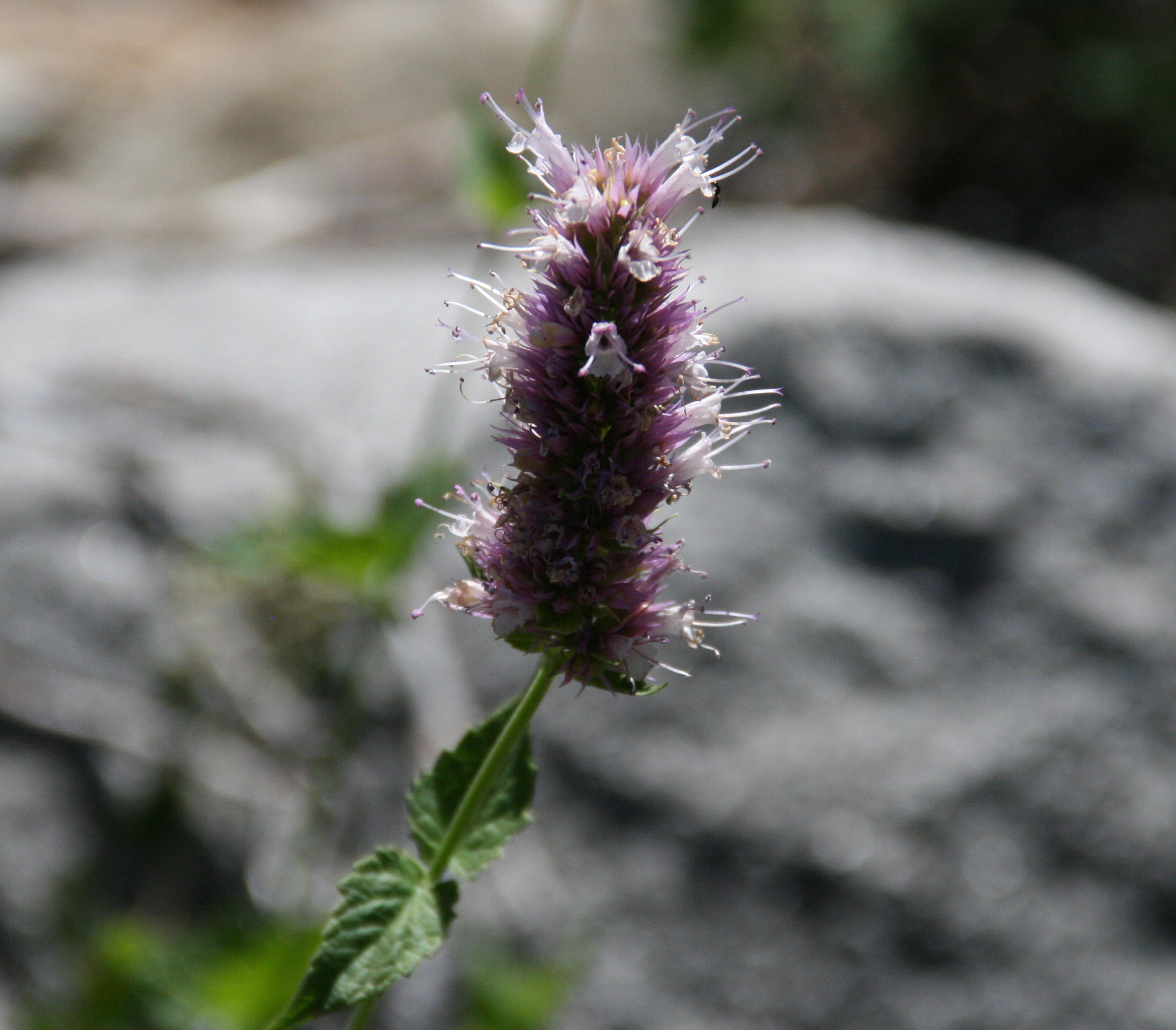
Photo by Chez Brungraber
Family: Lamiaceae · Type: Subshrub · Native
Agastache urticifolia (Horse mint) is a native California subshrub in the Lamiaceae family.
Horse mint is a California native perennial found in northern coastal ranges, Cascade Range, northern and central Sierra Nevada foothills, Sierra Nevada, southern coastal ranges, San Bernardino Mountains, Warner Mountains, and northern eastern Sierra Nevada in woodland and diverse habitats at elevations of 400 to 3,000 meters. Flowering from June to August, this plant produces lavender to purple flowers in dense, elongated clusters that attract pollinators. Growing with erect stems 30 to 90 centimeters tall, it forms clumps with multiple branching stems. Its leaves are ovate to lance-shaped, arranged oppositely along the stem, with serrated edges and a distinctive minty fragrance when crushed. The fruit consists of small nutlets that help the plant disperse its seeds across its wide mountain and woodland range.
Identification and appearance
Key characters: 1 sympatric species; key differentiator likely leaf size and broader habitat range
Habitat and range
Habitat: Common. Generally woodland, but many habitats
Elevation: 400-3000 m
California counties: Lake, Nevada, Mariposa, San Luis Obispo, Madera, Tuolumne, Trinity, Siskiyou, El Dorado, Mendocino, Plumas, Tulare, Sonoma, Tehama, Fresno, Lassen, Modoc, Alpine, Mono, Kern, Santa Barbara, Sierra, Shasta, Inyo, Butte, San Bernardino, Glenn, Placer, Colusa, Humboldt, Calaveras, Napa, Amador, Monterey
Outside California: to British Columbia, Rocky Mountains
Bloom period
Agastache urticifolia blooms Jun-Aug.
How to tell it apart
vs Stachys: Agastache stamens protrude far beyond flowers; Stachys stamens are enclosed in flower tube.; vs Mentha: Agastache has tall spikes with protruding stamens; Mentha has rounded clusters with enclosed stamens.; vs Nepeta: Agastache stamens clearly extend past petals; Nepeta stamens stay within flower tube.; vs Salvia: Agastache has four protruding stamens; Salvia has only two stamens visible.; vs Monardella: Agastache bracts are non-overlapping at base; Monardella bracts overlap forming a collar around flower head.
Frequently asked questions
Is Agastache urticifolia native to California?
Yes. Agastache urticifolia is native to California (recorded as native).
When does Agastache urticifolia bloom?
Agastache urticifolia blooms Jun-Aug.
Where in California does Agastache urticifolia grow?
Agastache urticifolia occurs in Lake, Nevada, Mariposa, San Luis Obispo, Madera, Tuolumne, Trinity, Siskiyou and other counties, at elevations of 400-3000 m.
What plant family does Agastache urticifolia belong to?
Agastache urticifolia is in the Lamiaceae family, genus Agastache.
What habitat does Agastache urticifolia grow in?
Agastache urticifolia grows in Common. Generally woodland, but many habitats.
Related species
Other California species in the same genus, family, or bioregion.
Sources: Jepson eFlora · Index of California Plant Names · CalPhotos
Last updated 2026-10-07
Data from The California Species Project — 14,000+ California species with verified data from CNPS, CDFW, USFWS, Cal-IPC, and more.