Agave utahensis var. eborispina
Ivory-spined agave, Ivory-Spined Agave, ivory-spined agave, ivory-spined agave
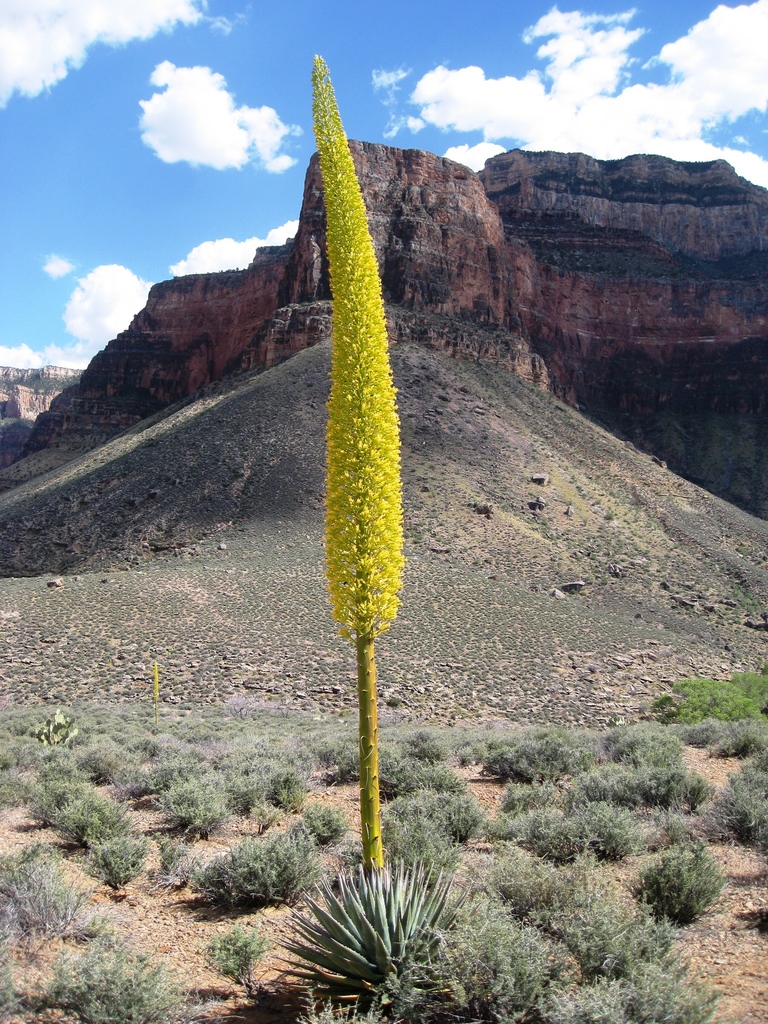
(c) J Brew, some rights reserved (CC BY-SA), uploaded by J Brew · licence
Family: Agavaceae · Type: Shrub · Native
Conservation status: CNPS 1B.3
Agave utahensis var. eborispina (Ivory-spined agave) is a native California shrub in the Agavaceae family, recognized by distinctive ivory-white terminal spine.
Ivory-spined agave is a rare (CNPS 1B.3) California native shrub found in the northeastern Mojave Desert's Nopah Range in desert scrub and conifer woodland on calcareous outcrops at elevations of 1,100 to 1,200 meters. Flowering from May to July, this distinctive plant produces rosettes with striking ivory-white spine tips contrasting against olive-green leaves. Growing 1.5 to 3 decimeters tall, it forms compact clusters with robust architectural structure. Its leaves extend 15 to 30 centimeters long, featuring 6 to 12 marginal teeth measuring 6 to 12 millimeters and a dramatic ivory-white terminal spine reaching 10 to 20 centimeters in length. The rosettes create a sculptural, symmetrical form characteristic of desert-adapted succulents.
Identification and appearance
Key characters: Geographically isolated; distinctive ivory-white terminal spine
Habitat and range
Habitat: Desert scrub [to conifer woodland] on calcareous outcrops
Elevation: 1100-1200 m
California counties: Inyo
Outside California: Nevada
Bloom period
Agave utahensis var. eborispina blooms May-Jul.
Conservation status
CNPS 1B.3
How to tell it apart
vs Aloe: Agave leaves spread from central rosette without a trunk; Aloe typically has a visible stem with leaves spiraling along it.; vs Yucca: Agave has yellow-green flowers with inferior ovary; Yucca has white flowers with superior ovary.; vs Hesperoyucca: Agave has yellow-green flowers with inferior ovary; Hesperoyucca has white flowers with superior ovary.; vs Phormium: Agave has thick succulent leaves with marginal spines; Phormium has thin fibrous strap-like leaves without spines.; vs Dudleya: Agave forms large rosettes with rigid sword-like leaves; Dudleya has smaller rosettes with soft paddle-shaped leaves.
Frequently asked questions
Is Agave utahensis var. eborispina native to California?
Yes. Agave utahensis var. eborispina is native to California (recorded as native).
When does Agave utahensis var. eborispina bloom?
Agave utahensis var. eborispina blooms May-Jul.
Where in California does Agave utahensis var. eborispina grow?
Agave utahensis var. eborispina occurs in Inyo, at elevations of 1100-1200 m.
What plant family does Agave utahensis var. eborispina belong to?
Agave utahensis var. eborispina is in the Agavaceae family, genus Agave.
Is Agave utahensis var. eborispina rare or endangered?
Agave utahensis var. eborispina carries California Rare Plant Rank 1B.3, state rank S2.
Related species
Other California species in the same genus, family, or bioregion.
- Agave utahensis var. nevadensis — Clark mountain agave
- Agave deserti — Desert agave
- Agave deserti var. deserti — Desert agave
- Agave deserti var. simplex — Simple desert agave
- Agave shawii var. shawii — Shaw agave
- Agave simplex — lonesome agave
- Camassia leichtlinii subsp. suksdorfii
- Camassia quamash subsp. breviflora
- Camassia sp. — Camas
Sources: Jepson eFlora · CNPS Rare Plant Inventory · Index of California Plant Names · CalPhotos · CDFW CNDDB
Last updated 2026-10-07
Data from The California Species Project — 14,000+ California species with verified data from CNPS, CDFW, USFWS, Cal-IPC, and more.